

ADVERTISEMENT

20th Congress solons pursue wage hike bills anew

Published Jul 1, 2025 11:34 am  |  Updated Jul 1, 2025 01:09 pm

At A Glance

  • The botched P200 legislated daily minimum wage hike from the previous 19th Congress appear to weigh heavy on the minds of both neophyte and returning House members.
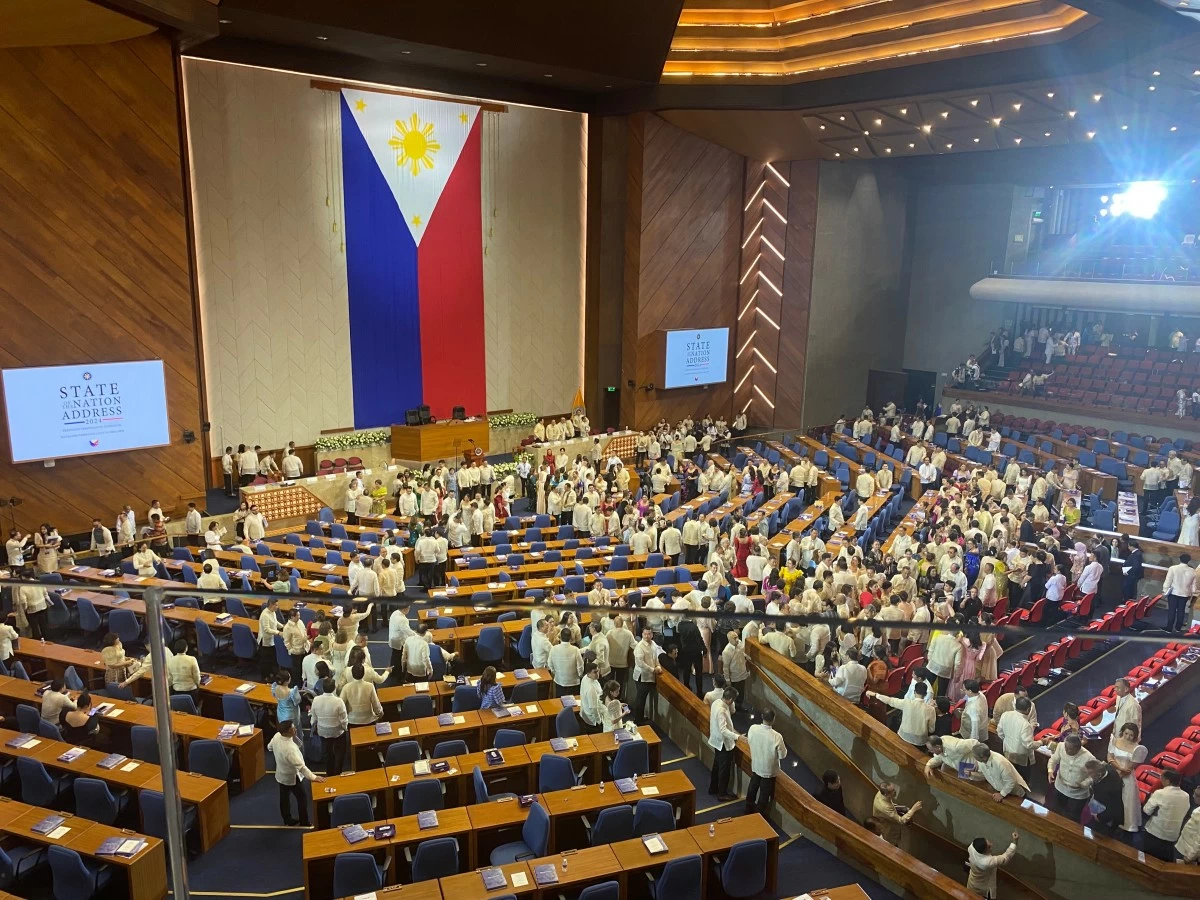
The House plenary (Contributed photo)

The botched P200 legislated daily minimum wage hike from the previous 19th Congress appear to weigh heavy on the minds of both neophyte and returning House members.
As such, the likes of Cavite 1st district Rep. Jolo Revilla, TUCP Party-list Rep. Raymond Democrito Mendoza, ACT Teachers Party-list Rep. Antonio Tinio, and Kamanggagawa Party-list Rep. Eli San Fernando filed on the first day of the 20th Congress Monday, June 30 measures that once again seek to bump up workers' wages.
The reelected Revilla and Mendoza filed House Bil (HB) No. 78 and HB No.88, respectively, to enact a P200 wage hike; while the returning Tinio filed HB No.202 which sought a P1,200 living wage for private sector.
On the other hand, San Fernando, a neophyte in the House of Representatives, filed HB No.94 or National Minimum Wage Act. It seeks to abolish the provincial wage system and establish a single, unified minimum wage nationwide.
Revilla says his proposal pursues a P200 daily minimum wage hike for workers in the private sector. This was similar to the one he filed in the 19th Congress.
“Our workers are the backbone of our economy. They deserve a wage that not only recognizes their hard work but also allows them to live with dignity and security,” he said in a statement Tuesday, July 1.
The House (P200) and the Senate (P100) both approved on third and final reading a legislated wage hike bill in the previous Congress. However, it all fell apart in the Bicameral Conference Committee phase after the two chambers couldn't agree on which amount to follow.
The last time that a wage hike measure was enacted in the country was back in 1989.
Revilla stressed that the P200 increase is aimed at providing immediate and tangible relief to workers who continue to bear the brunt of inflation and rising prices of basic goods and services.
Mendoza, for his part, said: ''We refiled the P200 legislated wage hike bill as the TUCP's first measure because it is the top priority of the working-class majority of our people, especially the more than five million minimum wage earners and their families for whom the P200 wage bill is their only hope for a decent increase.''
''Nakakainsulto''
Meanwhile, Tinio strongly condemned the National Capital Region (NCR) Wage Board's approval of a measly P50 daily wage increase, which he called an insult to Filipino workers who continue to struggle with rising prices and stagnant wages.
The wage board's decision raises the daily minimum wage in NCR from P645 to P695 for the non-agriculture sector, and from P608 to P658 for the agriculture sector, effective July 18, 2025.
''Nakakainsulto ito sa mga manggagawa (This is an insult to workers). While corporations are raking in record profits and prices of basic commodities continue to soar, our workers are given crumbs,'' Tinio said.
''This P50 increase is nothing but a band-aid solution to the worsening poverty of Filipino families,'' added the Makabayan bloc solon.
According to IBON Foundation data, the current P645 minimum wage in Metro Manila represents only 52.8 percent of the P1,222 family living wage needed in the region. The new P695 rate will still fall far short of what families need to survive with dignity.
''Kaya namin kagyat na finile ngayon ang panukalang batas para gawing P1,200 ang living wage ng mga manggagawa sa buong bansa (That’s why we immediately filed the proposal to provide a living wage of P1,200 to workers nationwide),'' Tinio said, referring to HB No.202.
TUCP Party-list argued that the latest NCR Wage Order No. 26, providing for a measly increase of P50 to the daily minimum wage, only reinforces the urgent need to refile and pass the legislated wage hike in the 20th Congress. 
Kamanggagawa Party-list considers the National Minimum Wage Act as its top legislative agenda.
“No worker should earn less simply because they were born or live in a different region. Wage justice cannot wait any longer,” San Fernando said.
Anchored on “equal pay for equal work,” the bill includes a five-year transition to align regional wages and abolish regional wage boards, with their functions absorbed by a strengthened National Wages and Productivity Commission.
ADVERTISEMENT
.most-popular .layout-ratio{ padding-bottom: 79.13%; } @media (min-width: 768px) and (max-width: 1024px) { .widget-title { font-size: 15px !important; } }

{{ articles_filter_1561_widget.title }}

.most-popular .layout-ratio{ padding-bottom: 79.13%; } @media (min-width: 768px) and (max-width: 1024px) { .widget-title { font-size: 15px !important; } }

{{ articles_filter_1562_widget.title }}

.most-popular .layout-ratio{ padding-bottom: 79.13%; } @media (min-width: 768px) and (max-width: 1024px) { .widget-title { font-size: 15px !important; } }

{{ articles_filter_1563_widget.title }}

{{ articles_filter_1564_widget.title }}

.mb-article-details { position: relative; } .mb-article-details .article-body-preview, .mb-article-details .article-body-summary{ font-size: 17px; line-height: 30px; font-family: "Libre Caslon Text", serif; color: #000; } .mb-article-details .article-body-preview iframe , .mb-article-details .article-body-summary iframe{ width: 100%; margin: auto; } .read-more-background { background: linear-gradient(180deg, color(display-p3 1.000 1.000 1.000 / 0) 13.75%, color(display-p3 1.000 1.000 1.000 / 0.8) 30.79%, color(display-p3 1.000 1.000 1.000) 72.5%); position: absolute; height: 200px; width: 100%; bottom: 0; display: flex; justify-content: center; align-items: center; padding: 0; } .read-more-background a{ color: #000; } .read-more-btn { padding: 17px 45px; font-family: Inter; font-weight: 700; font-size: 18px; line-height: 16px; text-align: center; vertical-align: middle; border: 1px solid black; background-color: white; } .hidden { display: none; }
function initializeAllSwipers() { // Get all hidden inputs with cms_article_id document.querySelectorAll('[id^="cms_article_id_"]').forEach(function (input) { const cmsArticleId = input.value; const articleSelector = '#article-' + cmsArticleId + ' .body_images'; const swiperElement = document.querySelector(articleSelector); if (swiperElement && !swiperElement.classList.contains('swiper-initialized')) { new Swiper(articleSelector, { loop: true, pagination: false, navigation: { nextEl: '#article-' + cmsArticleId + ' .swiper-button-next', prevEl: '#article-' + cmsArticleId + ' .swiper-button-prev', }, }); } }); } setTimeout(initializeAllSwipers, 3000); const intersectionObserver = new IntersectionObserver( (entries) => { entries.forEach((entry) => { if (entry.isIntersecting) { const newUrl = entry.target.getAttribute("data-url"); if (newUrl) { history.pushState(null, null, newUrl); let article = entry.target; // Extract metadata const author = article.querySelector('.author-section').textContent.replace('By', '').trim(); const section = article.querySelector('.section-info ').textContent.replace(' ', ' '); const title = article.querySelector('.article-title h1').textContent; // Parse URL for Chartbeat path format const parsedUrl = new URL(newUrl, window.location.origin); const cleanUrl = parsedUrl.host + parsedUrl.pathname; // Update Chartbeat configuration if (typeof window._sf_async_config !== 'undefined') { window._sf_async_config.path = cleanUrl; window._sf_async_config.sections = section; window._sf_async_config.authors = author; } // Track virtual page view with Chartbeat if (typeof pSUPERFLY !== 'undefined' && typeof pSUPERFLY.virtualPage === 'function') { try { pSUPERFLY.virtualPage({ path: cleanUrl, title: title, sections: section, authors: author }); } catch (error) { console.error('ping error', error); } } // Optional: Update document title if (title && title !== document.title) { document.title = title; } } } }); }, { threshold: 0.1 } ); function showArticleBody(button) { const article = button.closest("article"); const summary = article.querySelector(".article-body-summary"); const body = article.querySelector(".article-body-preview"); const readMoreSection = article.querySelector(".read-more-background"); // Hide summary and read-more section summary.style.display = "none"; readMoreSection.style.display = "none"; // Show the full article body body.classList.remove("hidden"); } document.addEventListener("DOMContentLoaded", () => { let loadCount = 0; // Track how many times articles are loaded const offset = [1, 2, 3, 4, 5, 6, 7, 8, 9, 10]; // Offset values const currentUrl = window.location.pathname.substring(1); let isLoading = false; // Prevent multiple calls if (!currentUrl) { console.log("Current URL is invalid."); return; } const sentinel = document.getElementById("load-more-sentinel"); if (!sentinel) { console.log("Sentinel element not found."); return; } function isSentinelVisible() { const rect = sentinel.getBoundingClientRect(); return ( rect.top < window.innerHeight && rect.bottom >= 0 ); } function onScroll() { if (isLoading) return; if (isSentinelVisible()) { if (loadCount >= offset.length) { console.log("Maximum load attempts reached."); window.removeEventListener("scroll", onScroll); return; } isLoading = true; const currentOffset = offset[loadCount]; window.loadMoreItems().then(() => { let article = document.querySelector('#widget_1690 > div:nth-last-of-type(2) article'); intersectionObserver.observe(article) loadCount++; }).catch(error => { console.error("Error loading more items:", error); }).finally(() => { isLoading = false; }); } } window.addEventListener("scroll", onScroll); });

Sign up by email to receive news.