







Pino Perspectives: Javier Tourist Center
By Nicholai Go
Published Jun 30, 2025 12:23 pm
|
Updated Jul 2, 2025 11:22 am


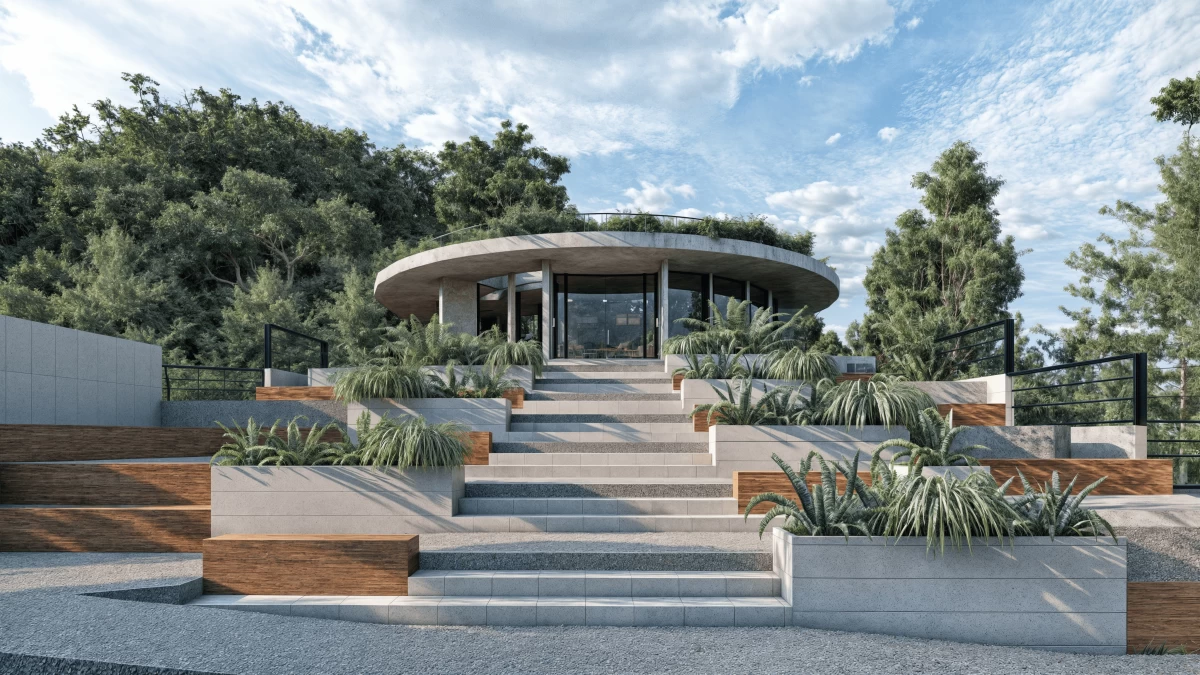
Exterior perspective view from entrance drop off of Javier Tourist Center in Leyte
In my last article, I wrote about Destination Architecture and how important it is for the Philippines to consider constructing more buildings that fit its criteria to not only improve tourism but also to improve the livelihood of its inhabitants by increasing commerce and sense of place.
Pino Places was privileged enough to be tasked by Mayor Mike Javier of a town named Javier in Leyte to design a tourist center that aims to become Destination Architecture. His goal was to have a building that would attract tourists from all over and improve the lives of his constituents by increasing commerce and providing growth opportunities. He understands that architecture can have a significant impact on his town.
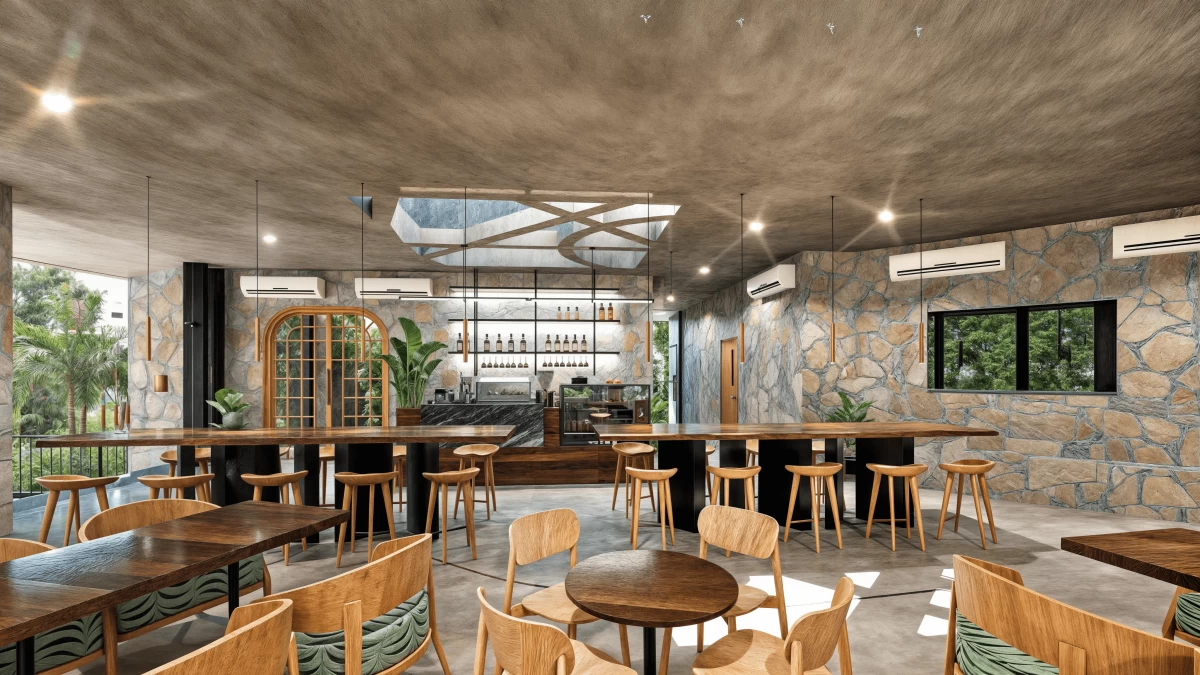
Cafe and restaurant
The selected site for the Javier Tourist Center is located at one of the highest points in town, offering an uninterrupted 360 degree view of a breathtaking pristine lake, rice fields, and a large spanning mountain ridge. The tourist center would house the following programs: gift shop, media room, café, auditorium, information center, changing room, hike trail entrance, and zipline launch point.
As I have described before, Destination Architecture combines clear geometry and strong resonance with the local culture and the natural environment. As principal architect, I chose an organic form: the circle, as it more reflects the organic mountain top site. Using two side-by-side circles as my framework, I allocated the different functions and programs based on operation flow, privacy, and access to specific key views.
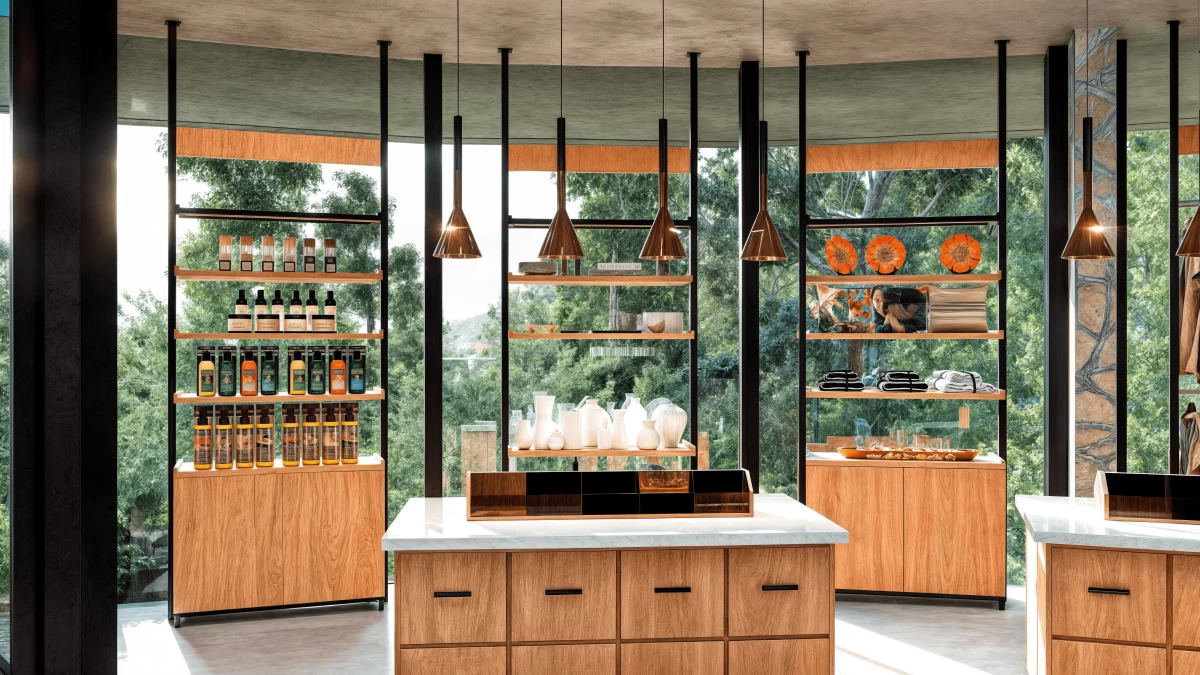
Gift shop merchandise area
For example, the bathroom and changing rooms are located between the two circles, wherein it is most private and views are minimal. Adjacent to the bathrooms is a stepped auditorium that follows the natural curvature of the void between the circles. This auditorium will be equipped with a state-of-the-art sound system and will be used for events and music festivals that will greatly support the community's local art scene.
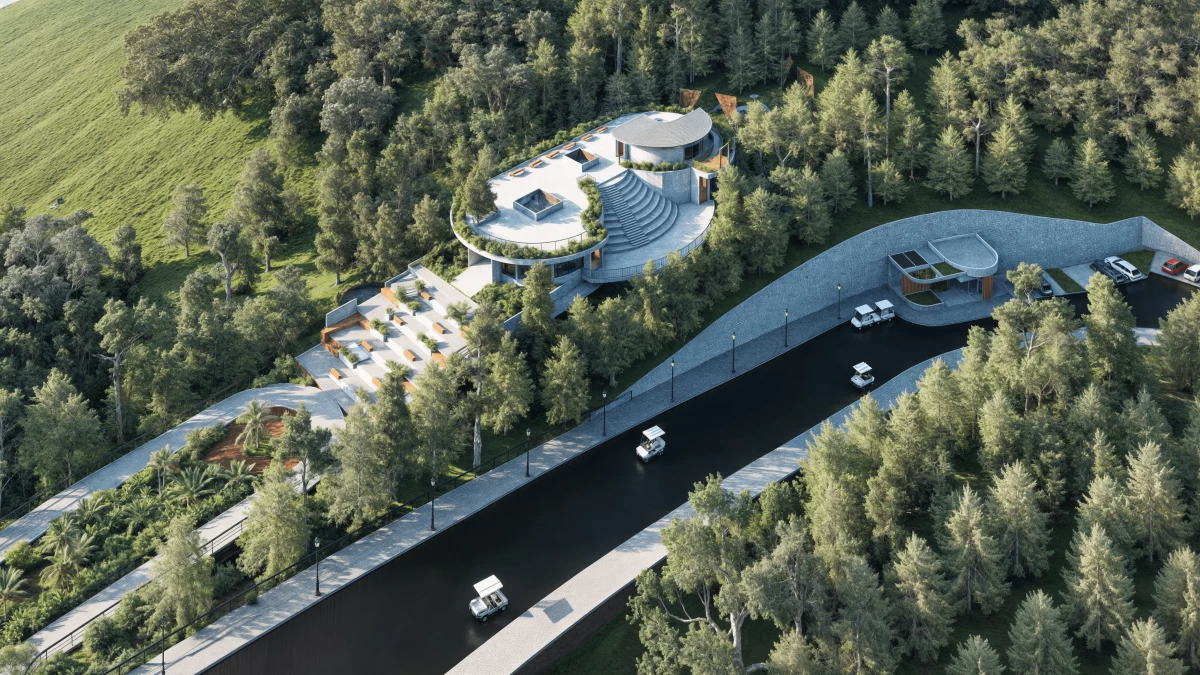
Aerial perspective view
The result of this strict adherence to the design concept is a building with clear, expressive geometry. To establish a strong connection to local culture and the environment, I chose to use native stone sourced directly from the mountain for most of the building’s walls. Polished concrete finishes give the structure a raw yet refined aesthetic that harmonizes with its surroundings. Floor-to-ceiling glass walls encircle the building, reflecting the forested environment and creating a seamless connection between indoor and outdoor spaces.
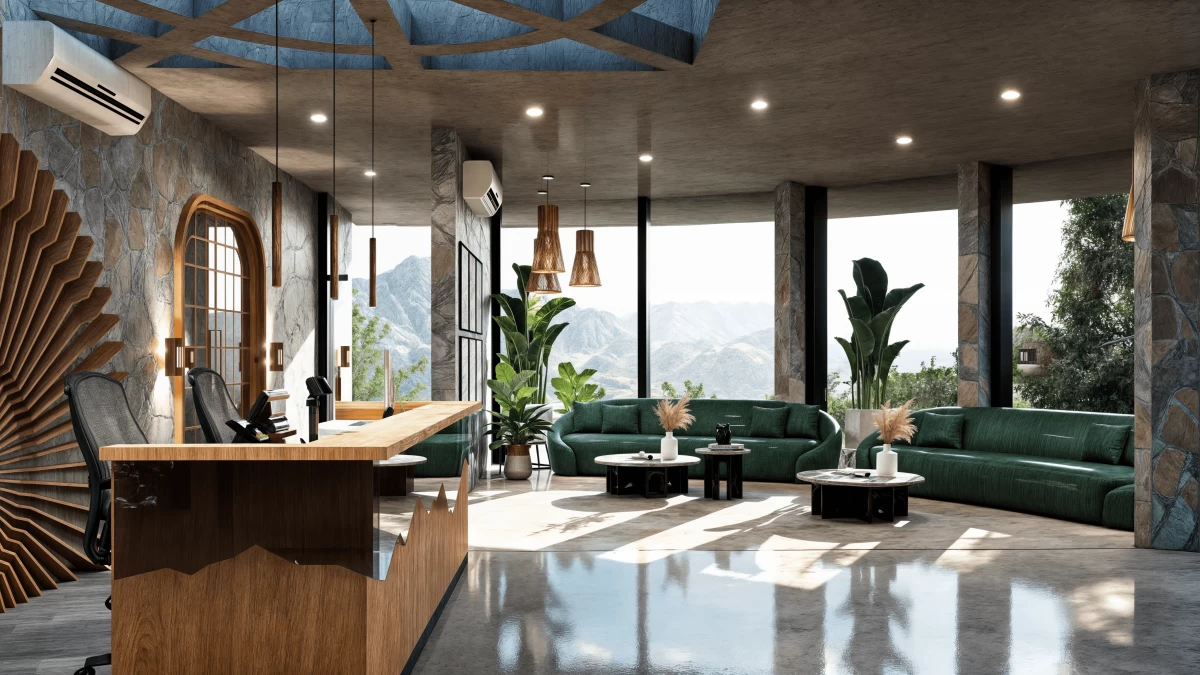
Entrance reception area and waiting lounge
The interiors of the tourist center blends modern sophistication with organic textures and cultural motifs, creating a warm and inviting atmosphere. At the heart of the space is a feature reception desk crafted with natural wood tones and a wave-inspired front panel, symbolizing connection to the surrounding landscape. Behind it, a sunburst wall installation radiates from textured stone masonry, offering a sense of local identity and craftsmanship.
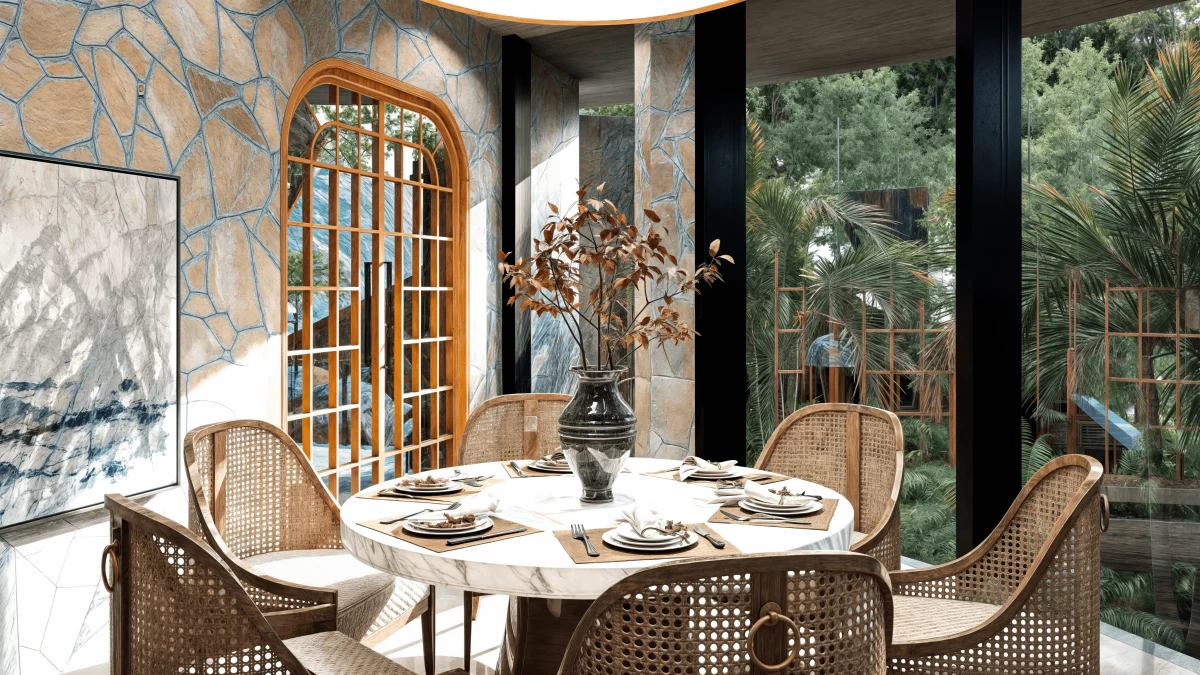
Private dining room with panoramic view
The flooring is subtly etched with a brass inlay representing a topographic or river-like path, guiding movement through the open layout. Skylights arranged in a circular pattern above the reception area bring in abundant natural light, casting dynamic shadows that animate the space throughout the day. The use of stone, wood, and metal finishes throughout the interior echoes the materials on the exterior, reinforcing a cohesive architectural language.
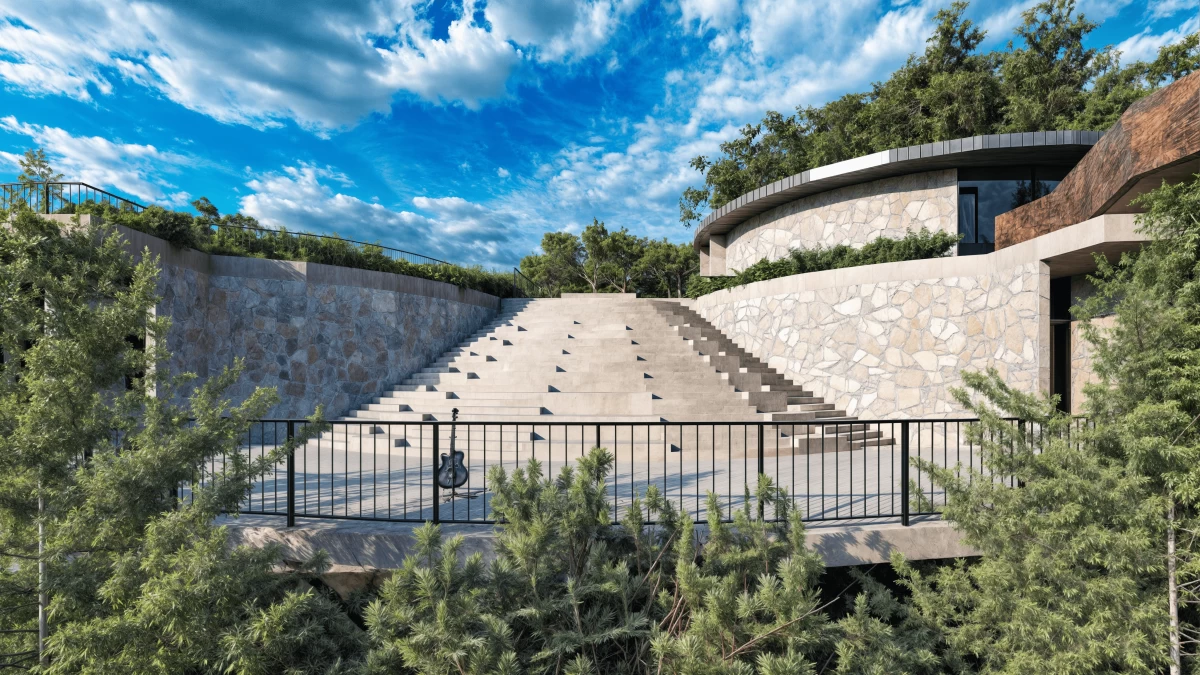
Perspective of stepped auditorium
The retail area is neatly integrated with shelves displaying colorful apparel and local products, making the visitor center function also as a cultural and commercial hub. Our aim is to provide a beautiful way to display local products boosting their popularity. Thoughtful lighting, clean lines, and the interplay of solid and transparent elements all contribute to a space that feels both contemporary and rooted in place.
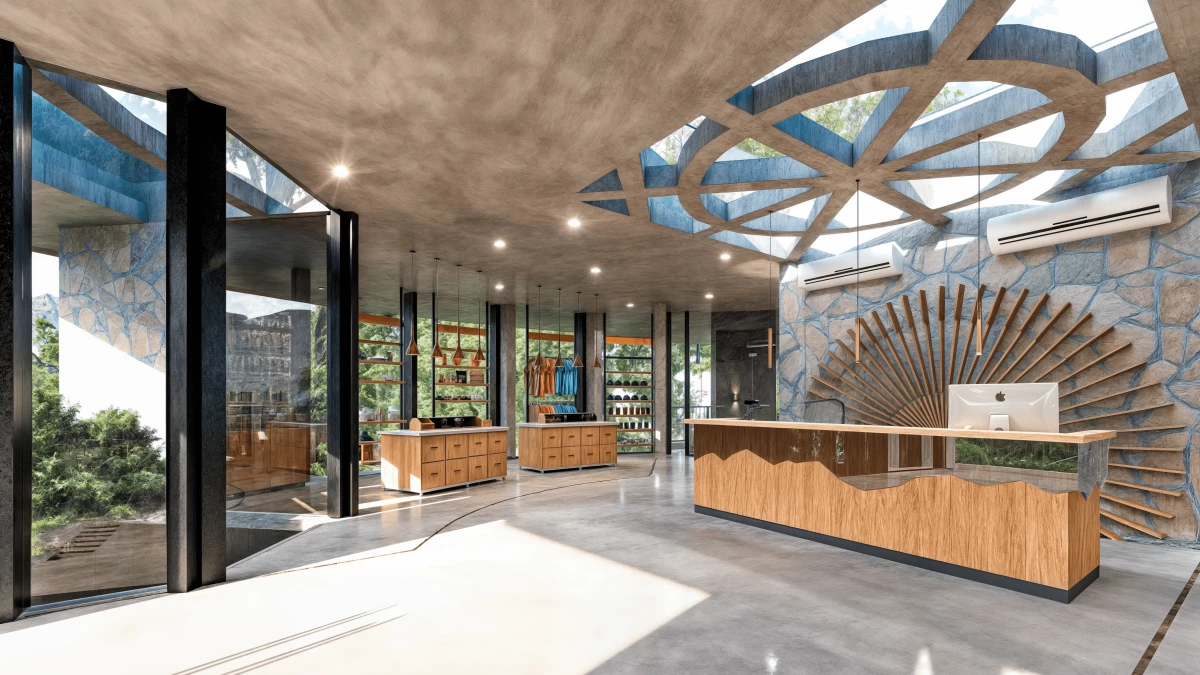
Entrance reception area and gift shop merchandise area
We must all strive to create more Destination Architecture, as it can revitalize cities, inspire visitors, and leave a lasting impact on both place and people. At Pino Places, we embraced the opportunity this project offered to push our aspirations for more refined, place-making architecture. The Javier Tourist Center is poised to become a prime example of Destination Architecture and is scheduled to open its doors to the public by 2026.