







Making breast cancer treatable for all Filipinos
Published Jun 30, 2025 03:28 pm
|
Updated Jul 8, 2025 11:48 am


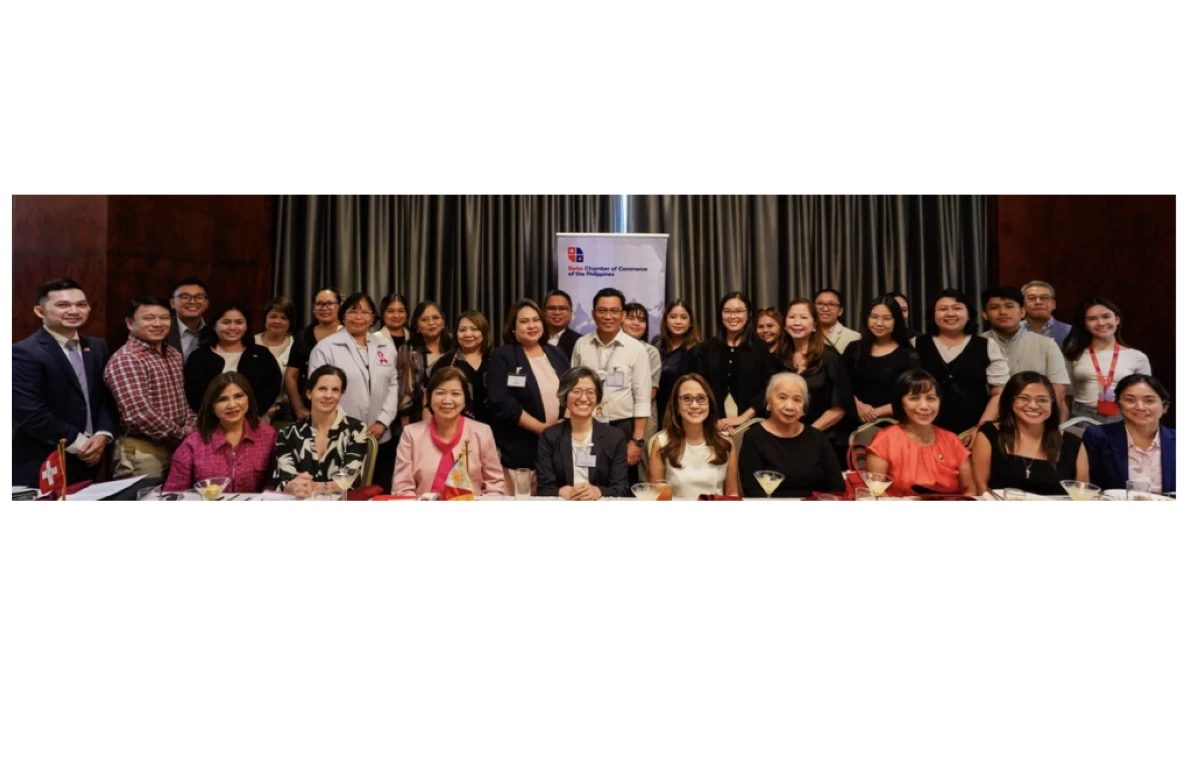
SwissCham roundtable discussion panelists, guests, and participants
Breast cancer—and cancer in general—should no longer be a death sentence. This was the clear message from health leaders, patient advocates, and policymakers during the luncheon meeting on “Strengthening the Implementation of the Global Breast Cancer Strategy in the Philippines,” held last June 4 and co-organized by the Swiss Chamber of Commerce of the Philippines and the Embassy of Switzerland, in partnership with Roche (Philippines) Inc.
Céline Fürst, deputy head of Mission of the Embassy of Switzerland, highlighted the urgent findings from the recent Economist Impact Report that breast cancer is now the most common cancer among Filipino women, with mortality projected to rise over 40 percent by 2030.
“These numbers are more than statistics. They reflect the lives of mothers, sisters, daughters, and women who have health and future threatened by systemic gaps in detection, treatment, and access,” Fürst shared.
“What's more troubling is that so many women are being diagnosed late and too many are unable to finish their treatment due to high out-of-pocket costs. For a country where over 54 percent of healthcare spending is borne by patients, it is no surprise that 70 percent of breast cancer patients face catastrophic health expenditure. In terms of drug reimbursement and access to advanced diagnostic and therapies for cancer patients, the Philippines is below average of Asia Pacific,” she added.
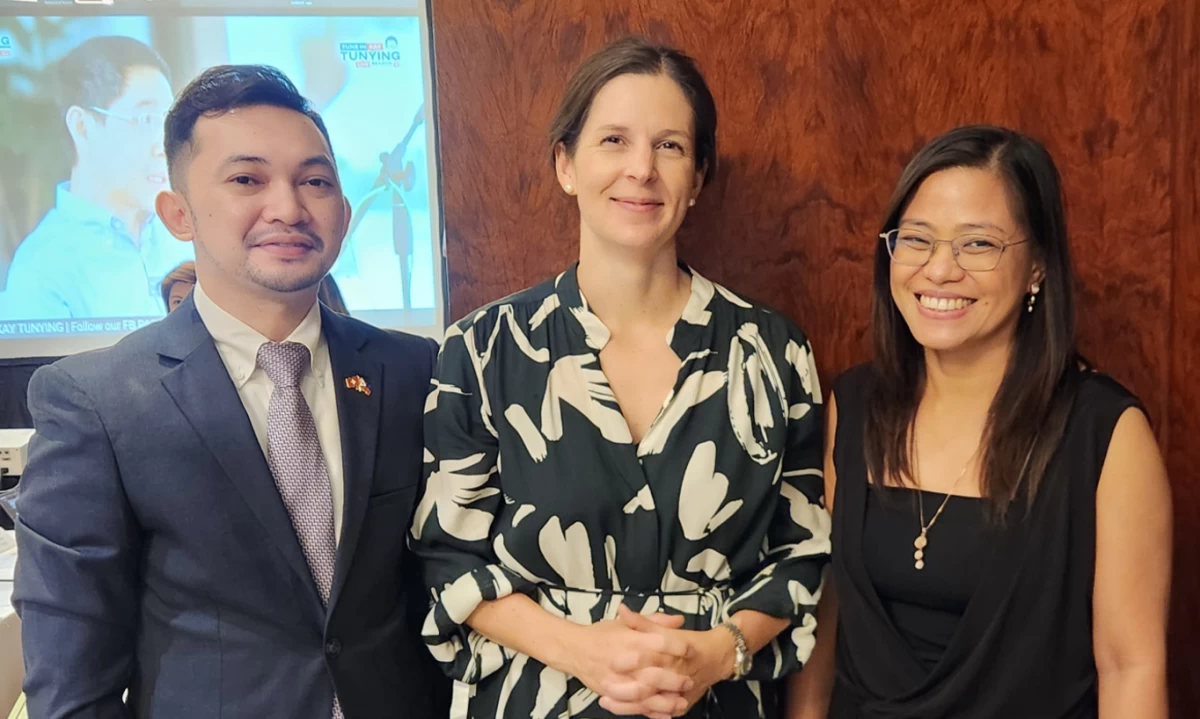
Swiss Embassy’s Head of Economic and Trade Kent Primor, Deputy Head of Mission Céline Fürst, and Cancer Commission Foundation Executive Director Tefel Pesigan-Valentino
Fürst encouraged the Philippines to learn from Switzerland’s experience: “Switzerland's own experience shows that progress is possible. We've learned that prevention and early detection save lives. Organized screening, strong public-private partnership, and patient-centered care models work, and they can work here in the Philippines, too,” she said.
Dr. Diana Edralin, general manager of Roche (Philippines) Inc., echoed the need for collaboration to make treatments more accessible. “The private sector is definitely committed to making medicines affordable. The Pharmaceutical and Healthcare Association of the Philippines (PHAP) has been reaching out to Philippine Health Insurance Corporation (PhilHealth). We’re partnering with them, with the help of medical societies, to update the clinical practice guidelines. There are a lot of innovative medicines that can make breast cancer not a death sentence, and to be made available to Filipinos,” she said.
“One of the things that we have to learn about breast cancer is that you need to complete the treatment. The cure of the disease is associated with the completion of the treatment. That is why the funding is very critical. We want to ensure that patients are able to comply in a timely manner, and also be able to be treated,” she added.
Kara Magsanoc-Alikpala, founding president of the ICanServe Foundation, emphasized the difficulty in accessing non-PNF (Philippine National Formulary) medicines, referring to pharmaceutical drugs that are excluded in the PNF.
The PNF serves as the official list of essential medicines in the Philippines and guides government procurement as well as PhilHealth reimbursement.

Roche Philippines General Manager Dr. Diana Edralin and Jose Reyes Memorial Medical Center Medical Oncologist Dr. Solidad Balete; PhilHealth Benefits Development and Research Department Senior Manager Dr. Melanie Santillan; ICanServe Foundation Founding President Kara Magsanoc-Alikpala
“A lot of the medicines now are no longer even in the standard of care, and not aligned with what’s advanced, and so some have adverse effects. We really need to include the newer and innovative medicines in that list,” she said.
“It is so hard to get non-PNF medicines. No matter what you hear that they are available, it is really difficult. From the ground, what I hear and what I know is that it is usually accessible to people who have friends in government, who have connections to politicians. That is the only way to survive but it is not equitable, which we have to break,” she added.
Dr. Solidad Balete, medical oncologist at the José R. Reyes Memorial Medical Center, stressed that access to innovative, standard-of-care treatments should be expanded for all cancer patients.
Dr. Melanie Coronel Santillan, senior manager of PhilHealth’s Benefits Development and Research Department, noted that measures to improve coverage for breast cancer services are already in place.
“We are collaborating, consulting the experts for standards, costing, and policy formulation. In terms of data sharing, we hope we can get prices of drugs, prices of services like procedures, labs, diagnostics, professional fees, and also the registry or digital tools. And also, capacity building and other important matters such as communications, which is very critical,” she said, adding that the state insurer is also eyeing the digitalization of health information systems.
In Congress, Tingog Party-list Representative Jude Acidre assured continued legislative support, including the push for the proposed Pharmaceutical Innovations Bill aimed at strengthening local research and access to life-saving drugs.
Dr. Corazon Ngelangel, president of the Philippine Cancer Society, emphasized that early screening remains one of the most powerful tools in the fight against cancer.
The meeting reaffirmed the Philippines' commitment to the World Health Organization’s (WHO) Global Breast Cancer Initiative (GBCI), which seeks to reduce breast cancer mortality by 2.5 percent annually until 2040.
Since achieving this goal will require unified efforts across sectors, organizers called for urgent, sustained collaboration to ensure that every Filipino, regardless of location or income, has access to timely, effective, and compassionate breast cancer care.