ADVERTISEMENT

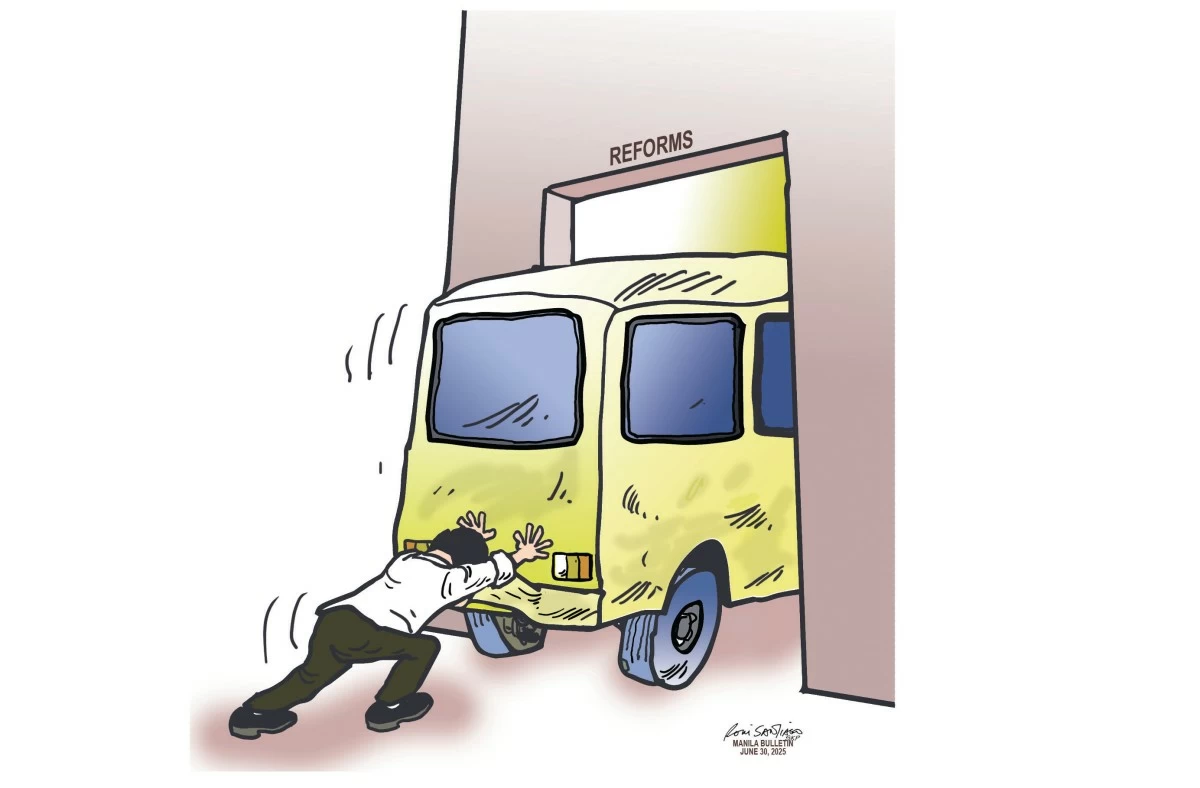
K–12 reforms as a national imperative: Toward better-educated children

Published Jun 30, 2025 12:05 am  |  Updated Jun 29, 2025 04:30 pm
President Ferdinand R. Marcos Jr.’s recent directives to improve the K–12 system bring much-needed focus to long-standing challenges in Philippine basic education. The call for “more classrooms, less administrative work for teachers” speaks to an essential recalibration—focusing national effort where it matters most: the learning environment and the educators who power it.
The K–12 reform, implemented over a decade ago, was envisioned to align Philippine education with global standards. Yet the persistent issues of overcrowded classrooms, overburdened teachers, outdated instructional approaches, and underwhelming learning outcomes have prevented the system from fulfilling its full promise.
This is the context in which the significance of President Marcos’ pronouncements, reinforced by Education Secretary Juan Edgardo “Sonny” Angara’s initiatives, can be appreciated fully. As co-chair of the Second Congressional Commission on Education (EDCOM 2), Secretary Angara brings with him a data-informed and reform-oriented perspective—one grounded in the stark realities of Philippine education’s global standing.
The EDCOM 2 report laid bare the urgency of reform: Filipino learners consistently rank near the bottom in international assessments in reading, math, and science. Secretary Angara has publicly acknowledged this and is determined to address the roots of the crisis, beginning with improvements in teaching quality, facilities, and governance.
Under his stewardship, the Department of Education is poised to align more closely with the EDCOM 2 recommendations—especially in upgrading teacher training, streamlining administrative workloads, and adopting evidence-based approaches to curriculum delivery. His track record in championing increased education budgets and systemic reform in the Senate adds both credibility and momentum.
Private sector partnerships are expected to play a pivotal role. With public resources under pressure, the infusion of corporate support and innovation can help accelerate the catch-up plan in classroom building, expand teacher training, supply learning technologies, and co-develop modern instructional materials. President Marcos’ openness to such collaborations opens the door to transformative interventions—particularly in regions most affected by learning poverty.
The renewed focus on teacher support is also crucial. When teachers are freed from excessive paperwork and empowered with training and tools, student learning outcomes improve. Angara’s commitment to benchmarking with international best practices—from teacher education in Finland to school governance in Singapore—signals a welcome openness to adaptive learning models that fit our context.
Moreover, expanding access to classrooms is not just a logistical matter—it reflects a moral imperative to provide safe, inclusive, and conducive learning spaces for every Filipino child. This, too, was underscored in EDCOM 2’s findings as foundational to addressing learning inequality.
Ultimately, the test of any reform lies in its impact. The K–12 system must evolve—not merely in form but in effectiveness. The way forward is not to abandon reform but to refine it—anchored on rigorous analysis, collaborative partnerships, and a relentless drive to elevate the quality and competitiveness of Philippine education.
As President Marcos leads the call and Secretary Angara takes the helm, there is renewed hope that the foundation of the future—our basic education system—will be strengthened. For in every child we educate well lies the promise of a better nation.
ADVERTISEMENT
.most-popular .layout-ratio{ padding-bottom: 79.13%; } @media (min-width: 768px) and (max-width: 1024px) { .widget-title { font-size: 15px !important; } }

{{ articles_filter_1561_widget.title }}

.most-popular .layout-ratio{ padding-bottom: 79.13%; } @media (min-width: 768px) and (max-width: 1024px) { .widget-title { font-size: 15px !important; } }

{{ articles_filter_1562_widget.title }}

.most-popular .layout-ratio{ padding-bottom: 79.13%; } @media (min-width: 768px) and (max-width: 1024px) { .widget-title { font-size: 15px !important; } }

{{ articles_filter_1563_widget.title }}

{{ articles_filter_1564_widget.title }}

.mb-article-details { position: relative; } .mb-article-details .article-body-preview, .mb-article-details .article-body-summary{ font-size: 17px; line-height: 30px; font-family: "Libre Caslon Text", serif; color: #000; } .mb-article-details .article-body-preview iframe , .mb-article-details .article-body-summary iframe{ width: 100%; margin: auto; } .read-more-background { background: linear-gradient(180deg, color(display-p3 1.000 1.000 1.000 / 0) 13.75%, color(display-p3 1.000 1.000 1.000 / 0.8) 30.79%, color(display-p3 1.000 1.000 1.000) 72.5%); position: absolute; height: 200px; width: 100%; bottom: 0; display: flex; justify-content: center; align-items: center; padding: 0; } .read-more-background a{ color: #000; } .read-more-btn { padding: 17px 45px; font-family: Inter; font-weight: 700; font-size: 18px; line-height: 16px; text-align: center; vertical-align: middle; border: 1px solid black; background-color: white; } .hidden { display: none; }
function initializeAllSwipers() { // Get all hidden inputs with cms_article_id document.querySelectorAll('[id^="cms_article_id_"]').forEach(function (input) { const cmsArticleId = input.value; const articleSelector = '#article-' + cmsArticleId + ' .body_images'; const swiperElement = document.querySelector(articleSelector); if (swiperElement && !swiperElement.classList.contains('swiper-initialized')) { new Swiper(articleSelector, { loop: true, pagination: false, navigation: { nextEl: '#article-' + cmsArticleId + ' .swiper-button-next', prevEl: '#article-' + cmsArticleId + ' .swiper-button-prev', }, }); } }); } setTimeout(initializeAllSwipers, 3000); const intersectionObserver = new IntersectionObserver( (entries) => { entries.forEach((entry) => { if (entry.isIntersecting) { const newUrl = entry.target.getAttribute("data-url"); if (newUrl) { history.pushState(null, null, newUrl); let article = entry.target; // Extract metadata const author = article.querySelector('.author-section').textContent.replace('By', '').trim(); const section = article.querySelector('.section-info ').textContent.replace(' ', ' '); const title = article.querySelector('.article-title h1').textContent; // Parse URL for Chartbeat path format const parsedUrl = new URL(newUrl, window.location.origin); const cleanUrl = parsedUrl.host + parsedUrl.pathname; // Update Chartbeat configuration if (typeof window._sf_async_config !== 'undefined') { window._sf_async_config.path = cleanUrl; window._sf_async_config.sections = section; window._sf_async_config.authors = author; } // Track virtual page view with Chartbeat if (typeof pSUPERFLY !== 'undefined' && typeof pSUPERFLY.virtualPage === 'function') { try { pSUPERFLY.virtualPage({ path: cleanUrl, title: title, sections: section, authors: author }); } catch (error) { console.error('ping error', error); } } // Optional: Update document title if (title && title !== document.title) { document.title = title; } } } }); }, { threshold: 0.1 } ); function showArticleBody(button) { const article = button.closest("article"); const summary = article.querySelector(".article-body-summary"); const body = article.querySelector(".article-body-preview"); const readMoreSection = article.querySelector(".read-more-background"); // Hide summary and read-more section summary.style.display = "none"; readMoreSection.style.display = "none"; // Show the full article body body.classList.remove("hidden"); } document.addEventListener("DOMContentLoaded", () => { let loadCount = 0; // Track how many times articles are loaded const offset = [1, 2, 3, 4, 5, 6, 7, 8, 9, 10]; // Offset values const currentUrl = window.location.pathname.substring(1); let isLoading = false; // Prevent multiple calls if (!currentUrl) { console.log("Current URL is invalid."); return; } const sentinel = document.getElementById("load-more-sentinel"); if (!sentinel) { console.log("Sentinel element not found."); return; } function isSentinelVisible() { const rect = sentinel.getBoundingClientRect(); return ( rect.top < window.innerHeight && rect.bottom >= 0 ); } function onScroll() { if (isLoading) return; if (isSentinelVisible()) { if (loadCount >= offset.length) { console.log("Maximum load attempts reached."); window.removeEventListener("scroll", onScroll); return; } isLoading = true; const currentOffset = offset[loadCount]; window.loadMoreItems().then(() => { let article = document.querySelector('#widget_1690 > div:nth-last-of-type(2) article'); intersectionObserver.observe(article) loadCount++; }).catch(error => { console.error("Error loading more items:", error); }).finally(() => { isLoading = false; }); } } window.addEventListener("scroll", onScroll); });

Sign up by email to receive news.