






Manila Bulletin
 Business
The Economy
Business groups laud Marcos Jr.'s economic wins at midterm mark
Business
The Economy
Business groups laud Marcos Jr.'s economic wins at midterm mark
Business
The Economy
Business groups laud Marcos Jr.'s economic wins at midterm mark
Business groups laud Marcos Jr.'s economic wins at midterm mark
Published Jun 30, 2025 12:01 am
|
Updated Jul 1, 2025 01:10 pm


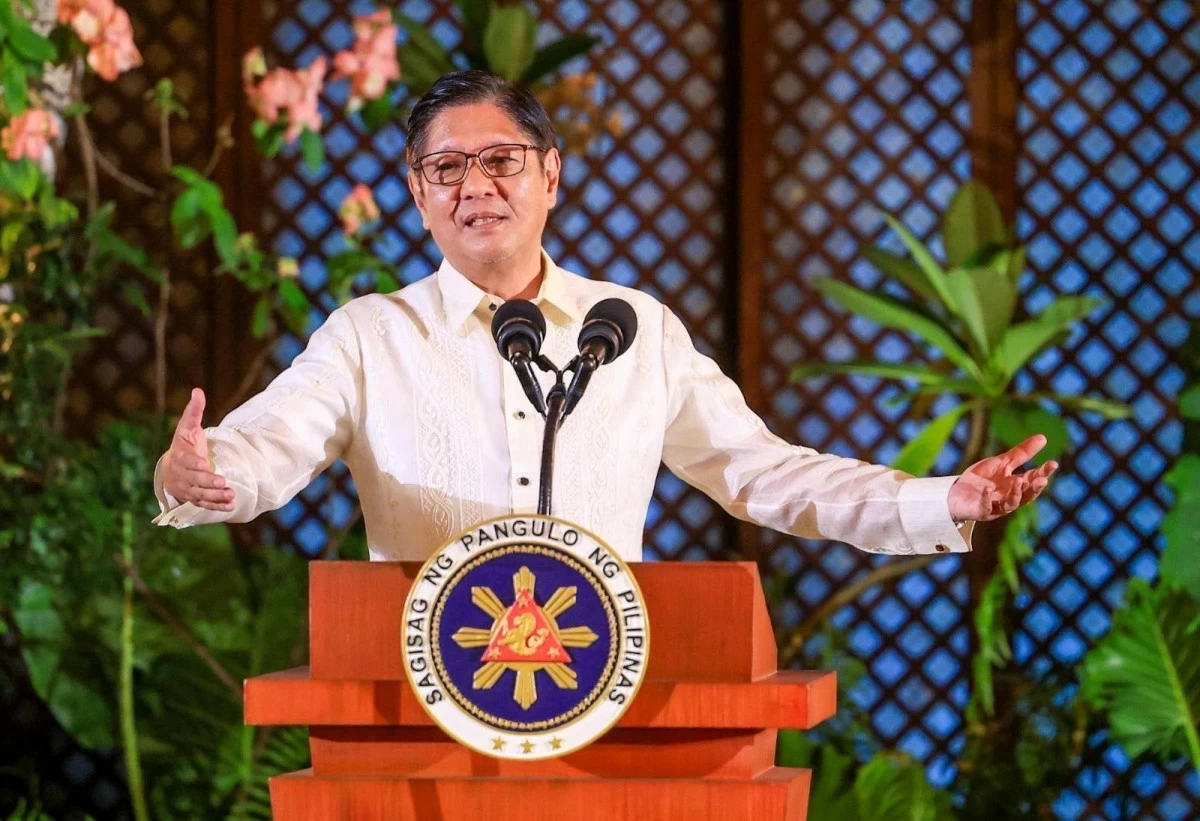
(Bongbong Marcos Facebook page)
(First of 2 parts)
Halfway through his six-year term, President Ferdinand “Bongbong” Marcos Jr.’s economic agenda is viewed as a bright spot by the country’s most influential business groups, which cite his strong leadership in driving economic growth and keeping inflation at bay.
Marcos, son of the late strongman Ferdinand Marcos Sr., assumed the country’s top seat on June 30, 2022, after garnering a landslide victory with over 31 million votes, more than double his closest rival.
Running on a message of unity, the President was faced with an insurmountable challenge of lifting the economy, still reeling from the ruinous impact of the Covid-19 pandemic.
During his first State of the Nation Address (SONA) at the Batasang Pambansa Complex on July 25, 2022, Marcos laid the groundwork for the economic policies his administration would undertake until 2028.
In his speech, Marcos vowed to implement sound fiscal management, temper rising inflation, and push the momentum of economic growth forward, among many other promises.
Three years onward, business groups interviewed by Manila Bulletin commended the President for staying true to his economic commitments.
The Makati Business Club (MBC), which comprises the country's leading business executives, said the administration, headed by Marcos’ economic team, performed strongly to achieve some of the President’s most urgent ambitions for the economy.
“They were able to control inflation, for one thing, which is a very important objective for us because inflation impacts the poor much more than anybody else. And in terms of a socially balanced economy, their management of the currency has been pretty good,” MBC Executive Director Rafael Ongpin said in a phone interview.
The Bangko Sentral ng Pilipinas (BSP) earlier reported that inflation eased to 1.3 percent last month. This was the country’s lowest inflation rate since November 2019, when it stood at 1.2 percent.
For context, when Marcos entered office in June 2022, the inflation rate stood at 6.1 percent, driven by higher prices of food and non-alcoholic beverages.
The current inflation rate is aligned with the government’s inflation target of between two percent and three percent, which was earlier lowered from a previous range of two to four percent.
“They've been able to get inflation below two percent, which is really the best performance one could hope for,” said Ongpin.
This achievement, he said, merits a “passing grade” for Marcos, pointing to the fact that the previous administration set the standards “quite low.”
The Financial Executives Institute of the Philippines (FINEX), meanwhile, said the Marcos administration stayed true to its goal of pushing the economy, with growth seen at a steady pace.
“Since [2022], the economy has managed to move forward, posting GDP [gross domestic product] growth of 5.7 percent last year while inflation was also moderated,” said FINEX President EJ Qua Hiansen in an email interview with Manila Bulletin.
While last year’s GDP growth fell short of the government’s target, the Department of Finance (DOF) noted that this was the second-fastest growth in Southeast Asia, behind Vietnam.
Qua Hiansen said recently enacted laws such as the Corporate Recovery and Tax Incentives for Enterprises to Maximize Opportunities for Reinvigorating the Economy (CREATE MORE) will help spur the economy faster.
CREATE MORE, which builds upon the Duterte-era CREATE Act, has reformed the country’s tax incentives regime to be more globally competitive and enticing for potential investors.
No less than President Marcos himself had ordered legislators to prioritize CREATE MORE’s passage. The President had reportedly received a flurry of complaints about CREATE, especially on the refund of the 12-percent value-added tax (VAT) slapped on imported production inputs, from foreign investors—most especially the Japanese economic zone locators—during his many overseas trips.
The Federation of Filipino Chinese Chambers of Commerce and Industry Inc. (FFCCCII) likewise lauded Marcos for establishing a “stable foundation” for the economy.
FFCCCII President Victor Lim said implementation of the law amending the Public Service Act (PSA), which allowed full foreign ownership in certain key sectors, as well as the Ease of Paying Taxes Act could stimulate a more robust growth.
The PSA amendments were signed into law by former President Rodrigo Duterte before he stepped down in 2022, alongside the further liberalization of the retail trade and foreign investment laws.
Marcos, for his part, signed into law the liberalization of the renewable energy (RE) sector as a follow-through to attract more foreign investors.
While acknowledging that Marcos’ economic policies are worthy of a “passing grade,” Lim said there is still “room for improvement.”
(To be concluded)