







OCD expands disaster preparedness program 'Panatag Pilipinas'
Published Jun 28, 2025 01:03 pm


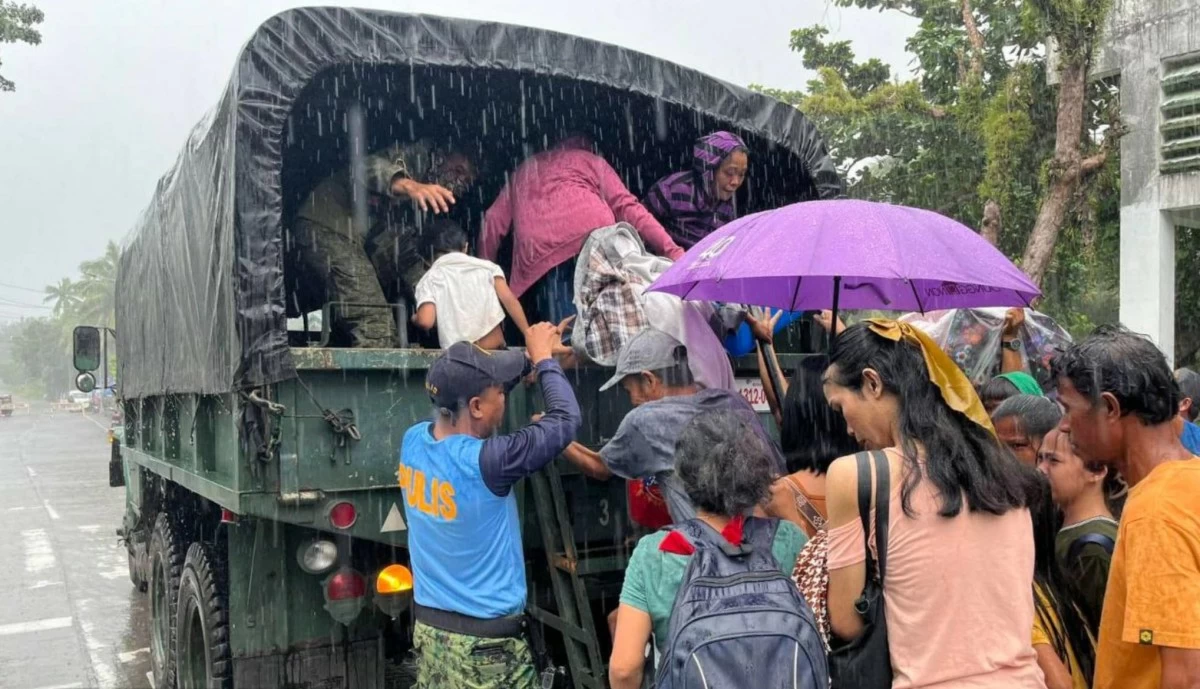
Personnel of the Philippine Army and Philippine National Police conduct pre-emptive evacuation at vulnerable areas in the Bicol Region amid the threat posed by Super Typhoon "Pepito" on November 16, 2024. (File photo: 9th Infantry Division)
The Office of Civil Defense (OCD) will launch an expanded version of its disaster preparedness program next week to reach more Filipinos and enhance the country’s preparedness.
“Panatag Pilipinas 2.0” will kick off in Makati City on Tuesday, July 1, coinciding with this year’s observance of the National Disaster Resilience Month (NDRM) with the theme “KUMIKILOS para sa Kahandaan, Kaligtasan, at Katatagan”.
“Ang ating pagdiriwang ng National [Disaster] Resilience Month ay isang pamamaraan upang ipaalala sa lahat ang kahalagahan ng paghahanda sa mga sakuna na maaring tumama sa ating bansa maging bagyo, baha, lindol, landslide, tsunami at iba pa (Our celebration of the National [Disaster] Resilience Month is a way to remind everyone of the importance of being prepared for disasters that may affect our country, whether it be typhoons, floods, earthquakes, landslides, tsunamis, and others),” OCD spokesperson Director Chris Noel Bendijo said.
The NDRM celebration will put a spotlight on the public’s collective action and preparedness for disasters across all sectors of society.
Originally launched as an online advocacy, the Panatag Pilipinas will now be screened through public screens in select malls, cinemas and properties nationwide.
It was launched in 2024 where the OCD utilized a comprehensive suite of information, education, and communication (IEC) materials online to deliver key messages before, during, and after a disaster through 60-second infotainment videos. Such videos covered the most common hazards in the country including earthquakes, volcanic eruptions, tropical cyclones, flooding, landslides, and tsunamis.
The OCD said the campaign’s expansion will bring its life-saving message to everyday spaces, reinforcing the campaign’s core reminder: Filipinos know what to do to stay safe during disasters. Military reservist and seasoned actor Dingdong Dantes will serve as the campaign ambassador.
“Ito ay mga maiikling video na ating ipalalabas, nag-umpisa tayo sa ating website at ngayon ipalalabas na natin sa Ayala Malls. Mga videos ito na patungkol sa mga kailangan nating gawin sa panahon ng lindol, pagbaha at iba pang sakuna na maaaring tumama sa ating bansa (These are short videos that we will be showing, we started with our website, and now these will be shown in Ayala Malls. These videos are about what we need to do during earthquakes, floods, and other disasters that may affect our country),” Bendijo said.
According to the World Risk Index 2024, the Philippines is the most at-risk country out of 193 nations assessed by the Institute for International Law of Peace and Armed Conflict at the Ruhr University Bochum in Denmark and Bündnis Entwicklung Hilft (Alliance Development Works).
The Philippines obtained a score of 46.91 among countries that were assessed based on their levels of exposure, vulnerability, susceptibility, lack of coping capacities, and lack of adaptive capacities to crises including extreme natural disasters, conflicts, pandemics and wars.
Bendijo said there was a noticeable increase in the number of Filipinos who are engaged in disaster preparedness and resilience.
“Natutuwa tayo dito dahil pagdating sa sakuna, ‘yung tsansa ng pagkakataong mabuhay ay tumataas kapag mas maraming nakakaalam ng mga kasanayan kagaya ng pangunang lunas, rescue skills pati na rin ‘yung ating disaster preparedness (We are pleased with this because when it comes to disasters, the chances of survival increase when more people are equipped with skills such as first aid, rescue techniques, and disaster preparedness),” he said.
However, the official recognized that “more work” still needs to be done as a country to further capacitate the public in responding to disasters.
“Marami pa tayong dapat isaayos at habulin bilang isang bansa upang mapaigting at mapabuti ang ating kahandaan. Nandyan na po ‘yung pagsunod natin sa Building Code at Structural Code of the Philippines sa ating mga konstruksyon, ‘yung pagpaplano sa mga pamilya kung anong dapat gawin sa panahon ng sakuna (We still have a lot to improve and catch up on as a country to strengthen and enhance our preparedness. This includes complying with the Building Code and Structural Code of the Philippines in our constructions, as well as encouraging families to plan what to do in times of disaster),” Bendijo added.