






Manila Bulletin
 Business
Banking & Finance
Empowering the accounting profession: Advancing global standards and local excellence
Business
Banking & Finance
Empowering the accounting profession: Advancing global standards and local excellence
Business
Banking & Finance
Empowering the accounting profession: Advancing global standards and local excellence
Empowering the accounting profession: Advancing global standards and local excellence
Published Jun 28, 2025 12:01 am
|
Updated Jun 27, 2025 01:11 pm


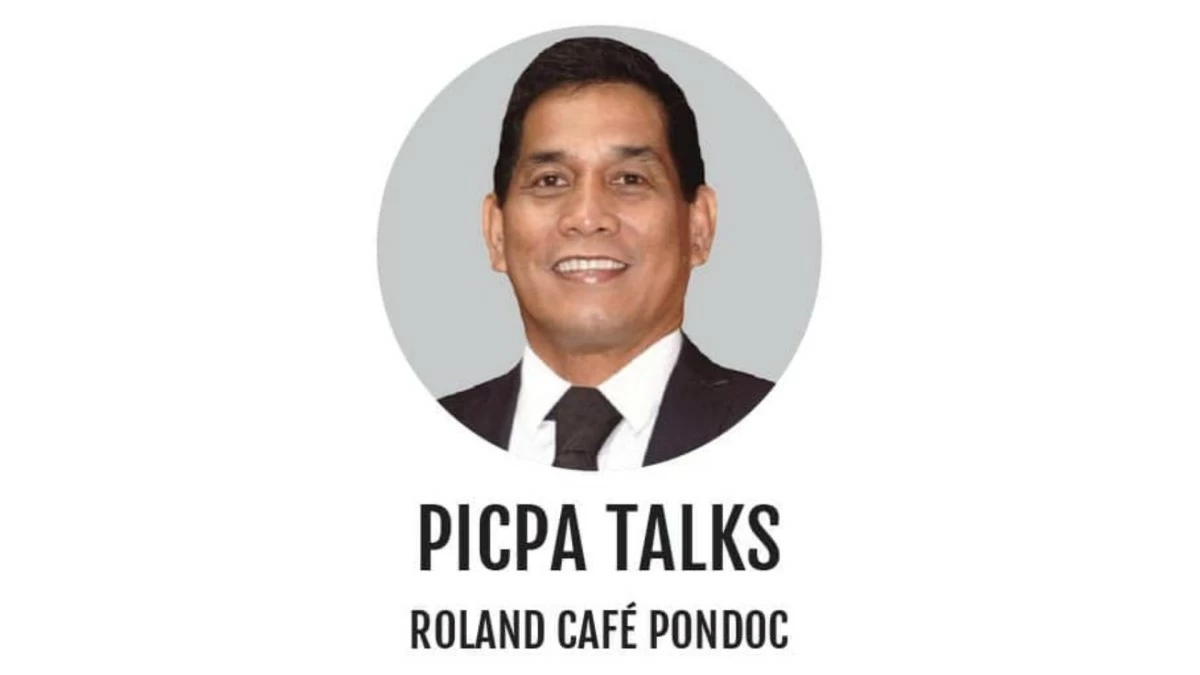
As I always say, true accounting brilliance isn't merely about technical proficiency; it's about adhering to your commitment to the values that define you. As pillars of financial integrity, accountants safeguard the financial health of businesses and economies. Our role is crucial, not just in financial reporting, but in fostering economic development, corporate governance, and societal welfare. We CPAs, across all sectors, must find a way to remain relevant, competent, and above all, values-driven.
We are in the midst of an evolution of the accountant's role. But no matter the shape or form, we must retain our substance, standing firm with the values we hold in every decision we make. Our unwavering commitment to these values will be the anchor that ensures we navigate the complexities ahead with integrity.
With the global economy interlinked like never before, financial markets are becoming increasingly integrated. This creates both opportunities and challenges for accounting professionals, which is why the need for consistent and high-quality financial information has become so in demand. As businesses and economies transcend borders, the necessity for global standards to ensure quality in financial reporting has become a defining priority.
The global push for harmonized financial reporting standards emerged to address the complexities of cross-border investments, international trade, and multinational corporations. As we all know, International Financial Reporting Standards (IFRS) are widely regarded as the universal standard and are used in the Philippines. In the public sector, we use the International Public Sector Accounting Standards (IPSAS). Adoption of IFRS and IPSAS has helped ensure that financial statements are comparable, reliable, and transparent on a global scale. Fortunately, we have made strides in adopting these standards and making them our own, enhancing the credibility and attractiveness of our financial markets.
With these accounting standards, we can achieve excellence—not just ordinary excellence, but excellence that reaches global standards. How do we achieve this? I believe that capacity building our professionals will definitely breed excellence. And to start, we must begin locally.
The Philippine context: Advancing local excellence
Local Nuances: The Philippine Challenge — While global standards provide the foundation, the accounting profession requires us to tailor global theories and practices to the unique business and regulatory environment in the Philippines. The regulatory environment, tax systems, economic conditions, and corporate culture all require specific expertise. Filipino accountants must blend international standards with local understanding and adaptability. The key challenge is ensuring that global principles are applied in ways that make sense within the unique framework of Philippine businesses and governance.
Fostering local excellence — Excellence isn’t just about following global standards; it’s about innovation, leadership, and commitment to quality in practice. Local excellence is rooted in:
* Adaptation of standards: Local adaptations and interpretations of IFRS and IPSAS (in the public sector) must be made by professionals with a deep understanding of both to optimize the standard being adapted.
* Capacity building: Continuously improving our interdisciplinary and contemporary skills, fostering expertise in financial reporting, auditing, taxation, and management accounting.
* Leadership in governance: Encouraging Philippine accountants to take leadership roles in both local and international organizations, driving thought leadership and innovation.
The future of the accounting profession
To advance the accounting profession, we must focus on continuous improvement and development, ethical leadership, and technological adaptation. We must integrate global standards while fostering local innovation, ensuring that we Filipino accountants continue to keep up and lead in both the global and local arenas.
Let us collaborate, learn, and inspire one another as we work towards elevating our profession, ensuring that we remain a pillar of trust, transparency, and accountability in a rapidly changing world. By combining the best of global practices with the unique strengths of our local expertise, we can empower not just ourselves as professionals, but the entire Philippine economy and society. The future of our profession depends on our ability to innovate, adapt, and commit to excellence.
Roland Café Pondoc is the outgoing PICPA National President and former COA Commissioner.