






Manila Bulletin
 Business
Trade & Industry
Beyond the pandemic: Local businesses must go digital to thrive
Business
Trade & Industry
Beyond the pandemic: Local businesses must go digital to thrive
Business
Trade & Industry
Beyond the pandemic: Local businesses must go digital to thrive
Beyond the pandemic: Local businesses must go digital to thrive
Published Jun 28, 2025 09:14 am


The post-pandemic digital age is accelerating faster than ever, and it is reshaping how businesses operate and adapt. But as technology advances, businesses that fail to evolve risk becoming outdated more quickly than before.
Spain’s IE University has studied the rising career trends, such as entrepreneurship and technology-driven occupations, and how emerging professionals step into their early careers.
IE University, which actively partners with Philippine academic institutions such as Ateneo de Manila University, De La Salle Santiago Zobel, and Saint Pedro Poveda College, shared insights on how today’s youth approach career choices, many of which are increasingly rooted in technology.

Santiago Iñiguez, IE University, president
Santiago Iñiguez, president of IE University, explained that most of its recent graduates are building their own businesses from the ground up, as he told Manila Bulletin, “One of the most notable trends is the increasing number of graduates who choose to launch their own ventures… These ventures often emerge in high-impact sectors such as fintech, sustainability, digital services, and health innovation—demonstrating how our graduates are shaping the future of business.”
In the Philippines, about 1.2 million micro, small, and medium enterprises (MSMEs) were recorded in 2023, according to the Philippine MSME Statistics. These small businesses made up 99.63 percent of the total businesses in the country, while only 0.37 percent are considered large enterprises.
Subsequently, these MSMEs brought in six million jobs in 2023, with micro enterprises bringing in the largest share of employment.

The post-pandemic era demands adaptability, and businesses that embrace change are the ones that will succeed. As shared by leaders from IE University and South Summit, fostering continuous innovation, leveraging new technologies like AI, and encouraging decentralized decision-making are key.
However, these MSMEs encounter several challenges, namely regulations, financing, operations, technological gaps, and market access. According to the Department of Trade and Industry’s (DTI) MSME Development Plan 2023-2028, lack of financial knowledge and limited training opportunities affect these entrepreneurs’ goals.
“In navigating operational challenges, MSMEs contend with restricted access to professional development opportunities, which hampers their capacity for skill acquisition and adaptation to evolving market landscapes. This limitation underscores a critical weakness in their agility and responsiveness to shifting consumer preferences and industry trends,” DTI stated in its development plan.
“Technological barriers exacerbate the predicament for MSMEs, with the pervasive digital divide impeding their ability to leverage digital tools and platforms for enhanced competitiveness,” it added, specifically addressing businesses in rural and remote areas.
Through the DTI’s roadmap (which has been made available online), it aims to empower small businesses through policy reforms, support programs such as allowing the optimization of artificial intelligence (AI), to welcome the digital-first ecosystem.
While some may not go into becoming their own businessmen, IE University has found that their graduates are recently moving into sectors such as fintech, sustainability, digital services, and health innovations.
“In parallel, we are seeing a strong rise in careers linked to technology, data, and artificial intelligence. As digital transformation continues to redefine the business landscape, our graduates are stepping into roles such as product managers, data analysts, digital strategists, and AI consultants,” Iñiguez said.
Similarly, the Philippine economy has embraced the influx of employment within the business process outsourcing (BPO) sector, with the Information Technology - Business Process Management (IT-BPM) industry reported 1.82 million employees in 2024.
Both the Philippines and Spain continue to embrace technology-driven careers in the business sector, recognizing the growing interconnection between the two. However, concerns over the potential dominance of AI remain widespread. IE University’s president expressed hope that businesses, particularly the new workforce generation, will be able to find a balance between technological advancement and a human-centered approach.
“Looking ahead, we anticipate that business careers will become even more interdisciplinary, requiring professionals who can combine business expertise with technology, ethics, sustainability, and human-centered design, Iñiguez said.
Beyond academic institutions, IE University has strengthened its ties with the Philippines, as it has partnered with Bukas Finance Corp. to provide Filipino students with accessible tuition payment options and sponsorships with Dentsu Philippines, Inc. The Spanish university is hopeful in expanding its presence in the country as it explores more opportunities to broaden their reach.
“In facing these challenges, higher education must reaffirm its enduring mission: to prepare individuals not just for the workforce, but for global
citizenship, constructive leadership, and lifelong intellectual growth. Institutions like IE University are committed to leading this evolution, embracing change while staying true to the values that define great universities,” he added.
Digital innovation as a business growth driver
Besides the lack of knowledge access, Nacho Mateo, the chief executive officer of global entrepreneurship platform South Summit saw recurring challenges that hinder growth in businesses.
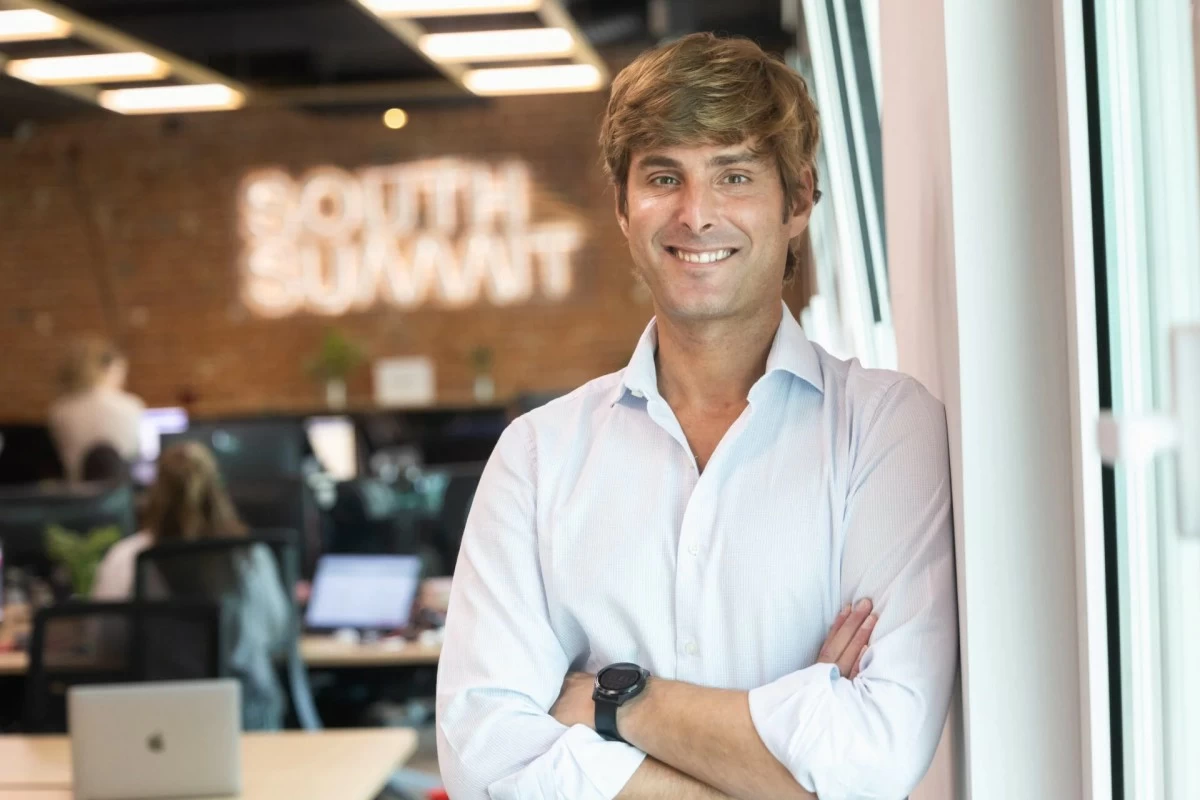
Nacho Mateo, South Summit global entrepreneurship platform, chief executive officer
“Companies that resist change often have rigid hierarchical structures and limited internal autonomy, which hinders innovation and adaptability. Additionally, many Spanish startups show restrained growth and revenue, with only 18 percent achieving positive EBITDA in 2024,” he said.
“To address this mindset, fostering continuous innovation, internationalization, and the creation of horizontal cultures with real autonomy is key. Entrepreneurs must encourage decentralized decision-making, adopt new technologies—such as generative AI—with a sustainable purpose, and seek foreign markets. This enhances flexibility, accelerates growth, and transforms organizational culture from within,” Mateo explained.
South Summit, a global showcase platform, brings together startups, scale-ups, and established companies for its annual open innovation and networking event.
Since its creation in 2012, it has brought in businesses from around the world to gather and exchange ideas to improve and increase their presence in the international market.
“South Summit was created to reunify that scattered talent, turn it into a network, and create real connections between entrepreneurs and investors,” Mateo said.
“Today, we are experiencing a moment of maturity and diversity that is truly exciting. The 2024 Entrepreneurship Map shows that the average age of startups has now reached 3.19 years, and 20 percent have made the leap to scale-ups. Moreover, innovation is part of the daily life of these startups: sustainability, AI, impact... more and more entrepreneurs are embracing these drivers.”

In the Philippines, micro, small, and medium enterprises (MSMEs) are the backbone of the economy, creating millions of jobs. But these vital businesses face hurdles from technological gaps to limited access to training.