






Manila Bulletin
 Business
Trade & Industry
Philippine exports seen to weaken in second half of 2025 as US firms front-load orders ahead of Trump tariffs
Business
Trade & Industry
Philippine exports seen to weaken in second half of 2025 as US firms front-load orders ahead of Trump tariffs
Business
Trade & Industry
Philippine exports seen to weaken in second half of 2025 as US firms front-load orders ahead of Trump tariffs
Philippine exports seen to weaken in second half of 2025 as US firms front-load orders ahead of Trump tariffs
Published Jun 27, 2025 03:52 pm


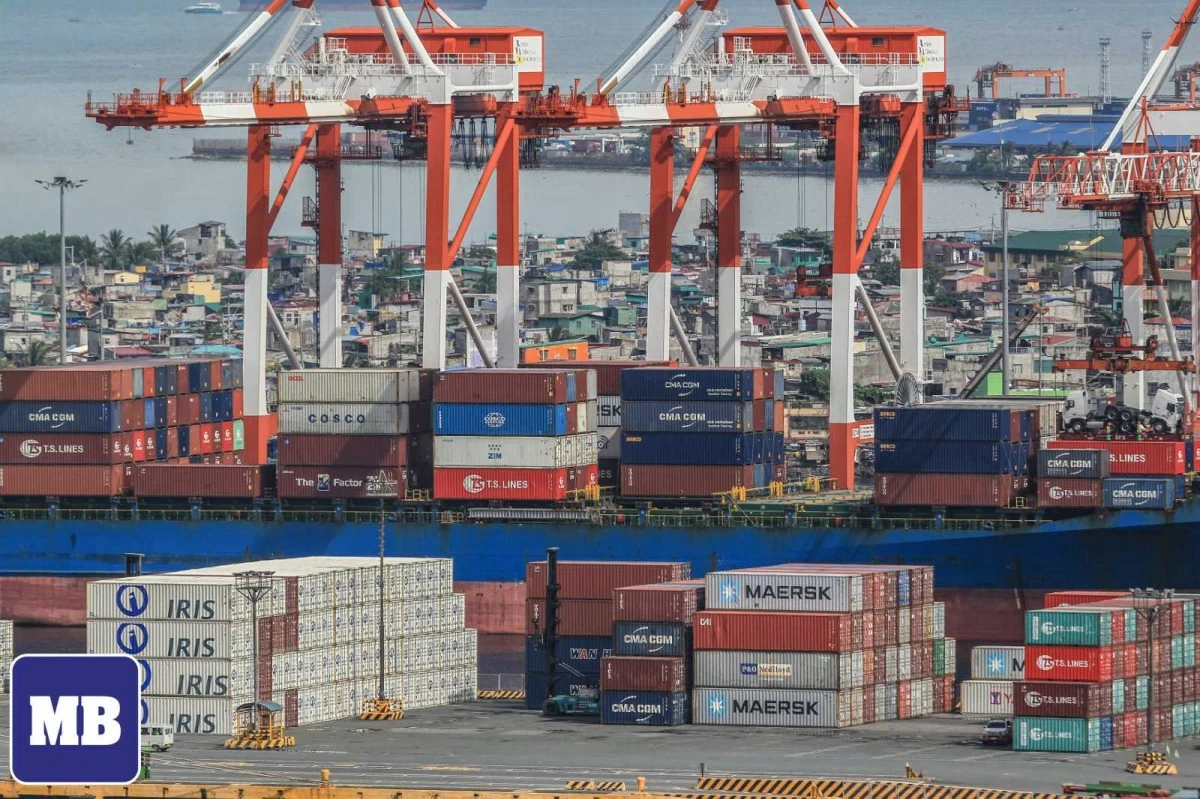
(Manila Bulletin file photo)
Despite double-digit exports growth in the first five months of the year, economic think tanks expect the sales of Philippine-made goods overseas to falter in the second half, especially if United States (US) President Donald Trump pushes through with his tariff spree.
“Exports are also likely to struggle given the subdued outlook for the country’s two main trading partners, the US and China. Trump tariffs pose less of a threat—the Philippines was hit by a tariff of just 17 percent on Liberation Day (one of the lowest in the region) and so agreeing a trade deal with the US is less of an urgency than for other countries,” Capital Economics senior Asia economist Gareth Leather, markets economist Shivaan Tandon, and assistant economist Joe Maher said in a June 26 report.
Across Asia-Pacific, Oxford Economics economist Sheana Yue said in a June 27 report that “further ahead, Asian exports growth is likely to moderate due to US inventory constraints and uncertainty.”
In particular, Yue noted that “companies in the US will probably continue frontloading orders” from the region.
The latest preliminary Philippine Statistics Authority (PSA) data released on Friday, June 27, showed that merchandise exports jumped 15.1 percent year-on-year to $7.29 billion in May, a faster annual increase than April’s 7.6-percent growth to $6.78 billion and reversing the three-percent decline a year ago.
From January to May, cumulative Philippine exports climbed 10.8 percent year-on-year to $34.2 billion.
As the pause in Trump’s reciprocal tariffs would end in July, goods exports to America rose 3.6 year-on-year to $1.11 billion in May, bringing five-month shipments to $5.38 billion, up 9.1 percent compared to US sales a year ago.
The US remained as the Philippines’ top export destination in the month of May as well as during the first five months, even as the over 15-percent share of total for both periods fell below the 16-17 percent a year ago.
The Cabinet-level Development Budget Coordinating Committee (DBCC) on Thursday, June 26, announced the government’s expectations of a two-percent decrease in goods exports this year, “largely due to slower global demand and heightened trade policy uncertainties.”
Prior to the global trade tensions started by Trump, the government had projected six-percent growth in 2025 merchandise exports.
On the other hand, the DBCC expects goods imports to grow by 3.5 percent this year “due to resilient domestic economic activity,” despite a downscaled 5.5- to 6.5-percent gross domestic product (GDP) growth target for the year in a mostly consumption-driven economy.
The DBCC’s latest imports growth projection is below the five-percent increase expected previously.
The latest PSA data showed that Philippine imports in the first five months of the year grew 4.4 percent year-on-year to $53.87 billion, despite a 4.4-percent drop in inbound shipments to $10.58 billion during the month of May.
The year-on-year decline in May imports outpaced the 2.5-percent contraction to $10.76 billion posted last April as well as reversed the 1.2-percent uptick recorded a year ago.
Imports from China continued to buck the slowing trend, as the May alone figure soared 14.9 percent to $3.15 billion, bringing the end-May total to $15.31 billion—higher by 17.8 percent year-on-year.
Imported Chinese products also hiked their share to over 28-29 percent of the month and year-to-date totals, versus 24-25 percent for the same periods last year.
The Philippines is a net importer of the goods it consumes. Economists are bracing for a surge of products coming from China—already the top source of Philippine imports for many years now—as Chinese exporters look for alternative markets other than the US amid renewed trade tensions between Beijing and Washington.