

ADVERTISEMENT

Mindanao switches to solar — one grid at a time

Top establishments in the region power up with solar energy for greener and cost-efficient operations

Published Jun 27, 2025 03:41 pm  |  Updated Jul 3, 2025 05:54 pm
When first introduced, solar seemed to spark suspicion, then interest. Using it for power, some feared having none at night, while others were reluctant to pay huge upfront costs for the panels. What more their maintenance, which looked technical and taxing? But burning coal has already irreversibly plagued the planet, leaving people curious about sustainable sources.
Today, these are problems of the past. Solar panels no longer break the bank, and electricity can run in the evening when paired with proper preparation. This allows establishments to plug into the sun for energy efficiency. How so? Take a look at this region where the country’s highest peak sits. 
Mindanao has been pushing for solar power to help companies and homes save cash and the Earth. By integrating renewable energy into their operations, most leading solar-powered businesses here shared that their savings have increased, and their emissions have decreased.
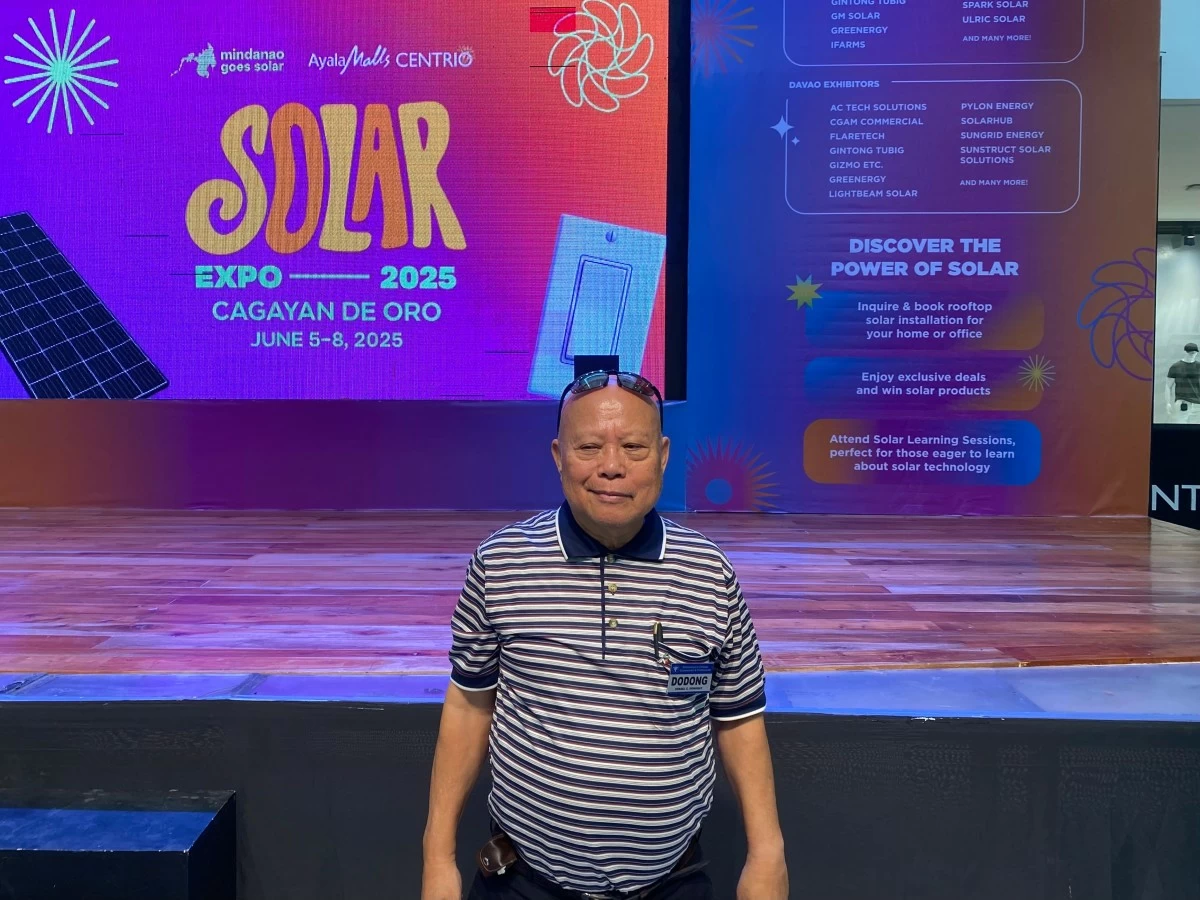
Engr. Cerael Donggay
Here’s a closer look at the region’s shift to solar. 
Solar solutions
In the fury of El Niño, a 16-hour brownout battered Mindanao in the 1990s, long before it learned the power in solar power. The region lacked light but not hope, and that was enough to illuminate the dark times.
To help reduce electricity expenses and environmental impact, top establishments from various sectors in Mindanao have made clean energy a priority.  
Those running on solar energy include hospital Madonna and Child Medical Center, automotive business Toyota Cagayan de Oro (CDO), coffee farm Mirabueno, pizzeria Demetrio's, hotel and coffee shop Mad Cafe, and Chali Resort and Conference Center.
Some of them operate fully on renewables, while others are close or on their way to achieving that, months to years after the panels were first installed. This move pushes the region toward a clean energy transition.
“Why should we make it confidential if it [solar energy] is good for everybody? If we have a solution that will satisfy everybody, why not share it?” said Cereal Donggay, president and CEO of Greenergy PH, citing “no politics.
By generating power off-grid, one business said this has reduced its total energy costs by ₱150,000 or 15 percent.
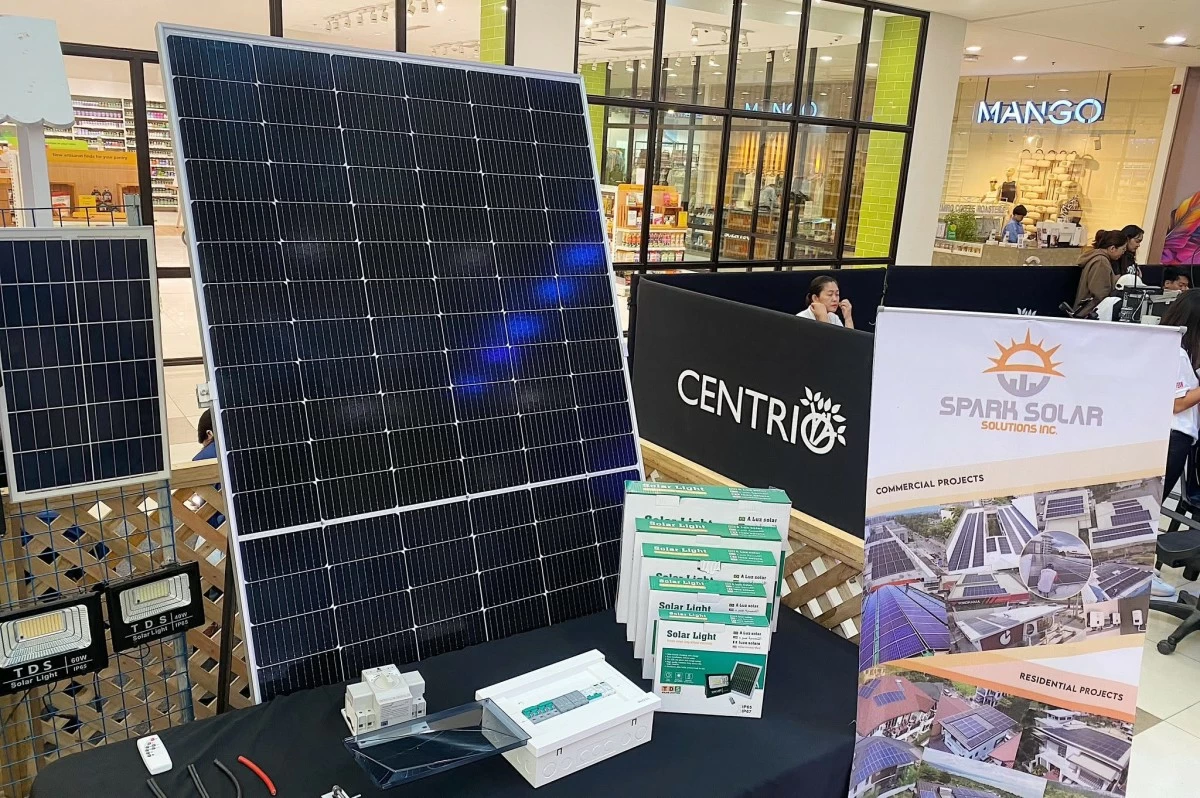
During the solar energy expo at a mall in Cagayan de Oro
Meanwhile, an expo was also held from June 5 to 8 at a mall in CDO which showcased solar panels for household use, companies, and personal consumption, organized by Mindanao Goes Solar movement.
Solar power for the better
The 1990s were a time of power outages in the region, Donggay recalled during his interim in Mindanao as a vice president of National Power Corporation, in part due to its hydro reliance, making it susceptible to climatic conditions.
“Yung supply namin na 600 gigawatts depleted to 200 gigawatts [Our supply of 600 gigawatts was depleted to 200 gigawatts],” he said, remembering the ‘90s crisis in Mindanao that dimmed the region for 16 hours every day.
“Because of the huge load of Mindanao, the demand for energy was rapid, which cannot be met by renewable alone. The capacity of hydro was limited. The additional need for power was actually filled by fossil, diesel, coal,” Donggay explained. 
The good thing is Mindanao has a reliable supply, he said, stating they no longer fear running out of electricity with fossil fuels.
“The bad thing is fossil is very expensive and destroying our environment. It does not contribute a good thing to preserve the Earth,” he asserted. 
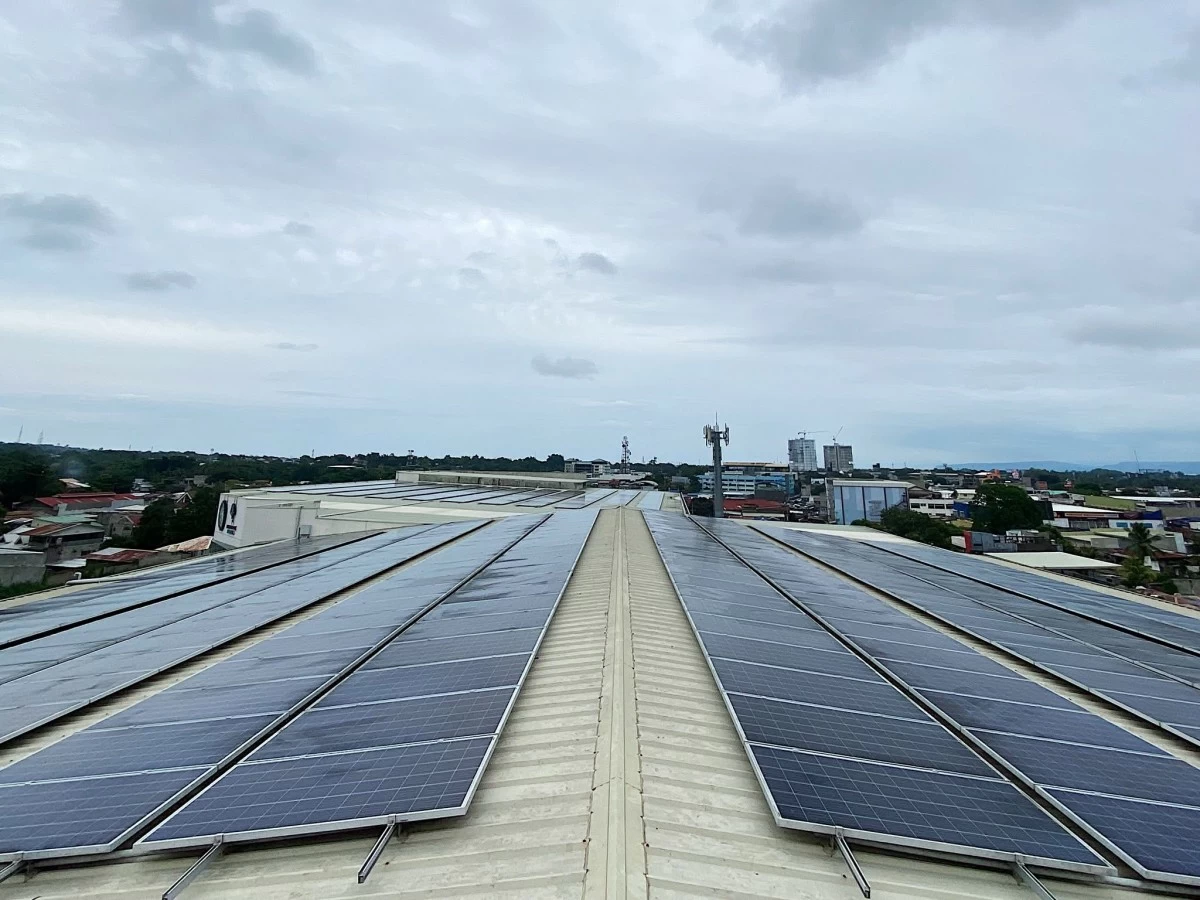
Solar panels are installed on the rooftop of Madonna and Child Medical Center.
Now, with the help of the solar energy systems company and the solar movement, the region is being pushed to transition away from dirty energy and toward renewable. 
Mindanao Goes Solar with Greenergy PH 
Donggay believes that what we are doing to break free from fossil reliance is not enough. If the sun is fully utilized, he claimed its supply can be generated for 500,000 years.
“We need to come up with more robust storage energy projects, he said.
Pushing solar stakeholders to achieve energy transition in the area through solar technology, Mindanao Goes Solar offers Mindanaoans reachable information on solar energy, why it’s good for them, for their cities and municipalities, for the planet, and for their pockets.
According to the movement, it provides the value case of solar for Mindanao through knowledge events and information campaigns over social media platforms popular in the region. With support from the European Climate Foundation, it initiated “stakeholder analysis and ecosystem mapping” of solar energy in the region. 
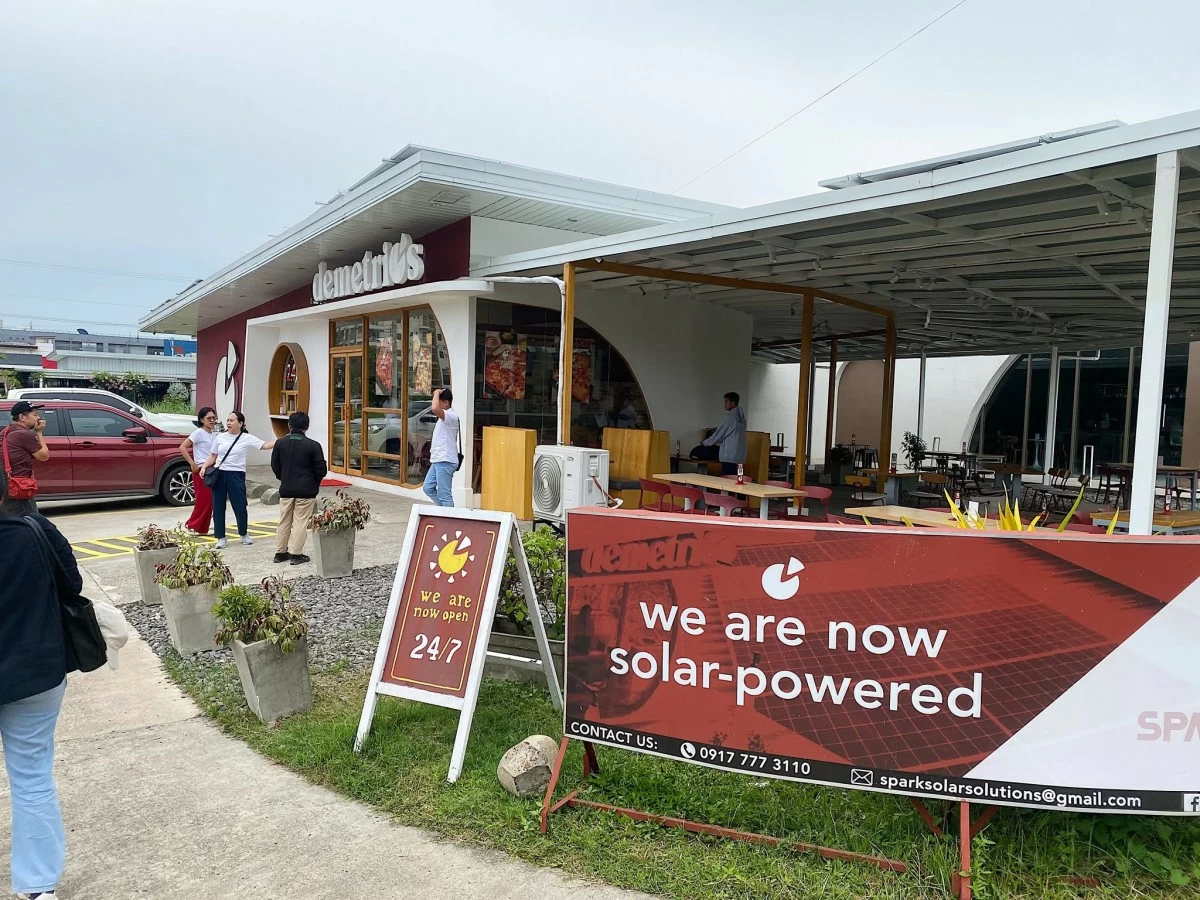
Demetrio's
Demetrio's
Meanwhile, Greenergy PH seeks to become the most credible expert in green renewable energy in the country. It has implemented major renewable energy projects, primarily in Northern Mindanao, one being the 300 MW Pulangi 5 hydropower project in Bukidnon.
As per the company, it has “a combined 30 years of experience in power utility management, 24 years in renewable energy research and development, six years on low-carbon and sustainable development.”
If we continue to use dirty fossil fuels for electricity generation without considering sustainable sources, then each day that passes by is bound to get darker. So, who says no to some free power while empowering the planet to regain its balance?

Related Tags

Mindanao Goes Solar Greenergy PH solar power Engr Cerael Donggay
ADVERTISEMENT
.most-popular .layout-ratio{ padding-bottom: 79.13%; } @media (min-width: 768px) and (max-width: 1024px) { .widget-title { font-size: 15px !important; } }

{{ articles_filter_1561_widget.title }}

.most-popular .layout-ratio{ padding-bottom: 79.13%; } @media (min-width: 768px) and (max-width: 1024px) { .widget-title { font-size: 15px !important; } }

{{ articles_filter_1562_widget.title }}

.most-popular .layout-ratio{ padding-bottom: 79.13%; } @media (min-width: 768px) and (max-width: 1024px) { .widget-title { font-size: 15px !important; } }

{{ articles_filter_1563_widget.title }}

{{ articles_filter_1564_widget.title }}

.mb-article-details { position: relative; } .mb-article-details .article-body-preview, .mb-article-details .article-body-summary{ font-size: 17px; line-height: 30px; font-family: "Libre Caslon Text", serif; color: #000; } .mb-article-details .article-body-preview iframe , .mb-article-details .article-body-summary iframe{ width: 100%; margin: auto; } .read-more-background { background: linear-gradient(180deg, color(display-p3 1.000 1.000 1.000 / 0) 13.75%, color(display-p3 1.000 1.000 1.000 / 0.8) 30.79%, color(display-p3 1.000 1.000 1.000) 72.5%); position: absolute; height: 200px; width: 100%; bottom: 0; display: flex; justify-content: center; align-items: center; padding: 0; } .read-more-background a{ color: #000; } .read-more-btn { padding: 17px 45px; font-family: Inter; font-weight: 700; font-size: 18px; line-height: 16px; text-align: center; vertical-align: middle; border: 1px solid black; background-color: white; } .hidden { display: none; }
function initializeAllSwipers() { // Get all hidden inputs with cms_article_id document.querySelectorAll('[id^="cms_article_id_"]').forEach(function (input) { const cmsArticleId = input.value; const articleSelector = '#article-' + cmsArticleId + ' .body_images'; const swiperElement = document.querySelector(articleSelector); if (swiperElement && !swiperElement.classList.contains('swiper-initialized')) { new Swiper(articleSelector, { loop: true, pagination: false, navigation: { nextEl: '#article-' + cmsArticleId + ' .swiper-button-next', prevEl: '#article-' + cmsArticleId + ' .swiper-button-prev', }, }); } }); } setTimeout(initializeAllSwipers, 3000); const intersectionObserver = new IntersectionObserver( (entries) => { entries.forEach((entry) => { if (entry.isIntersecting) { const newUrl = entry.target.getAttribute("data-url"); if (newUrl) { history.pushState(null, null, newUrl); let article = entry.target; // Extract metadata const author = article.querySelector('.author-section').textContent.replace('By', '').trim(); const section = article.querySelector('.section-info ').textContent.replace(' ', ' '); const title = article.querySelector('.article-title h1').textContent; // Parse URL for Chartbeat path format const parsedUrl = new URL(newUrl, window.location.origin); const cleanUrl = parsedUrl.host + parsedUrl.pathname; // Update Chartbeat configuration if (typeof window._sf_async_config !== 'undefined') { window._sf_async_config.path = cleanUrl; window._sf_async_config.sections = section; window._sf_async_config.authors = author; } // Track virtual page view with Chartbeat if (typeof pSUPERFLY !== 'undefined' && typeof pSUPERFLY.virtualPage === 'function') { try { pSUPERFLY.virtualPage({ path: cleanUrl, title: title, sections: section, authors: author }); } catch (error) { console.error('ping error', error); } } // Optional: Update document title if (title && title !== document.title) { document.title = title; } } } }); }, { threshold: 0.1 } ); function showArticleBody(button) { const article = button.closest("article"); const summary = article.querySelector(".article-body-summary"); const body = article.querySelector(".article-body-preview"); const readMoreSection = article.querySelector(".read-more-background"); // Hide summary and read-more section summary.style.display = "none"; readMoreSection.style.display = "none"; // Show the full article body body.classList.remove("hidden"); } document.addEventListener("DOMContentLoaded", () => { let loadCount = 0; // Track how many times articles are loaded const offset = [1, 2, 3, 4, 5, 6, 7, 8, 9, 10]; // Offset values const currentUrl = window.location.pathname.substring(1); let isLoading = false; // Prevent multiple calls if (!currentUrl) { console.log("Current URL is invalid."); return; } const sentinel = document.getElementById("load-more-sentinel"); if (!sentinel) { console.log("Sentinel element not found."); return; } function isSentinelVisible() { const rect = sentinel.getBoundingClientRect(); return ( rect.top < window.innerHeight && rect.bottom >= 0 ); } function onScroll() { if (isLoading) return; if (isSentinelVisible()) { if (loadCount >= offset.length) { console.log("Maximum load attempts reached."); window.removeEventListener("scroll", onScroll); return; } isLoading = true; const currentOffset = offset[loadCount]; window.loadMoreItems().then(() => { let article = document.querySelector('#widget_1690 > div:nth-last-of-type(2) article'); intersectionObserver.observe(article) loadCount++; }).catch(error => { console.error("Error loading more items:", error); }).finally(() => { isLoading = false; }); } } window.addEventListener("scroll", onScroll); });

Sign up by email to receive news.