ADVERTISEMENT

PH hopes Israel-Iran ceasefire will hold toward the path of peace

Published Jun 26, 2025 05:14 pm
Despite the fragile truce between Israel and Iran, the Philippines hopes that the United States-brokered ceasefire will hold and the region can move toward the path of peace.

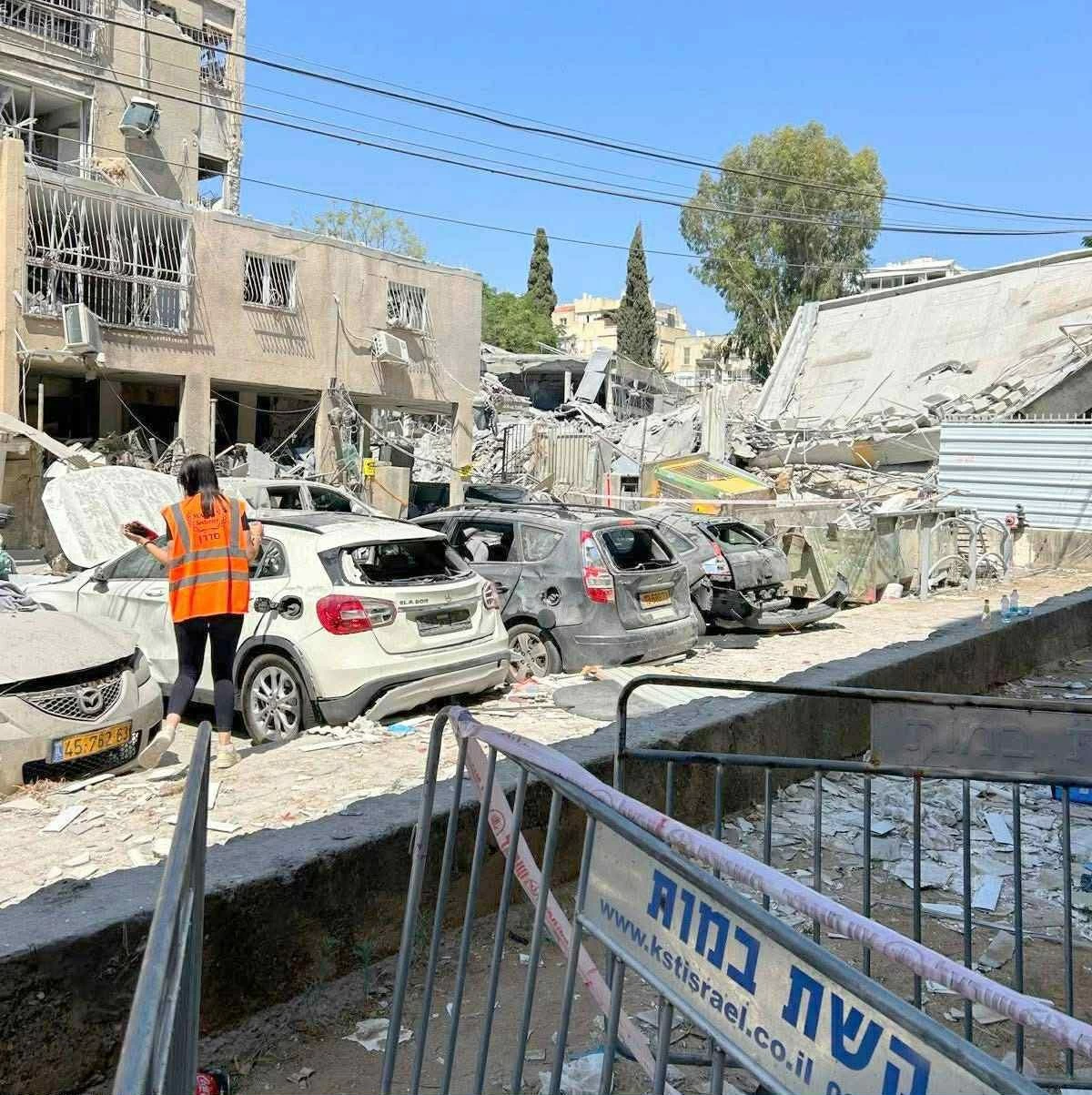
A member of the Philippine Rapid Response Team inspects the residence of 16 Filipinos hit by an Iranian missile in Bnei Brak, Israel. (Photo from the Philippine Embassy in Israel)
“I think we're hopeful that this ceasefire will hold. Because everybody is thinking about peace. We've experienced it a few days ago. How difficult it was for our people in the Middle East. And also all over the world,” DFA Assistant Secretary for Middle East and African Affairs Germinia Aguilar-Usudan said on Thursday, June 26.

“So, we are, as I've said and as the (DFA) Undersecretary (Eduardo de Vega) said, we are hoping that this will hold with the US backing this ceasefire,” she added.

Iran and Israel ended its 12-day exchange of missiles after US President Donald Trump brokered a ceasefire agreement shortly after Iran attacked its military base in Qatar as a response to the US bombing three Iranian nuclear sites.

Iran’s retaliation on Israel came also after Israel bombed a key Iranian nuclear facility on June 13, and killing some of its top military officials.

Both countries agreed to the ceasefire if the other stops its attacks.

De Vega said that as diplomats, they must remain “optimistic” and “hopeful” but prepared “for the worst.”

‘Always fragile’

However, he also admitted that although the Philippines “welcomes the ceasefire,” the Middle East is “always fragile.”

“Well, the first assessment already, welcome the ceasefire. Anything in the Middle East is always fragile. But then again, it always happens between Israel and its neighbors,” De Vega said, adding that the United States and neighboring Arab countries will influence the maintenance of peace in the region.

“What can sustain it? Well, the will of the parties. US, of course, influence. The neighbors also want it. The Arab countries did not want to interfere in this. To make the conflict bigger,” he stressed.

Although De Vega said that “we’d like to think that the worst is now (over),” he admitted that there’s always a worst-case scenario when it comes to wars.

“Every time there's a war, it could spill over to the rest of the world, but we did not see it. When Israel and Iran had this latest hostilities, the Arab neighbors and even other world powers were hoping or seeking not to get involved or make it even bigger. So, we don't want to think of a doomsday scenario,” he explained.

However, he assured that all embassies have contingency plans in the Middle East in case there’s a need to evacuate all Filipinos there.

Multilateralism

De Vega also underscored how multilateralism can keep the peace in the region, stressing the roles that the International Atomic Energy Agency (IAEA) and the global community must play.

The official pointed out to the IAEA because both Israel and the United States are adamant that their attacks against Iran was not about a regime change, but about their nuclear capability.

Israel’s June 13 attack on Iran came also day after the IAEA said Tehran was not complying with its commitment to nuclear safeguards, although Israel did not use this as justification for its missile attack.

Aside from the role of the UN nuclear watchdog, De Vega also pointed out that the whole world wants peace in the Middle East.

“Also the support of the world community for a peaceful solution. And after all, the world could use a little less tension. And all for the benefit of the millions of people, including Filipinos in the Middle East,” he added.

Related Tags

Israel-Iran attacks CEASEFIRE DFA multilateralism Middle East
ADVERTISEMENT
.most-popular .layout-ratio{ padding-bottom: 79.13%; } @media (min-width: 768px) and (max-width: 1024px) { .widget-title { font-size: 15px !important; } }

{{ articles_filter_1561_widget.title }}

.most-popular .layout-ratio{ padding-bottom: 79.13%; } @media (min-width: 768px) and (max-width: 1024px) { .widget-title { font-size: 15px !important; } }

{{ articles_filter_1562_widget.title }}

.most-popular .layout-ratio{ padding-bottom: 79.13%; } @media (min-width: 768px) and (max-width: 1024px) { .widget-title { font-size: 15px !important; } }

{{ articles_filter_1563_widget.title }}

{{ articles_filter_1564_widget.title }}

.mb-article-details { position: relative; } .mb-article-details .article-body-preview, .mb-article-details .article-body-summary{ font-size: 17px; line-height: 30px; font-family: "Libre Caslon Text", serif; color: #000; } .mb-article-details .article-body-preview iframe , .mb-article-details .article-body-summary iframe{ width: 100%; margin: auto; } .read-more-background { background: linear-gradient(180deg, color(display-p3 1.000 1.000 1.000 / 0) 13.75%, color(display-p3 1.000 1.000 1.000 / 0.8) 30.79%, color(display-p3 1.000 1.000 1.000) 72.5%); position: absolute; height: 200px; width: 100%; bottom: 0; display: flex; justify-content: center; align-items: center; padding: 0; } .read-more-background a{ color: #000; } .read-more-btn { padding: 17px 45px; font-family: Inter; font-weight: 700; font-size: 18px; line-height: 16px; text-align: center; vertical-align: middle; border: 1px solid black; background-color: white; } .hidden { display: none; }
function initializeAllSwipers() { // Get all hidden inputs with cms_article_id document.querySelectorAll('[id^="cms_article_id_"]').forEach(function (input) { const cmsArticleId = input.value; const articleSelector = '#article-' + cmsArticleId + ' .body_images'; const swiperElement = document.querySelector(articleSelector); if (swiperElement && !swiperElement.classList.contains('swiper-initialized')) { new Swiper(articleSelector, { loop: true, pagination: false, navigation: { nextEl: '#article-' + cmsArticleId + ' .swiper-button-next', prevEl: '#article-' + cmsArticleId + ' .swiper-button-prev', }, }); } }); } setTimeout(initializeAllSwipers, 3000); const intersectionObserver = new IntersectionObserver( (entries) => { entries.forEach((entry) => { if (entry.isIntersecting) { const newUrl = entry.target.getAttribute("data-url"); if (newUrl) { history.pushState(null, null, newUrl); let article = entry.target; // Extract metadata const author = article.querySelector('.author-section').textContent.replace('By', '').trim(); const section = article.querySelector('.section-info ').textContent.replace(' ', ' '); const title = article.querySelector('.article-title h1').textContent; // Parse URL for Chartbeat path format const parsedUrl = new URL(newUrl, window.location.origin); const cleanUrl = parsedUrl.host + parsedUrl.pathname; // Update Chartbeat configuration if (typeof window._sf_async_config !== 'undefined') { window._sf_async_config.path = cleanUrl; window._sf_async_config.sections = section; window._sf_async_config.authors = author; } // Track virtual page view with Chartbeat if (typeof pSUPERFLY !== 'undefined' && typeof pSUPERFLY.virtualPage === 'function') { try { pSUPERFLY.virtualPage({ path: cleanUrl, title: title, sections: section, authors: author }); } catch (error) { console.error('ping error', error); } } // Optional: Update document title if (title && title !== document.title) { document.title = title; } } } }); }, { threshold: 0.1 } ); function showArticleBody(button) { const article = button.closest("article"); const summary = article.querySelector(".article-body-summary"); const body = article.querySelector(".article-body-preview"); const readMoreSection = article.querySelector(".read-more-background"); // Hide summary and read-more section summary.style.display = "none"; readMoreSection.style.display = "none"; // Show the full article body body.classList.remove("hidden"); } document.addEventListener("DOMContentLoaded", () => { let loadCount = 0; // Track how many times articles are loaded const offset = [1, 2, 3, 4, 5, 6, 7, 8, 9, 10]; // Offset values const currentUrl = window.location.pathname.substring(1); let isLoading = false; // Prevent multiple calls if (!currentUrl) { console.log("Current URL is invalid."); return; } const sentinel = document.getElementById("load-more-sentinel"); if (!sentinel) { console.log("Sentinel element not found."); return; } function isSentinelVisible() { const rect = sentinel.getBoundingClientRect(); return ( rect.top < window.innerHeight && rect.bottom >= 0 ); } function onScroll() { if (isLoading) return; if (isSentinelVisible()) { if (loadCount >= offset.length) { console.log("Maximum load attempts reached."); window.removeEventListener("scroll", onScroll); return; } isLoading = true; const currentOffset = offset[loadCount]; window.loadMoreItems().then(() => { let article = document.querySelector('#widget_1690 > div:nth-last-of-type(2) article'); intersectionObserver.observe(article) loadCount++; }).catch(error => { console.error("Error loading more items:", error); }).finally(() => { isLoading = false; }); } } window.addEventListener("scroll", onScroll); });

Sign up by email to receive news.