






The Chinese Embassy in Manila on Thursday, June 26, hit back at a Philippine military official for implying that the Chinese government and the Chinese Communist Party (CCP) have ties to the illegal drug trade.
Manila Bulletin
 Philippines
National
Chinese embassy 'firmly opposes' PH military claim of drug trade links
Philippines
National
Chinese embassy 'firmly opposes' PH military claim of drug trade links
Philippines
National
Chinese embassy 'firmly opposes' PH military claim of drug trade links
Chinese embassy 'firmly opposes' PH military claim of drug trade links
Published Jun 26, 2025 03:52 pm


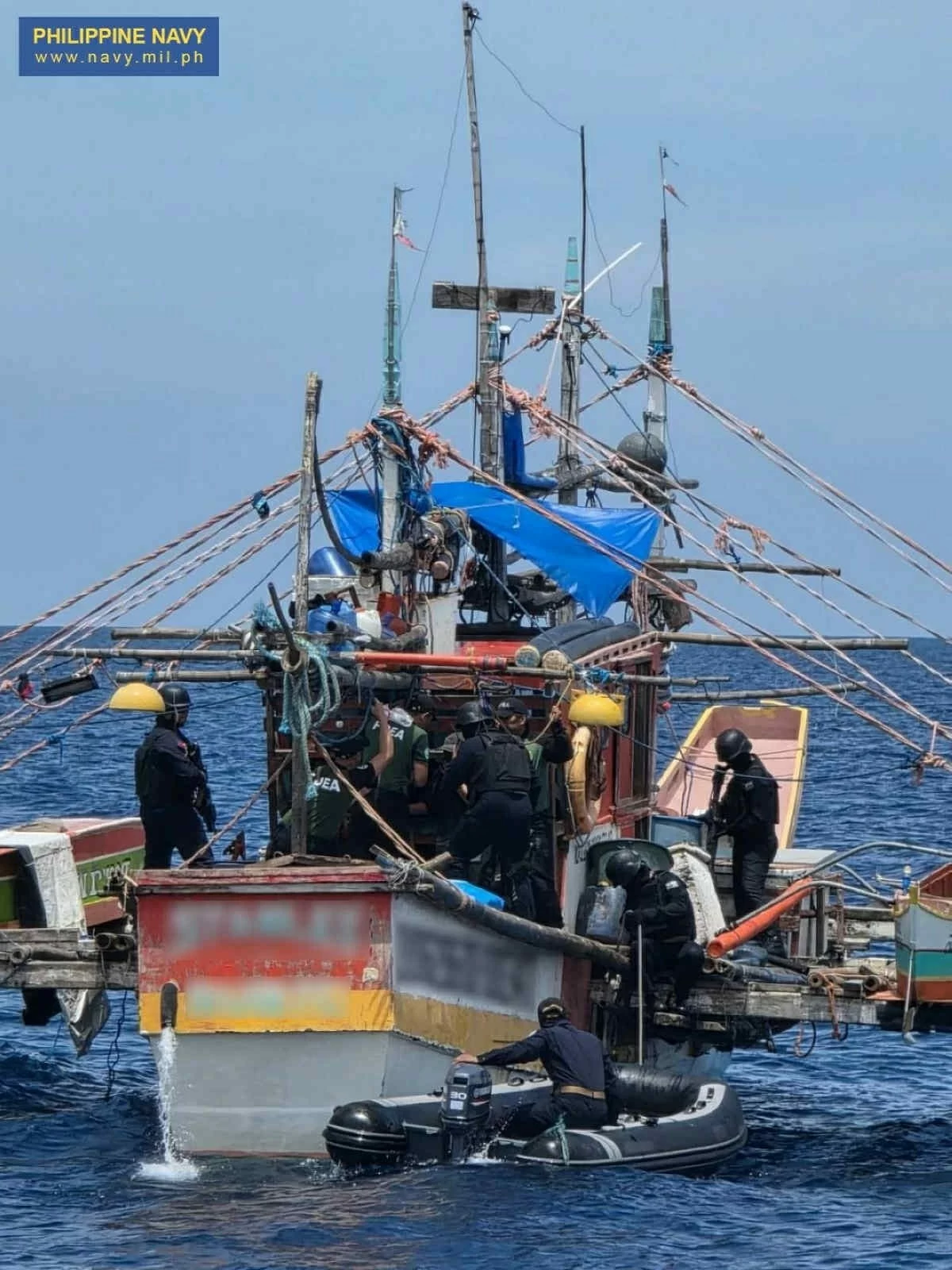
The Philippine Navy's Northern Luzon Naval Command (NLNC) intercept 1.5 tons of crystal meth aboard a fishing vessel off the coast of Zambales on June 20, 2025. The seized drugs had an estimated street value of P10 billion. (NLNC Photo)
In the remarks of the spokesperson of the Chinese Embassy in Manila, the embassy lambasted “certain individuals within the Philippine military” for “exploiting maritime issues to provoke and escalate tensions” because they are “driven by selfish political motives and acting as pawn of the US Indo-Pacific strategy.”
“We firmly oppose the baseless and malicious accusations made by certain individuals with intention to smear China,” the statement read.
The embassy said that stirring tensions in the region and acting as pawn of the United States “does not help in solving problems.”
“On the contrary, it has become the root cause of distrust and the stumbling block to dispute resolution,” it added.
The remarks came after Philippine Navy (PN) spokesperson for the West Philippine Sea (WPS) Rear Admiral Roy Vincent Trinidad revealed on Tuesday, June 24, that the P10-billion crystal meth (shabu) haul seized by the Navy could be a part of an elaborate plan by the CCP “to destroy the future generation of Filipinos.”
He revealed that the illegal drugs have Chinese-looking markings and the fishing boat where they were found was boarded by a Chinese-Malaysian suspect.
The Chinese Embassy denied the accusation, saying that “China has the toughest resolve and policy against drugs and we have one of the best counternarcotics track records in the world.”
“China has scheduled the largest number of substances and has imposed the strictest drug control policy in the world. China and the Philippines have maintained sound law enforcement cooperation on combating drugs and other transnational crimes,” the embassy furthered.
In fact, the embassy noted that a Philippine Presidential Anti-Organized Crime Commission (PAOCC) delegation had just visited China and reached important consensus with Chinese counterparts “on further strengthening efforts to combat transnational crimes.”
The embassy urged “certain individuals in the Philippine military” to refrain from “malicious attacks” versus China, asking them to “heed the will of the people, act in their nation’s true interest and return to the correct path of resolving disputes through dialogue and consultation.”