






The Philippine government acted “too little, too late” in evacuating and securing Filipinos from conflict-torn Israel, Iran, and neighboring nations, Vice President Sara Duterte said on Wednesday, June 25.
Manila Bulletin
 Philippines
National
'Too little, too late': VP Sara hits slow gov't response on Middle East conflict
Philippines
National
'Too little, too late': VP Sara hits slow gov't response on Middle East conflict
Philippines
National
'Too little, too late': VP Sara hits slow gov't response on Middle East conflict
'Too little, too late': VP Sara hits slow gov't response on Middle East conflict
Published Jun 25, 2025 03:25 pm


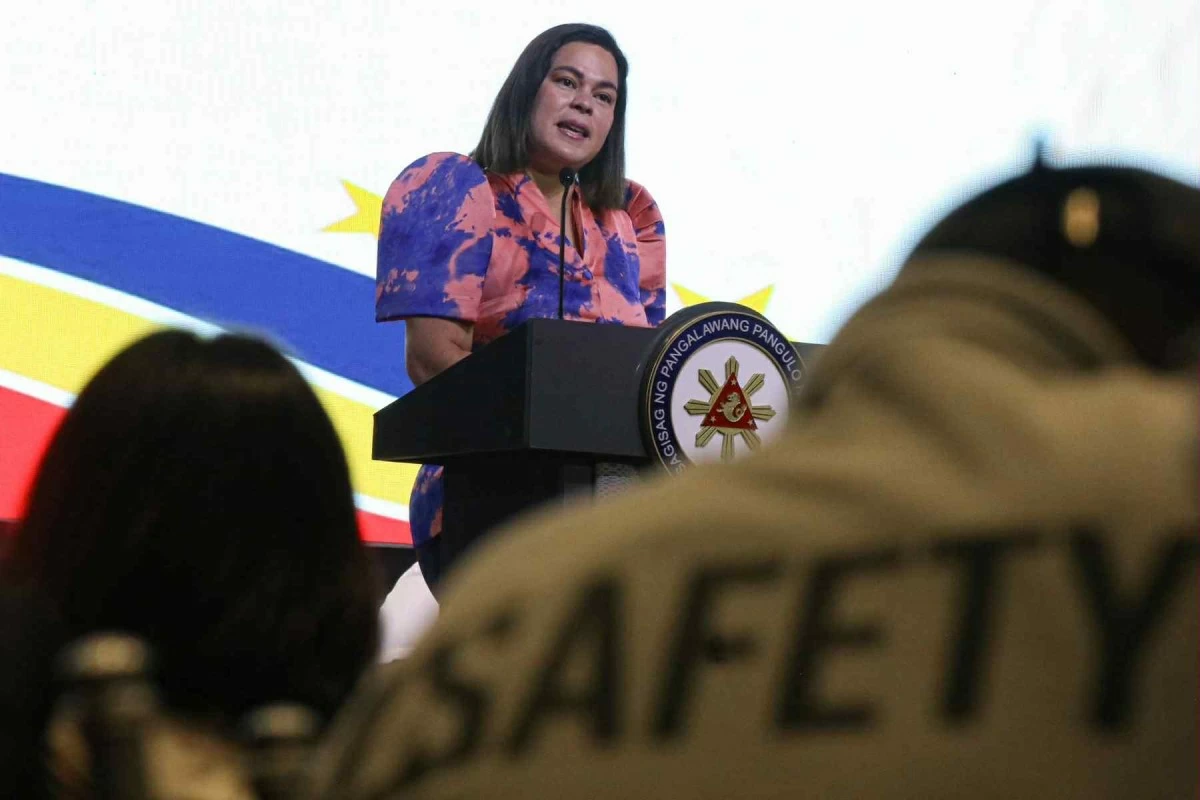
Vice President Sara Duterte is a keynote speaker of the annual Pride reception held by her office in San Fernando, Pampanga on Wednesday, June 25, 2025. This event celebrates Pride Month by honoring LGBTQIA community through efforts towards inclusivity, equality, and empowerment (Santi San Juan/MANILA BULLETIN)
Duterte called out the government for its ill-preparedness to address the impact of the conflict on Filipinos living and working in the region, while promising that the Office of the Vice President (OVP) will do everything in its power to help the Department of Foreign Affairs (DFA) and the Department of Migrant Workers (DMW) in their repatriation efforts for the Filipinos.
“Well, it’s too little, too late again. Dapat kasi the moment na nag-release na ng missiles or nag-launch ng missiles ay meron ng plano kung ano ang gagawin para sa mga Pilipino na gustong lumikas (The moment that missiles have been launched, there should have been a plan for Filipinos who want to leave),” she explained, alleging that the government waited for borders and the airspace to close before acting.
“So, dapat kasi nag-plano, hindi naman surprise yon. Alam naman nating lahat na mangyayari yon kasi nagsabi na silang dalawa na mag-aaway sila. Kaya hindi siya surpresa sa buong mundo (So, they should have planned because it was not a surprise. We all know it’s going to happen because the two countries said they were at war with each other. So, the whole world was not surprised),” she added.
The government official raised the alert level 3, or voluntary repatriation, status in Israel and Iran a week after Israel first bombed Iran’s nuclear sites.
The first batch of repatriates from Israel arrived in the country earlier this week, with the next batch to be sent home immediately after they cross the King Hussein Border in Jordan.
But with the ceasefire agreement between Israel and Iran now in full effect, it is not clear if the Filipinos who initially signed up for repatriation will go through with it.
Duterte also slammed the government for not being prepared to address the impact of the conflict on oil prices, as this was easy to predict every time a conflict arises in the Middle East.
“Lagi iyan pag merong sitwasyon doon sa Middle East. Yung pagtaas ng presyo ng krudo hindi din nakakagulat yon sa ganoong pangyayari sa Middle East . . . Dapat plug-and-play lang yon eh. ‘Pag nangyari na, ganito ang gagawin (That always happens when there’s a situation there in the Middle East. The rise of oil prices is not surprising because of what happened in the Middle East. That should be plug-and-play lang. When something happens, this is what we’re going to do),” she pointed out.
The Vice President warned that the Philippines should not meddle in the Middle Eastern conflict because “this is a war of supremacy and domination” and that nations “are trying to show that they are superpowers of the world.”
On the other hand, the Philippines, Duterte explained, neither has the money or the power “at the moment” to join in a war.
The official reiterated the Philippines should have an “independent foreign policy” where it is a friend to all, and not just an ally of the United States. This was after she criticized the administration for siding with Washington in its ongoing tensed relationship with China.