







Smuggled onions test positive for E. coli—DA
Published Jun 25, 2025 03:44 pm


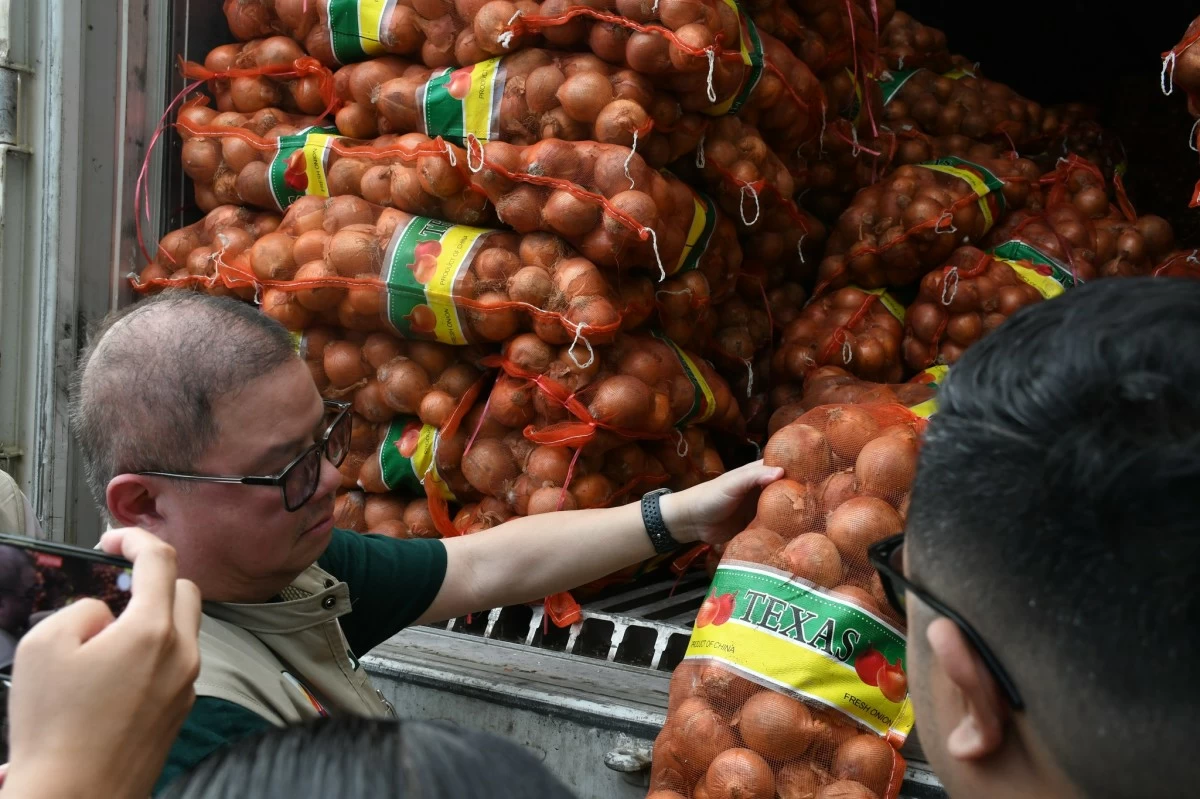
(BPI photo)
Department of Agriculture (DA) Secretary Francisco Tiu Laurel is warning consumers against buying imported onions after samples taken from a public market in Manila tested positive for E. coli.
Last week, Laurel ordered a more stringent campaign against onion smuggling after finding imported red onions in the Paco public market in Manila during a market visit.
The DA has since tested the onions and found that they are infected with E. coli or Escherichia coli, which is commonly found in the feces of humans and animals.
“This is a food safety issue and a clear threat to public health. We will order the confiscation of those onions as required under the Food Safety Act of 2013,” said Laurel in a statement on Wednesday, June 24.
The Bureau of Plant Industry (BPI) has formally informed the local government of Manila about the test results, noting that they indicate poor sanitation in the handling and processing of the red onions.
Imported onions, which are larger than local varieties, have steadily surfaced in markets across the country despite the absence of import permits.
In fact, the DA has not issued any permits for onion imports following the directive of President Marcos to safeguard local farmers from the influx of foreign-grown allium.
Laurel said he has instructed the BPI and other DA units to be on “alert” for suspected imported onions and to swiftly submit any samples for testing.
He earlier sought the assistance of the Philippine National Police (PNP) to help gather intelligence to apprehend onion smugglers.
Laurel said these smuggled goods “undermine” the income of farmers at a time when they should be recovering.
Meanwhile, on Tuesday, a shipment of 25 metric tons of red onions from China was intercepted by the BPI and the Bureau of Customs (BOC) at the Mindanao International Container Terminal in Misamis Oriental.
The shipment, valued at around ₱2 million, was declared to contain frozen goods.
Laurel said the government would pursue legal action against the consignee of the shipment under Republic Act (RA) No. 12022 or the Anti-Agricultural Economic Sabotage Act.
Under the law, illicit operations in agricultural and fishery products such as smuggling, hoarding, profiteering, and cartel operations are now classified as economic sabotage, imposing substantial fines and extended prison terms.
The agriculture chief said the DA will request the BOC to turn over the onions for government redistribution if they are found safe for consumption.