







Radius at 25: Stronger, smarter, and led with purpose by Exequiel Delgado
With President and CEO Quiel Delgado at the helm, Radius Telecoms stays rooted in its core strengths while boldly stepping into the future - thriving through vision, precision, and people-first leadership
Published Jun 25, 2025 09:30 am


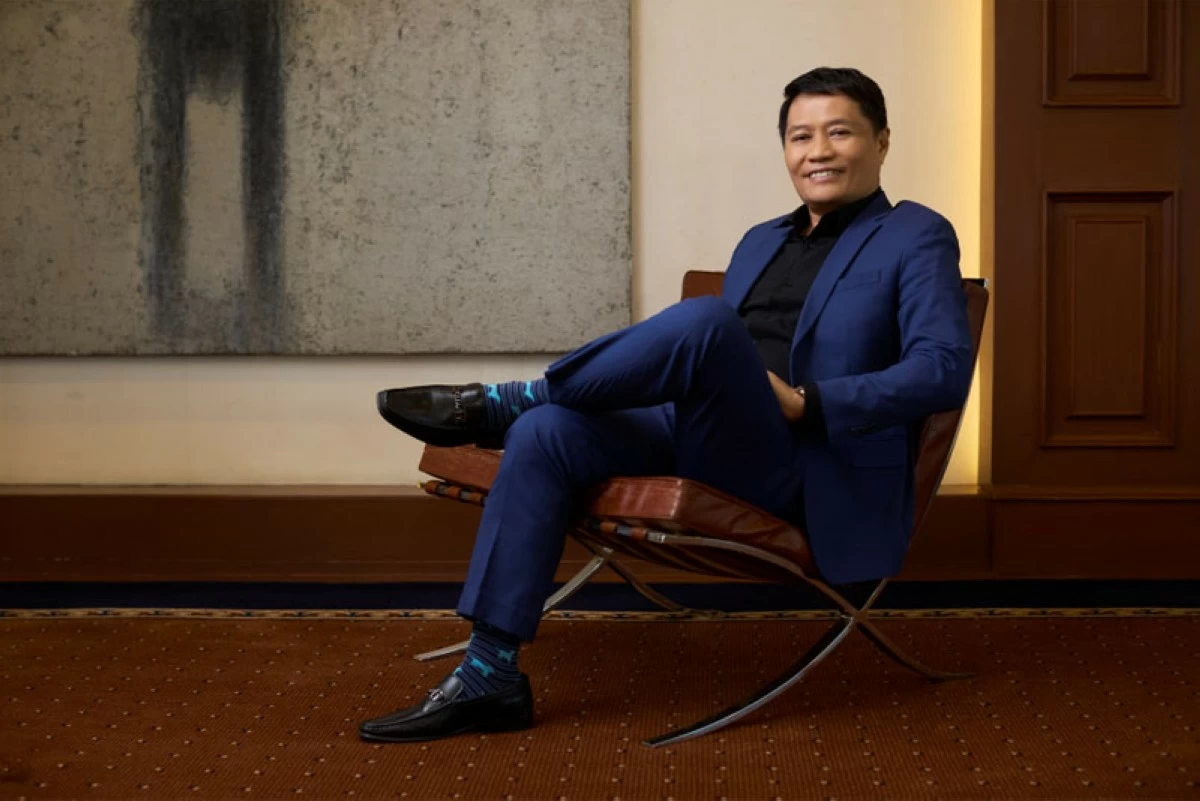
Radius President and CEO Quiel Delgado
It was in the early 2000s when the internet in the Philippines was still in its dial-up days, the digital era had only begun to take shape, and telcos were beginning to stake their claims in a rapidly expanding market. At the time, copper was the trusted workhorse medium for telecommunication companies. It was the norm, cheap, and deeply embedded in everyone’s infrastructure. Fiber optic technology, while promising, was expensive and seen as excessive, a luxury for a future that hasn’t quite arrived.
But from the beginning, the leaders of Radius Telecoms took a different route. Founded in 2000, Radius stood out as one of the rare Southeast Asian telcos to bet fully on fiber optics as a mode of transmission. While others settled for copper to minimize costs, Radius committed to the long game; a decision earlier leaders took that would quietly set the stage for decades of advantage - favoring performance, scalability, and longevity over short-term gains.
“And 25 years after, we are now reaping the benefits from a major decision made by our past leaders,” says Exequiel “Quiel” C. Delgado, Radius President and CEO since 2019. “They future-proofed our offerings and allowed us to become more flexible and scalable as needed.”
For Quiel, an engineer at heart and a strategist by discipline, that legacy wasn’t just a technical win, but also a decision to modernize with intention.
From groundwork to growth trajectory
Before taking the reins at Radius, Delgado built a career spanning local and international telcos, pairing his deep roots in electronics and communications engineering with leadership roles that taught him both grit and grace. It’s the balance of technical acuity and people-first leadership that defined his strategy when he joined Radius.
“I was attracted to Radius because I felt my experience was the perfect balance needed for the company to continue its growth trajectory and enter into new lines of business,” he shares.
His leadership has been marked by clarity of purpose: respect the foundation without being afraid to build smarter floors above it.
One of his earliest mandates was to expand Radius' reach. While its consumer broadband arm was eventually handed off to PLDT, Quiel redirected the company’s focus toward enterprises, data centers, and hyperscaler ecosystems, markets that require not just speed, but stability, reliability, and security.
With a full fiber-optic network from day one, Radius has carved out a strong position in the enterprise space, supporting critical industries like BPOs, banking, and data centers. While many telcos are still transitioning from copper or using hybrid legacy systems, Radius is operating on a future-ready foundation, one that’s already serving the needs of today’s most bandwidth-hungry and security-conscious clients.
A classic network, now with a smarter engine
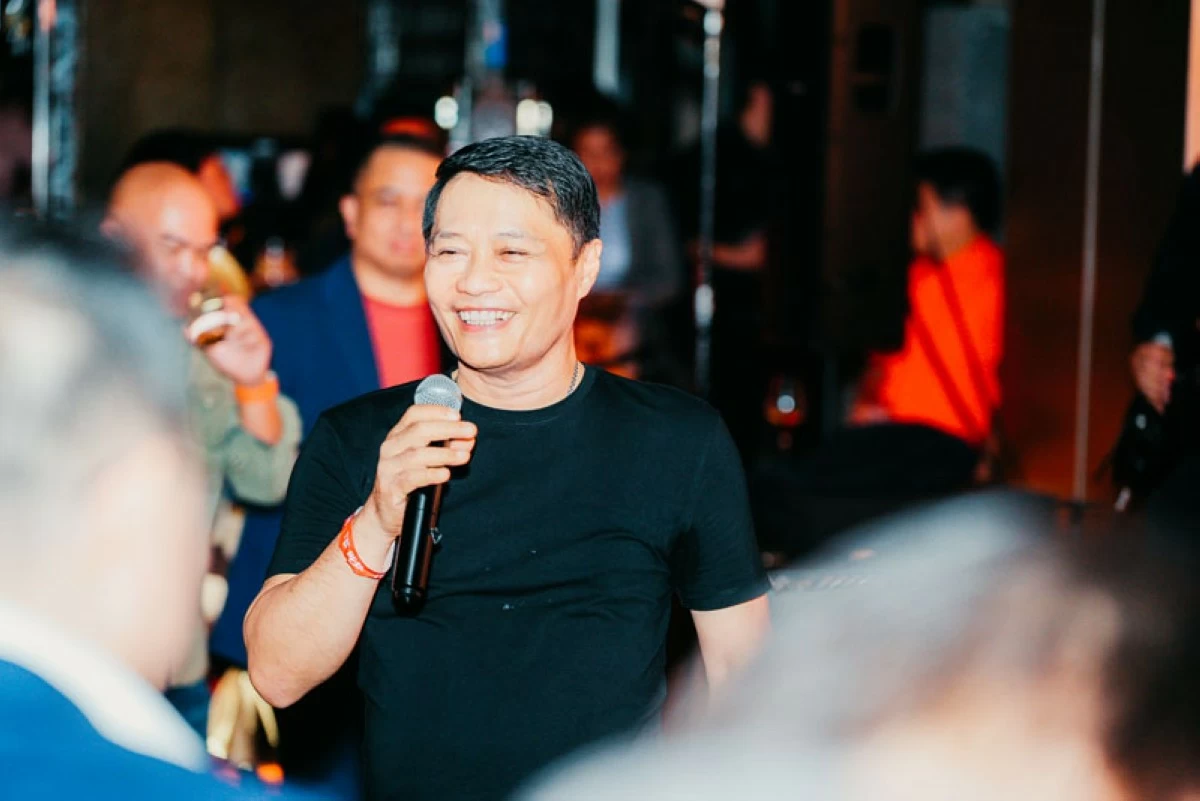
Radius President and CEO Quiel Delgado
Under Quiel’s leadership, Radius has maintained its fiber backbone and gave it a smarter skin.
Among the key innovations was the managed SD-WAN offering, allowing Radius clients to enjoy real-time, intelligent traffic steering across hybrid environments: wired, wireless, or even dual-carrier setups, all orchestrated through a central, secure platform. This brought unprecedented flexibility and reliability to meet the connectivity needs of its enterprise customers.
Next came auto-provisioning tools, a game-changer for business broadband. What used to be a manual and time-consuming process was transformed into a fully digital experience, from application to installation, billing to aftersales. Installations that once took days were now done within 48 hours for serviceable broadband areas, or even on the same day during quick-install campaigns.
On the security front, Radius brought a zero-trust solution, replacing the traditional perimeter model with continuous and granular verification. “From implicit trust, we now move to explicit verification at every step,” Quiel explains. This shift brought clients a stronger cybersecurity posture which is aligned with global standards.
Security has since become a priority, with strategic alliances forged with Cisco, Fortinet, and Nexusguard. As Quiel puts it, “The threat landscape is always changing. Our goal is to help customers build a security posture that matches global practices.”
Recently, Radius has secured its MEF 3.0 certification from the global industry association of network, cloud, and technology providers, Metro Ethernet Forum. Radius is the third telco in the country to secure this badge.
Yet for Quiel, the most transformative move was the integration of AI-driven operations. He sees AI not as a replacement, but as a powerful partner that sharpens analysis, improves monitoring, and streamlines network performance.
“AI won’t replace the human touch,” Quiel affirms. “It will just enhance the decision-making of our people and will streamline operations to be able to delight our customers even more. Our people’s warmth, sincerity, and attention to detail will be the icing on the cake that will make Radius a cut above the rest.”
Radius remains an example of how thinking long-term doesn’t mean moving slowly. It means knowing when to leap, when to wait, and ensuring the critical jump lands on solid ground.
Leading beyond the screen

Quiel treats Radius valued clients to a live band performance during last year’s Appreciation Night
For Quiel, technology is only half the equation. The other half lies in cultivating a team that can rise side by side with it. His approach to leadership is deliberate and inclusive. Hands-on without being overbearing, grounded in technical know-how but guided by empathy and vision.
He leads with a kind of quiet intensity, not one to chase every trend, but not afraid to move fast when it matters. His strategic patience and measured optimism have made Radius both stable and agile, a rare combination in an industry often sprinting toward the next big thing.
This executional excellence was especially evident during the pandemic. While many companies slowed down, Radius doubled down. “We did not stop our rollout even at the height of the pandemic,” he says, crediting dedicated project managers and contractors. “We completed our fiber rollout just in time, benefitting new data center companies which started operations in 2021.”
Today, Radius provides bandwidth ranging from 10G to 800G and even offers Premium Dark Fiber facilities to select hyperscaler clients.
A quiet revolution, still unfolding
At 25, Radius remains young in its outlook but seasoned in its soul - a vintage machine powered by a modern engine. And at the helm is a leader who understands both the math and the meaning of transformation.
“The Philippines is in a prime position to be the next data center hub in Southeast Asia,” Quiel shares. “With our modern infrastructure, availability of commercial power, and skilled workforce, backed up by strong government support, we’re ready. And we’ll be here, not scrambling to catch up, but ready to lead.”
Because in Quiel Delgado’s playbook, evolution is a discipline built on a strong foundation, shaped by vision, and guided by a strong belief of what people can achieve if guided the right way.