







Intelligence with intention: HUAWEI's blueprint for a connected tomorrow
Published Jun 25, 2025 07:49 am
|
Updated Jun 25, 2025 04:54 pm


Covering the Mobile World Congress 2025 for the first time felt like a leap into the deep end of innovation—but even on my fourth visit, Shanghai still finds new ways to surprise me.
There’s a rhythm here that mirrors Huawei’s showcase at this year’s MWC: fast-paced, future-forward, but deeply human. While many brands showcased the usual parade of sleek devices and dizzying specs, Huawei invited attendees into something subtler. Something quieter. Something more enduring.
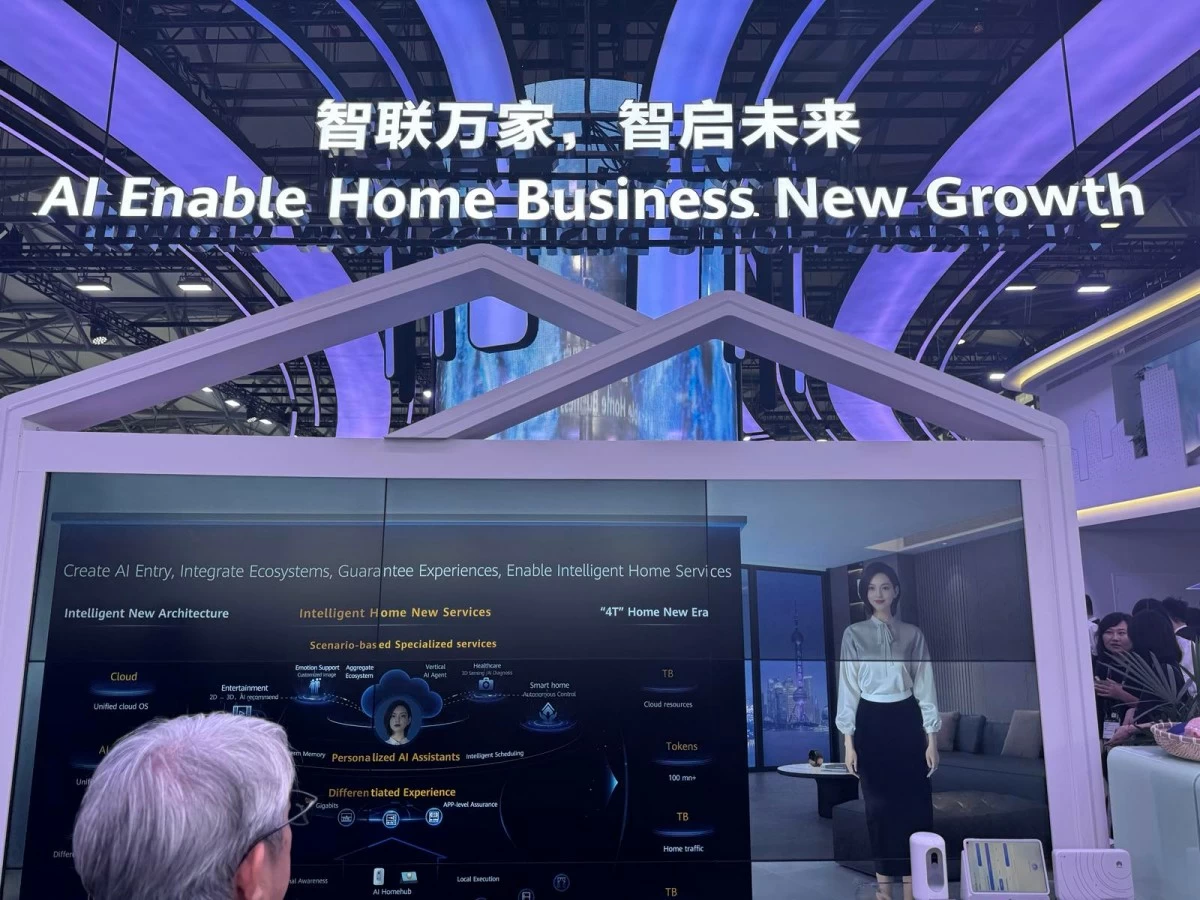
This year’s theme, Accelerating the Intelligent World, wasn’t just a tagline. It was a blueprint—for a future where technology is not only powerful, but purposeful.
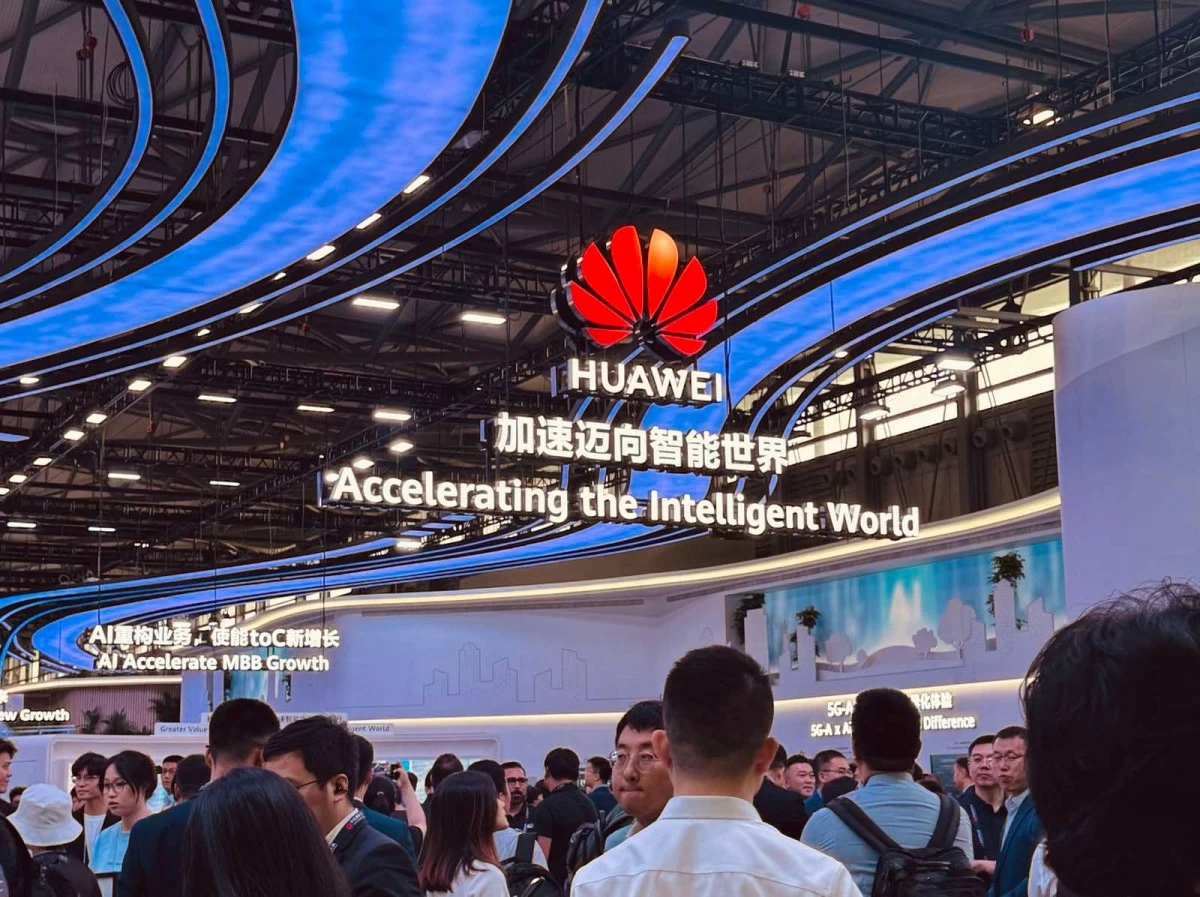
At Huawei’s MWC 2025 showcase, the company unveiled its emotionally intelligent AI assistant designed to integrate cloud-based services across home, healthcare, and business environments—blurring the lines between convenience and connection.
We're talking about life-saving moments in healthcare, adaptive tools in education, seamless automation in homes and cities, and AI that doesn’t just function—it evolves.
With 5G-Advanced, Huawei isn’t just connecting people. It’s closing the gap between possibility and precision.
Meet TongTong: AI That Listens—and Learns
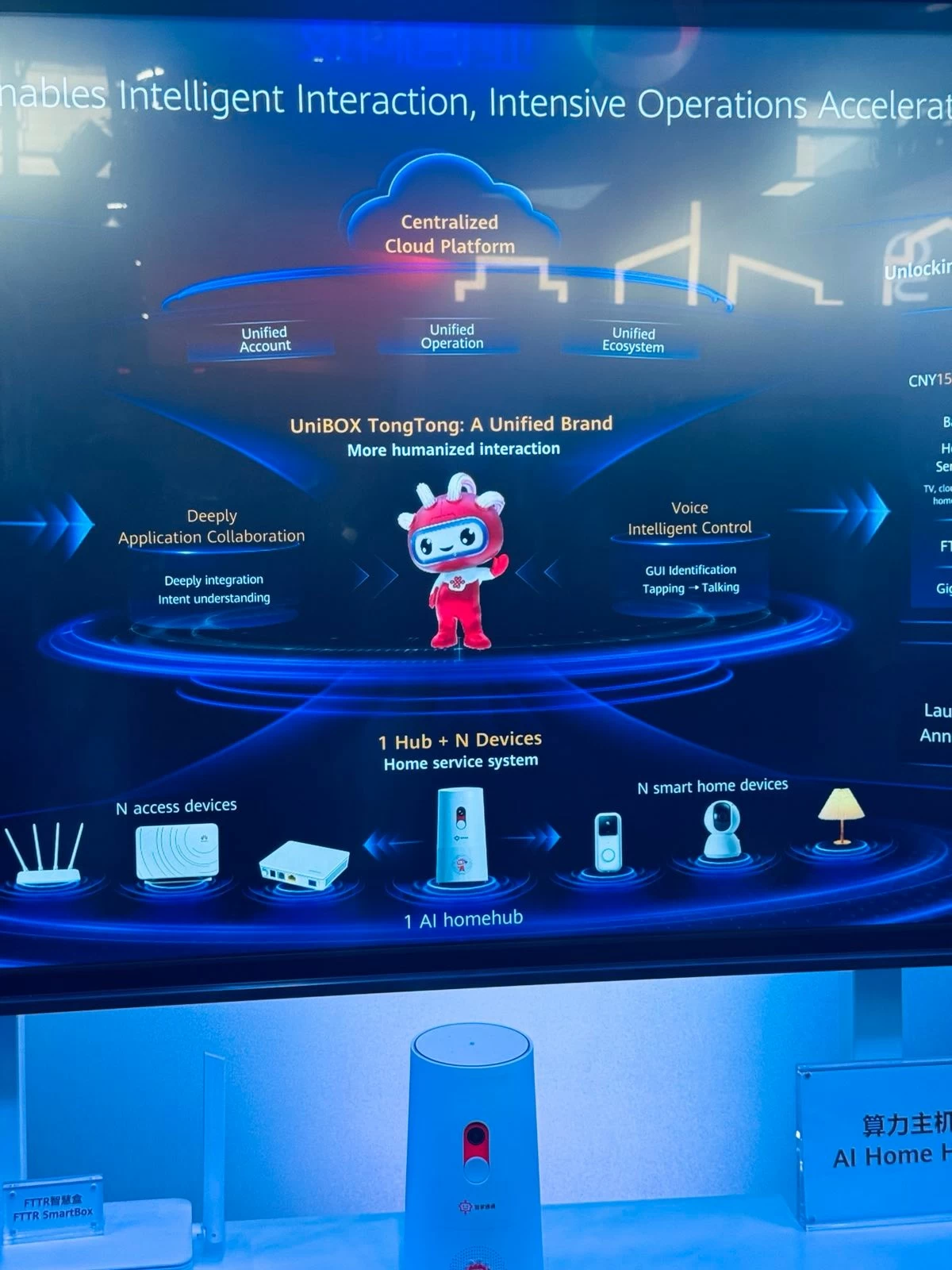
One of the most compelling parts of the showcase was a gentle-voiced assistant named TongTong. At first glance, it seems like just another voice interface. But within minutes, it’s clear: TongTong is different.
While Siri or Alexa might respond to commands, TongTong pays attention to patterns. It recognizes tone. It adjusts based on mood. It learns your routines—not to sell them back to you, but to serve you better.
Think of it as Baymax from Big Hero 6, if Baymax ran your home, played your music, managed your appointments, and understood when you needed to hear something comforting after a long day. This is AI layered with emotional intelligence—and it’s where Huawei is pulling ahead.
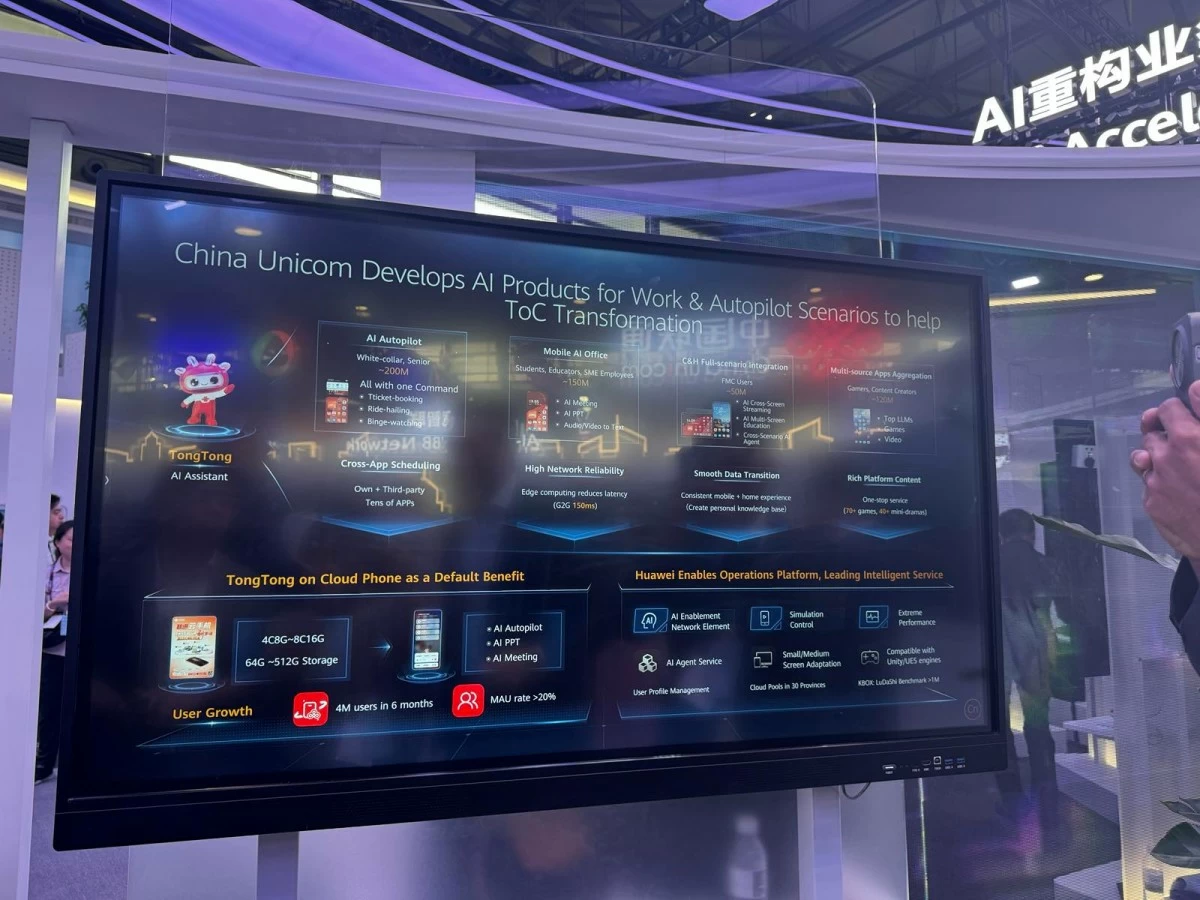
A closer look at how TongTong, Huawei’s emotionally intelligent AI assistant, powers everyday life—from ride-hailing to classroom learning and senior care—through cloud-based integration with China Unicom’s services.
Healing Smarter: AI in Healthcare
In the healthcare sector, Huawei is using AI not to replace doctors, but to amplify them.
At the MWC exhibit, Huawei demonstrated intelligent hospital systems that monitor micro-expressions—subtle facial changes that could signal discomfort or impending medical events. These systems support early intervention, giving medical staff more than just data—they offer insights.
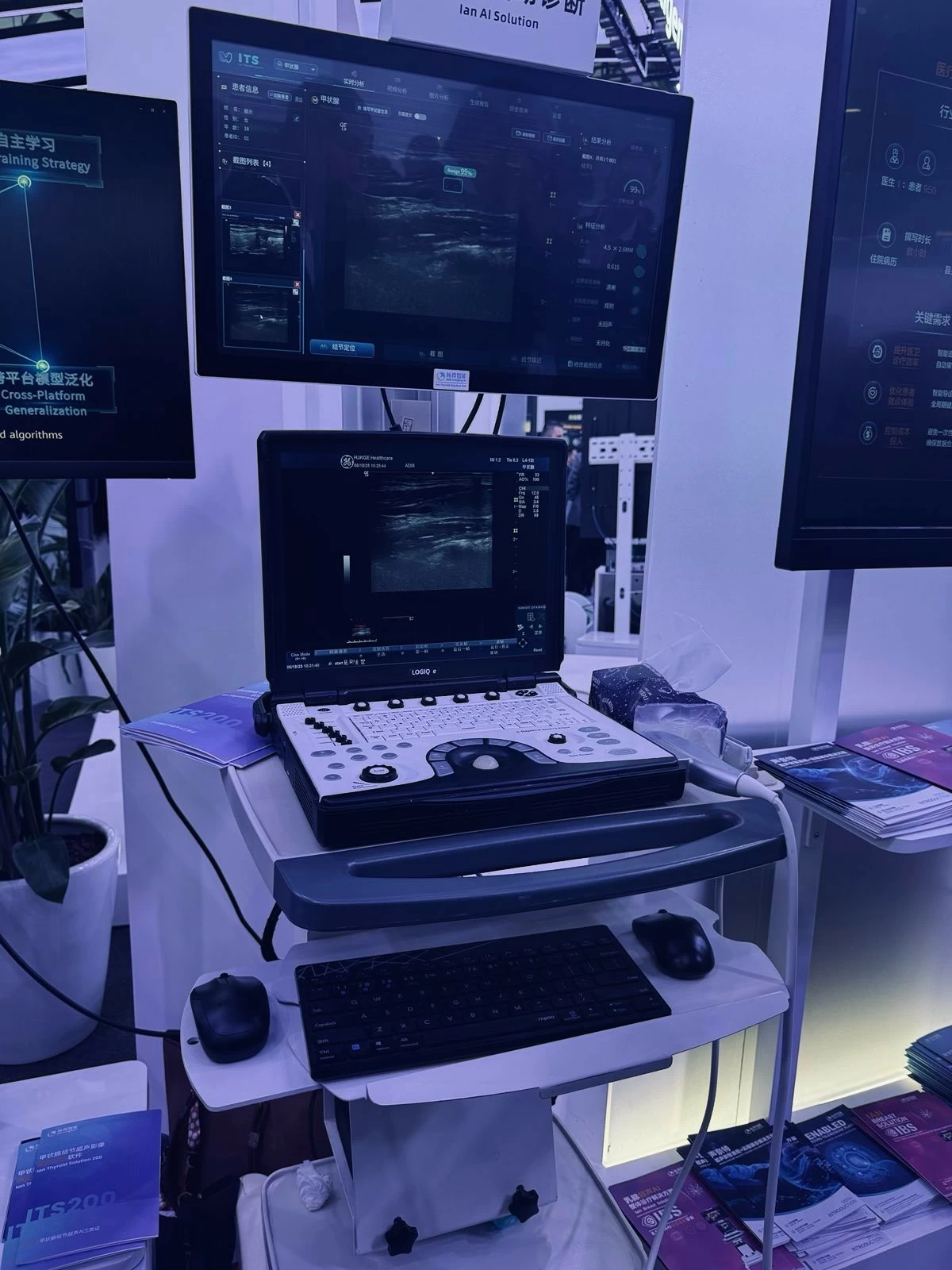
Huawei’s AI-driven healthcare solutions on display at MWC 2025 include real-time diagnostic imaging systems—designed to assist in early detection and improve clinical accuracy through intelligent data interpretation.
It’s a shift from reaction to prevention, powered by connected devices that see beyond the obvious. This kind of predictive healthcare, enabled by 5G-Advanced and AI, is no longer theoretical. It’s being tested—and it’s working.
The Future of Learning: Personalized Education
In Huawei’s vision, the classroom is no longer one-size-fits-all.
Its AI-powered learning platforms offer individualized paths tailored to each student’s pace, attention span, and learning style. If a child loses focus after three wrong answers, the system adjusts. If a visual learner struggles with text, the interface responds accordingly.
For teachers, it’s like having a silent assistant that helps track emotional cues and engagement—freeing up time to focus on what they do best: teaching.
Here, AI isn’t replacing the human connection—it’s enhancing it.
A Home That Knows You
At home, Huawei’s AI becomes part of the family rhythm. Not disruptive, but responsive.
Lights that dim as your body prepares for sleep. Air conditioning that adjusts to your metabolism and not just the room temperature. A fridge that knows your diet and doesn’t just beep when it’s open too long, but suggests meals based on what’s left inside.
It’s not just smart—it’s intuitive.
And it doesn’t stop at the front door. With Huawei’s cross-device ecosystem, the smart home becomes a connected lifestyle, extending from kitchen counters to city streets.
Machines with Empathy
There’s something radical about Huawei’s approach that doesn’t scream for attention. It invites reflection.
In a world that often glorifies frictionless performance and optimized routines, Huawei introduces a new layer: empathy. Their technology doesn’t just work—it waits, adjusts, and even feels.
This isn’t the AI of sci-fi thrillers, but a quieter, more present kind of intelligence. One that leans in, instead of taking over.

Part of Huawei’s intelligent ecosystem, this humanoid robot—on display at MWC Shanghai—demonstrates the brand’s advances in automation, mobility, and human-centric AI designed to support manufacturing, logistics, and assisted living.
As someone who’s spent years covering stories on sustainability, community, and culture, stepping into the tech world—especially at MWC—was equal parts awe and recalibration.
And while it was my first time at the Mobile World Congress, it was my fourth time in Shanghai. Yet the city, much like the innovations I witnessed, continues to evolve in ways I didn’t expect. It’s fast but never cold. Complex but never hollow.
Just like the world Huawei envisions—one that’s built on intelligence, but held together by intention. The future isn’t just about faster processors or sleeker gadgets. It’s about tools that learn, adapt, and ultimately help us live better—together.
Huawei’s contribution to that future isn’t just impressive. It’s quietly, unmistakably human. And perhaps, in this age of endless disruption, that’s the most revolutionary thing of all.
Still, even as our machines grow more capable—with AI learning to anticipate needs, offer support, and even recognize emotion—it’s worth celebrating what remains uniquely ours.
Because behind every breakthrough is a human intention. And beyond every algorithm, the simple truth endures: it’s our relationships, our presence, our shared understanding that give technology its true meaning.
Technology may guide us toward greater possibilities—but it’s human connection that keeps us grounded, inspired, and whole.