






Manila Bulletin
 Business
Banking & Finance
BSP: Malls, wet markets are hotbeds for counterfeit money
Business
Banking & Finance
BSP: Malls, wet markets are hotbeds for counterfeit money
Business
Banking & Finance
BSP: Malls, wet markets are hotbeds for counterfeit money
BSP: Malls, wet markets are hotbeds for counterfeit money
By Derco Rosal
Published Jun 25, 2025 03:13 pm


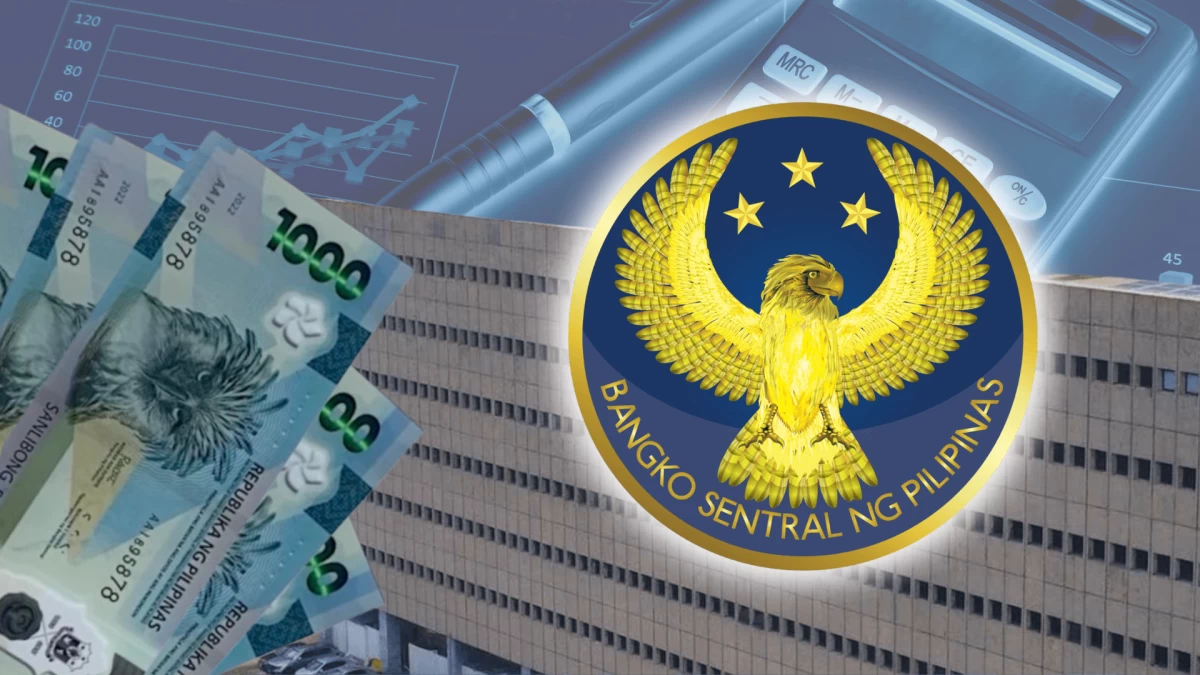
The Bangko Sentral ng Pilipinas (BSP) is calling for targeted anti-counterfeiting campaigns in shopping malls, supermarkets, and wet markets after these locations emerged as the main sources of fake banknotes and coins recovered last year.
Data from the 2024 BSP annual report published in June showed that counterfeits were “frequently recovered in areas with high foot traffic, such as shopping malls (27.2 percent), supermarkets (25.9 percent), and wet markets (20.9 percent).”
“This highlights the need for targeted anti-counterfeiting campaigns in these areas,” the report said.
According to the central bank report, the ₱1,000 paper banknote was the most counterfeited bill, accounting for 59.9 percent or the majority of documented counterfeits last year. The ₱500 paper banknote was the second-most counterfeited bill at 19.3 percent.
Notably, there were a very low number of cases of counterfeit ₱1,000 polymer banknotes. Recording only three “low-quality” counterfeits in 2024, the BSP noted that the three-year-old ₱1,000 polymer banknote has shown “resilience” against counterfeiting.
“These counterfeit polymer banknotes were printed on paper, with the transparent portions cut out and substituted with substandard plastic, making them easily detectable by the public,” the BSP said.
Fake coins also dropped significantly by 87.8 percent last year, noting that there were fewer than one fake coin for every one million real coins in circulation. Most counterfeit coins were leftovers from previous years, mostly five-peso coins from the BSP coin series.
The BSP attributed this substantial decline in counterfeited banknotes and coins to the “enhanced security features of the New Generation Currency (NGC), including the micro-printed details and laser-engraved designs.”
These added features made it more challenging for fraudsters to copy and reproduce the currencies, the BSP said.
Most counterfeiting involved inkjet printing, accounting for 79.7 percent of the recorded cases. Laser printing was next at 12.6 percent, while tampered security threads accounted for 7.6 percent.
When it comes to location, most fake currencies were found in Metro Manila, at 52.2 percent, followed by the provinces of Cavite, Laguna, Batangas, Rizal, and Quezon (collectively known as CALABARZON), at 12.2 percent.
Last year, the BSP conducted five enforcement operations, leading to six arrests and 11 criminal charges. These operations resulted in the seizure of 960 fake ₱1,000 eNGC bills, 305 fake ₱500 eNGC bills, one fake ₱100 eNGC bill, and 220 fake $100 bills.