ADVERTISEMENT

ACEN, UPC Renewables break ground on new power projects in India

Published Jun 25, 2025 01:40 pm
Ayala-led ACEN Corporation and renewable energy (RE) developer UPC Renewables have begun constructing two clean power projects in India, slated for completion by early 2027.
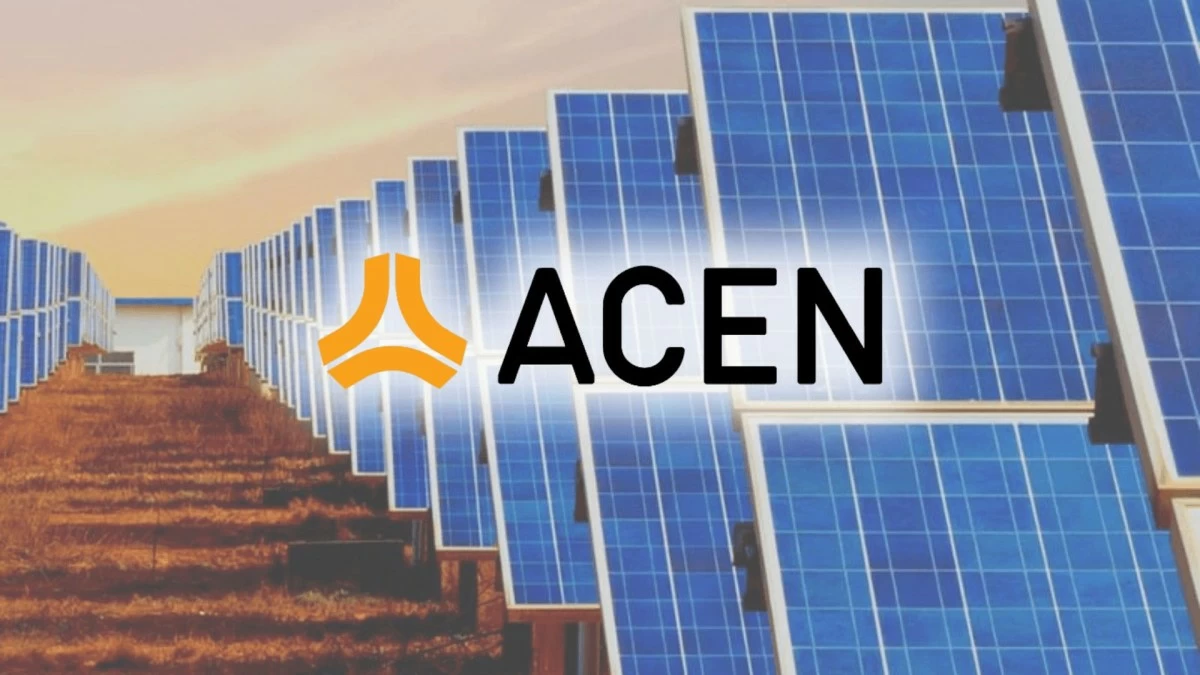
In a disclosure to the Philippine Stock Exchange on Wednesday, June 25, ACEN and UPC announced they broke ground on a 420-megawatt (MW) solar farm in Rajasthan and a 120-MW wind farm in Karnataka. These two projects are expected to produce a combined 1,158 gigawatt-hours (GWh) of renewable energy annually.
Located in the high-irradiance Barmer region of Rajasthan, the 420-MW solar farm is projected to produce 767 GWh annually. In Karnataka, the 120-MW wind farm will harness strong monsoonal wind patterns and favorable terrain to deliver 391 GWh of renewable energy annually, ACEN said.
Once operational, these projects are expected to power around 241,000 households, avoiding approximately 876,000 tons of carbon emissions every year. Additionally, they are anticipated to generate around 1,500 green jobs during the construction phase.
This groundbreaking ceremony follows the company’s previous efforts in India, which include the 420-MW Masaya solar, 70-MW Paryapt solar, and 140-MW Sitara solar projects.
Patrice Clausse, ACEN International's Chief Executive Officer (CEO) and Group Investment Officer, stated that this partnership has enabled the company to achieve disciplined capital deployment in India.
Brian Caffyn, UPC chairman and group CEO, added that the start of the two RE projects signifies the company's commitment to sustainability. The commencement of these new projects marks another important milestone in our expansion across Asia-Pacific, reinforcing our commitment to scalable and sustainable energy solutions. Following the successful deployment of 630 MWp of solar capacity in India, this next phase further strengthens our trusted partnership with ACEN and the excellent team in India driving this vision forward, he said.
Alok Nigam, CEO of UPC Renewables India, explained that the projects are part of a one-gigawatt peak renewable energy portfolio set to be delivered in India within the next two years.
ACEN currently boasts around 7 GW of attributable RE capacity, spanning operational, under-construction, and committed projects. Its projects and investments extend beyond the Philippines to Australia, Vietnam, India, Laos, and Indonesia, among others. UPC currently has a presence in nine countries in the Asia Pacific region, including 7 GW of energy assets.

Related Tags

ACEN Corporation
ADVERTISEMENT
.most-popular .layout-ratio{ padding-bottom: 79.13%; } @media (min-width: 768px) and (max-width: 1024px) { .widget-title { font-size: 15px !important; } }

{{ articles_filter_1561_widget.title }}

.most-popular .layout-ratio{ padding-bottom: 79.13%; } @media (min-width: 768px) and (max-width: 1024px) { .widget-title { font-size: 15px !important; } }

{{ articles_filter_1562_widget.title }}

.most-popular .layout-ratio{ padding-bottom: 79.13%; } @media (min-width: 768px) and (max-width: 1024px) { .widget-title { font-size: 15px !important; } }

{{ articles_filter_1563_widget.title }}

{{ articles_filter_1564_widget.title }}

.mb-article-details { position: relative; } .mb-article-details .article-body-preview, .mb-article-details .article-body-summary{ font-size: 17px; line-height: 30px; font-family: "Libre Caslon Text", serif; color: #000; } .mb-article-details .article-body-preview iframe , .mb-article-details .article-body-summary iframe{ width: 100%; margin: auto; } .read-more-background { background: linear-gradient(180deg, color(display-p3 1.000 1.000 1.000 / 0) 13.75%, color(display-p3 1.000 1.000 1.000 / 0.8) 30.79%, color(display-p3 1.000 1.000 1.000) 72.5%); position: absolute; height: 200px; width: 100%; bottom: 0; display: flex; justify-content: center; align-items: center; padding: 0; } .read-more-background a{ color: #000; } .read-more-btn { padding: 17px 45px; font-family: Inter; font-weight: 700; font-size: 18px; line-height: 16px; text-align: center; vertical-align: middle; border: 1px solid black; background-color: white; } .hidden { display: none; }
function initializeAllSwipers() { // Get all hidden inputs with cms_article_id document.querySelectorAll('[id^="cms_article_id_"]').forEach(function (input) { const cmsArticleId = input.value; const articleSelector = '#article-' + cmsArticleId + ' .body_images'; const swiperElement = document.querySelector(articleSelector); if (swiperElement && !swiperElement.classList.contains('swiper-initialized')) { new Swiper(articleSelector, { loop: true, pagination: false, navigation: { nextEl: '#article-' + cmsArticleId + ' .swiper-button-next', prevEl: '#article-' + cmsArticleId + ' .swiper-button-prev', }, }); } }); } setTimeout(initializeAllSwipers, 3000); const intersectionObserver = new IntersectionObserver( (entries) => { entries.forEach((entry) => { if (entry.isIntersecting) { const newUrl = entry.target.getAttribute("data-url"); if (newUrl) { history.pushState(null, null, newUrl); let article = entry.target; // Extract metadata const author = article.querySelector('.author-section').textContent.replace('By', '').trim(); const section = article.querySelector('.section-info ').textContent.replace(' ', ' '); const title = article.querySelector('.article-title h1').textContent; // Parse URL for Chartbeat path format const parsedUrl = new URL(newUrl, window.location.origin); const cleanUrl = parsedUrl.host + parsedUrl.pathname; // Update Chartbeat configuration if (typeof window._sf_async_config !== 'undefined') { window._sf_async_config.path = cleanUrl; window._sf_async_config.sections = section; window._sf_async_config.authors = author; } // Track virtual page view with Chartbeat if (typeof pSUPERFLY !== 'undefined' && typeof pSUPERFLY.virtualPage === 'function') { try { pSUPERFLY.virtualPage({ path: cleanUrl, title: title, sections: section, authors: author }); } catch (error) { console.error('ping error', error); } } // Optional: Update document title if (title && title !== document.title) { document.title = title; } } } }); }, { threshold: 0.1 } ); function showArticleBody(button) { const article = button.closest("article"); const summary = article.querySelector(".article-body-summary"); const body = article.querySelector(".article-body-preview"); const readMoreSection = article.querySelector(".read-more-background"); // Hide summary and read-more section summary.style.display = "none"; readMoreSection.style.display = "none"; // Show the full article body body.classList.remove("hidden"); } document.addEventListener("DOMContentLoaded", () => { let loadCount = 0; // Track how many times articles are loaded const offset = [1, 2, 3, 4, 5, 6, 7, 8, 9, 10]; // Offset values const currentUrl = window.location.pathname.substring(1); let isLoading = false; // Prevent multiple calls if (!currentUrl) { console.log("Current URL is invalid."); return; } const sentinel = document.getElementById("load-more-sentinel"); if (!sentinel) { console.log("Sentinel element not found."); return; } function isSentinelVisible() { const rect = sentinel.getBoundingClientRect(); return ( rect.top < window.innerHeight && rect.bottom >= 0 ); } function onScroll() { if (isLoading) return; if (isSentinelVisible()) { if (loadCount >= offset.length) { console.log("Maximum load attempts reached."); window.removeEventListener("scroll", onScroll); return; } isLoading = true; const currentOffset = offset[loadCount]; window.loadMoreItems().then(() => { let article = document.querySelector('#widget_1690 > div:nth-last-of-type(2) article'); intersectionObserver.observe(article) loadCount++; }).catch(error => { console.error("Error loading more items:", error); }).finally(() => { isLoading = false; }); } } window.addEventListener("scroll", onScroll); });

Sign up by email to receive news.