

ADVERTISEMENT

US carrier strike group embarks on scheduled deployment amid Middle East tensions

Published Jun 24, 2025 12:37 pm

At A Glance

  • The U.S. was already planning to deploy the USS Gerald R. Ford when American warplanes bombed three Iranian sites early Sunday to support Israel's goals. Iran retaliated with a limited missile attack on a U.S. military base in Qatar on Monday.
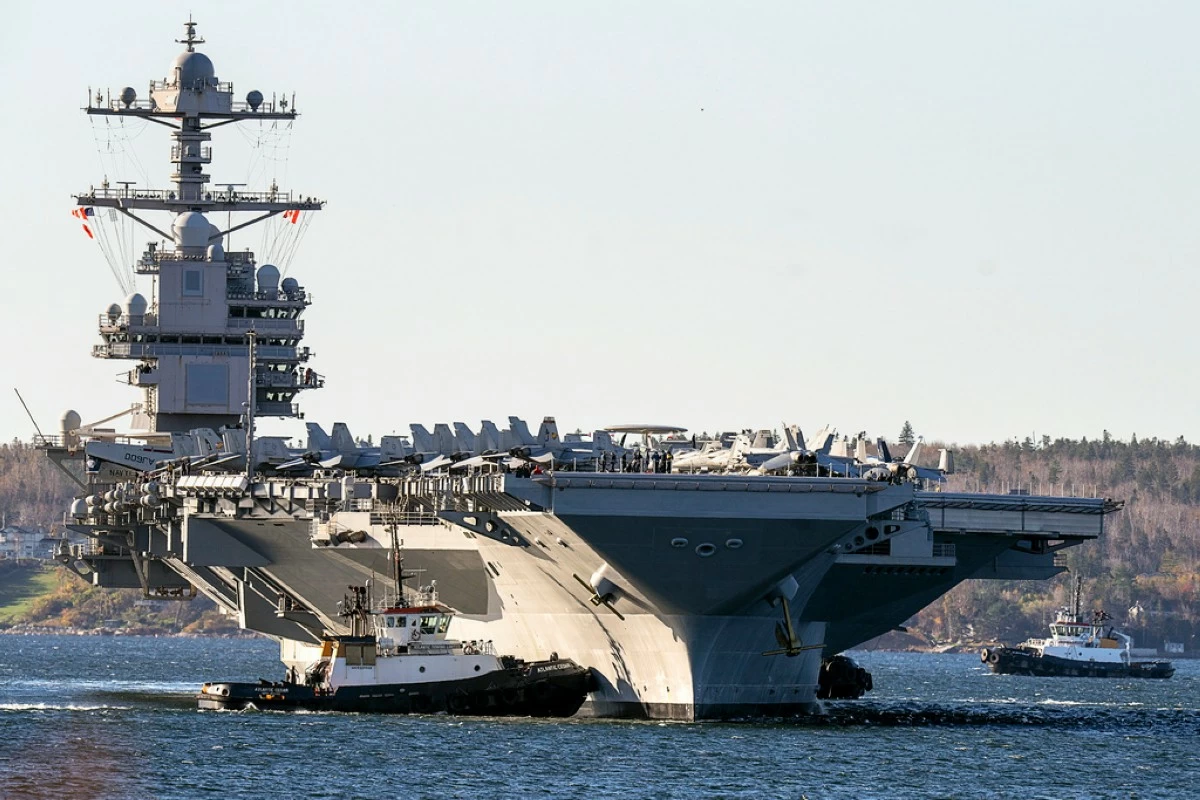
The USS Gerald R. Ford, arrives in Halifax, on Oct. 28, 2022. (Andrew Vaughan/The Canadian Press via AP, File)
NORFOLK, Va. (AP) — The United States' most advanced aircraft carrier leaves Virginia for a regularly scheduled deployment Tuesday that could position it near Israel after the U.S. inserted itself in Israel's war to destroy Iran's nuclear program.
The U.S. was already planning to deploy the USS Gerald R. Ford when American warplanes bombed three Iranian sites early Sunday to support Israel's goals. Iran retaliated with a limited missile attack on a U.S. military base in Qatar on Monday.
But later on Monday, President Donald Trump said on social media that Israel and Iran have agreed to a complete and total ceasefire to be phased in over 24 hours. Trump said on Truth Social that the ceasefire would bring an Official END to the war.
The Ford will sail for the European theater of command, which includes waters off Israel's Mediterranean coast. The presence of the aircraft carrier and its accompanying warships gives Trump the option of a third carrier group in the Middle East if needed. The U.S. has been shifting military aircraft and warships into and around the region to protect Israel from Iranian attacks.
Nearly 4,500 sailors will depart Tuesday morning from the nation's largest Navy base in Norfolk, which sits near the southern edge of Chesapeake Bay. The carrier strike group includes guided-missile destroyers and several squadrons of fighter jets.
The Ford is the first in the new Ford class of aircraft carriers, which use an electromagnetic system for launching planes instead of steam catapults to increase flying missions. The ships are also designed to carry a wider variety of planes and operate with several hundred fewer sailors.
The Ford was previously sent to the Eastern Mediterranean to be within striking distance of Israel after Hamas' Oct. 7 attacks in 2023. The carrier stayed in the Eastern Mediterranean while its accompanying warships sailed into the Red Sea, where they repeatedly intercepted ballistic missiles fired at Israel and attack drones fired at the ships from Houthi-controlled Yemen.
From November 2023 until January 2025, the Iranian-backed Houthis waged persistent missile and drone attacks against commercial and military ships in the region in what the group's leadership described as an effort to end Israel's war against Hamas in the Gaza Strip. The U.S.-led campaign against the rebels included Navy fighter jets and turned into the most intense running sea battle the Navy has faced since World War II.
U.S. Navy sailors saw incoming Houthi-launched missiles seconds before they were destroyed by their ship's defensive systems. Pentagon officials talked last year about how to care for the sailors when they returned home, including counseling and treatment for possible post-traumatic stress.
The Houthi rebels recently said they would resume attacks on U.S. vessels in the Red Sea if the Trump administration joined Israel's military campaign against Iran. The Houthis paused such attacks in May under a deal with the U.S.

Related Tags

WORLDNEWS Israel-Iran attacks
ADVERTISEMENT
.most-popular .layout-ratio{ padding-bottom: 79.13%; } @media (min-width: 768px) and (max-width: 1024px) { .widget-title { font-size: 15px !important; } }

{{ articles_filter_1561_widget.title }}

.most-popular .layout-ratio{ padding-bottom: 79.13%; } @media (min-width: 768px) and (max-width: 1024px) { .widget-title { font-size: 15px !important; } }

{{ articles_filter_1562_widget.title }}

.most-popular .layout-ratio{ padding-bottom: 79.13%; } @media (min-width: 768px) and (max-width: 1024px) { .widget-title { font-size: 15px !important; } }

{{ articles_filter_1563_widget.title }}

{{ articles_filter_1564_widget.title }}

.mb-article-details { position: relative; } .mb-article-details .article-body-preview, .mb-article-details .article-body-summary{ font-size: 17px; line-height: 30px; font-family: "Libre Caslon Text", serif; color: #000; } .mb-article-details .article-body-preview iframe , .mb-article-details .article-body-summary iframe{ width: 100%; margin: auto; } .read-more-background { background: linear-gradient(180deg, color(display-p3 1.000 1.000 1.000 / 0) 13.75%, color(display-p3 1.000 1.000 1.000 / 0.8) 30.79%, color(display-p3 1.000 1.000 1.000) 72.5%); position: absolute; height: 200px; width: 100%; bottom: 0; display: flex; justify-content: center; align-items: center; padding: 0; } .read-more-background a{ color: #000; } .read-more-btn { padding: 17px 45px; font-family: Inter; font-weight: 700; font-size: 18px; line-height: 16px; text-align: center; vertical-align: middle; border: 1px solid black; background-color: white; } .hidden { display: none; }
function initializeAllSwipers() { // Get all hidden inputs with cms_article_id document.querySelectorAll('[id^="cms_article_id_"]').forEach(function (input) { const cmsArticleId = input.value; const articleSelector = '#article-' + cmsArticleId + ' .body_images'; const swiperElement = document.querySelector(articleSelector); if (swiperElement && !swiperElement.classList.contains('swiper-initialized')) { new Swiper(articleSelector, { loop: true, pagination: false, navigation: { nextEl: '#article-' + cmsArticleId + ' .swiper-button-next', prevEl: '#article-' + cmsArticleId + ' .swiper-button-prev', }, }); } }); } setTimeout(initializeAllSwipers, 3000); const intersectionObserver = new IntersectionObserver( (entries) => { entries.forEach((entry) => { if (entry.isIntersecting) { const newUrl = entry.target.getAttribute("data-url"); if (newUrl) { history.pushState(null, null, newUrl); let article = entry.target; // Extract metadata const author = article.querySelector('.author-section').textContent.replace('By', '').trim(); const section = article.querySelector('.section-info ').textContent.replace(' ', ' '); const title = article.querySelector('.article-title h1').textContent; // Parse URL for Chartbeat path format const parsedUrl = new URL(newUrl, window.location.origin); const cleanUrl = parsedUrl.host + parsedUrl.pathname; // Update Chartbeat configuration if (typeof window._sf_async_config !== 'undefined') { window._sf_async_config.path = cleanUrl; window._sf_async_config.sections = section; window._sf_async_config.authors = author; } // Track virtual page view with Chartbeat if (typeof pSUPERFLY !== 'undefined' && typeof pSUPERFLY.virtualPage === 'function') { try { pSUPERFLY.virtualPage({ path: cleanUrl, title: title, sections: section, authors: author }); } catch (error) { console.error('ping error', error); } } // Optional: Update document title if (title && title !== document.title) { document.title = title; } } } }); }, { threshold: 0.1 } ); function showArticleBody(button) { const article = button.closest("article"); const summary = article.querySelector(".article-body-summary"); const body = article.querySelector(".article-body-preview"); const readMoreSection = article.querySelector(".read-more-background"); // Hide summary and read-more section summary.style.display = "none"; readMoreSection.style.display = "none"; // Show the full article body body.classList.remove("hidden"); } document.addEventListener("DOMContentLoaded", () => { let loadCount = 0; // Track how many times articles are loaded const offset = [1, 2, 3, 4, 5, 6, 7, 8, 9, 10]; // Offset values const currentUrl = window.location.pathname.substring(1); let isLoading = false; // Prevent multiple calls if (!currentUrl) { console.log("Current URL is invalid."); return; } const sentinel = document.getElementById("load-more-sentinel"); if (!sentinel) { console.log("Sentinel element not found."); return; } function isSentinelVisible() { const rect = sentinel.getBoundingClientRect(); return ( rect.top < window.innerHeight && rect.bottom >= 0 ); } function onScroll() { if (isLoading) return; if (isSentinelVisible()) { if (loadCount >= offset.length) { console.log("Maximum load attempts reached."); window.removeEventListener("scroll", onScroll); return; } isLoading = true; const currentOffset = offset[loadCount]; window.loadMoreItems().then(() => { let article = document.querySelector('#widget_1690 > div:nth-last-of-type(2) article'); intersectionObserver.observe(article) loadCount++; }).catch(error => { console.error("Error loading more items:", error); }).finally(() => { isLoading = false; }); } } window.addEventListener("scroll", onScroll); });

Sign up by email to receive news.