






Manila Bulletin
 Business
Trade & Industry
Tax perks for electric vehicle makers poised to attract ₱120 billion in investments, says DTI
Business
Trade & Industry
Tax perks for electric vehicle makers poised to attract ₱120 billion in investments, says DTI
Business
Trade & Industry
Tax perks for electric vehicle makers poised to attract ₱120 billion in investments, says DTI
Tax perks for electric vehicle makers poised to attract ₱120 billion in investments, says DTI
Published Jun 23, 2025 03:08 pm


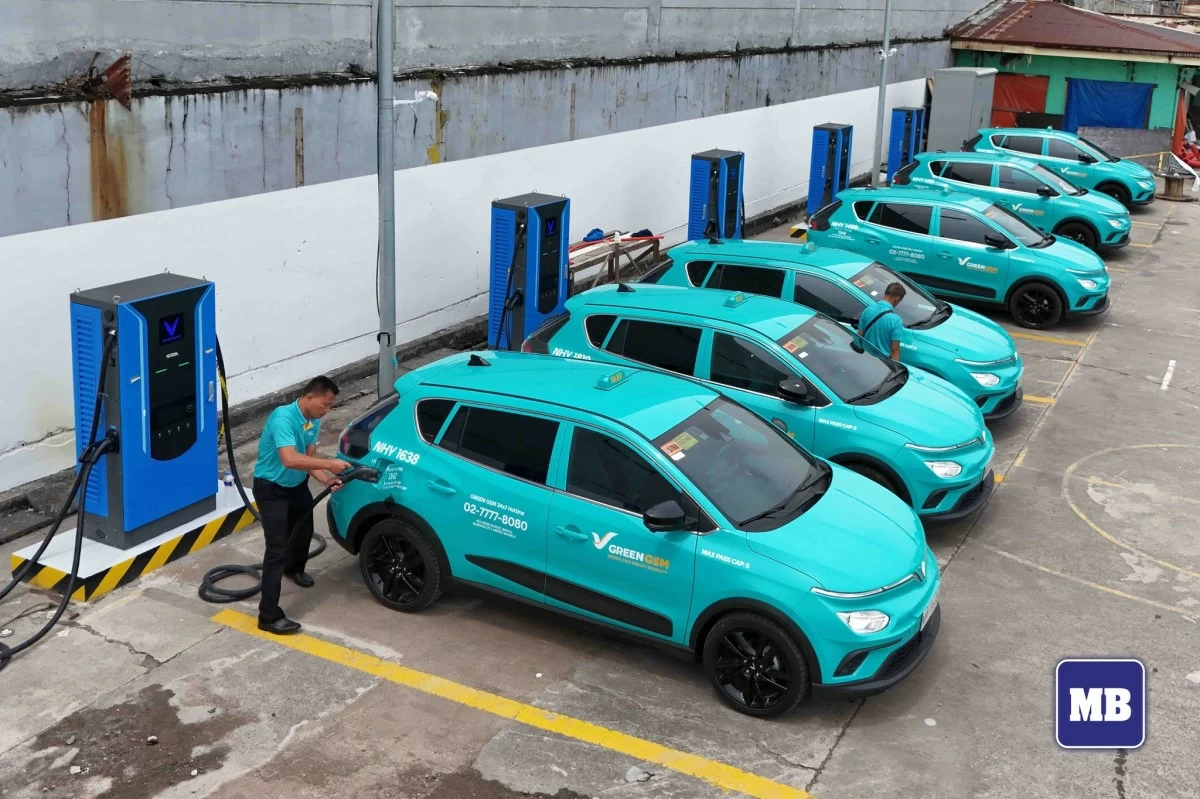
(Santi San Juan/MANILA BULLETIN)
The Department of Trade and Industry (DTI) is now awaiting the approval of the Fiscal Incentives Review Board (FIRB) for the government’s new incentives program for domestic electric vehicle (EV) manufacturing, which is poised to attract ₱120 billion in capital investments.
In a statement, DTI Secretary Cristina Roque said she has approved and transmitted to the FIRB the EV incentive strategy (EVIS) and its proposed incentives.
As mandated under Republic Act (RA) No. 11697 or the Electric Vehicle Industry Development Act (EVIDA), the DTI, through the Board of Investments (BOI), is tasked to recommend an EVIS to the FIRB for approval.
EVIS is part of the comprehensive roadmap for the EV Industry, which also focuses on the establishment of charging stations and other support infrastructure, as well as human resource (HR) development and research and development (R&D).
Under the strategy, the government seeks to narrow the cost gap between EVs and traditional motor vehicles to encourage the transition to EVs.
The government is keen on leveraging time-bound, targeted, performance-based, and transparent fiscal and non-fiscal support to attract EV and EV parts manufacturing into the country.
Specifically, it is targeting companies involved in electronic components and other strategic parts, battery production, charging station development, and the establishment of testing facilities.
The DTI said the incentive scheme supports both capital investment and sustained production.
Roque said EVIS is targeting “ambitious yet attainable” production targets from 2028 to 2040, including supporting the local rollout of up to nine million EVs such as two- and three-wheelers, passenger cars, buses, and trucks, along with nearly 400,000 charging stations.
Aside from potentially attracting ₱120 billion in capital investments, she said EVIS will spur job creation across the country to the tune of 680,000 jobs.
Roque claimed that the influx of new investments and jobs will generate up to ₱11.4 trillion in economic output.
She added that EVIS is expected to boost the government’s tax revenue by ₱400 billion and save the country up to $30 billion in foreign exchange (forex) by reducing dependence on imported vehicles and parts.
“President Ferdinand Marcos Jr. has made it clear: economic transformation must be felt by every Filipino. The EVIS is our concrete response—laying the foundation for a strong, inclusive EV industry that empowers our workers, strengthens local manufacturing, and delivers lasting opportunities for communities nationwide,” said Roque.
Under EVIS, participating companies must meet Philippine and international standards, provide long-term after-sales support, and submit investment plans vetted by the BOI.
The FIRB is scheduled to deliberate on EVIS next month.
This year, EVs are cited as one of the top sales trends in the local auto industry by the Chamber of Automotive Manufacturers of the Philippines Inc. (CAMPI).
Based on CAMPI data, 10,433 units of EVs have been sold as of May. This covers battery EVs, plug-in hybrid EVs, and hybrid EVs.