







Moral leadership
Published Jun 23, 2025 12:05 am
|
Updated Jun 22, 2025 03:58 pm


PEACE BY PEACE
(Part I)
In 2006, I was blessed to meet Dr. Albert C. Pierce at the Eisenhower Building at the National Defense University, Washington D.C. I was so interested to see him since my great interest from that time is to find a better leadership model that can transform our Philippine Military Academy (PMA) cadets into moral leaders of character. My position then was the Director of Army Ground Warfare Center and at the same time, the Assistant Commandant of Cadets at Philippine Military Academy.
Dr. Albert C. Pierce served as the founding director of the Center for the Study of Professional Military Ethics at US Naval Academy in Annapolis, Maryland. Earlier, I visited this center in Annapolis and the current Dean then told me, “Please look for Dr. Albert Pierce at NDU. He can help you in your Leadership Development Modelling Research.”
According to Dr. Pierce, his moral leadership theory is anchored in four abilities that organizations would develop in individuals:
Moral awareness: individuals need the ability to recognize the dimensions of what is morally right and morally wrong.
Moral reasoning: according to Pierce, once morals have been identified, people need to be able to think through the problem, project the consequences, and then decide what to do. “For him, ethics is not just about good vs evil but life is more complex than that.”
Moral courage: is the individual’s ability to overcome fear of the consequences of doing the right thing.
Moral Effectiveness: is the ability to persuade others and the organization to choose the most ethical decision and direction. Moral effectiveness can lead to the transformation of moral culture within the organization.
Dr. Pierce gave me the eight-page transcript of his concept. After more than three hours explaining, he told me, “Good luck in your future.”
It’s been 19 years since then, and I thought of him again when I started my preparations to teach 195 students of the Command and General Staff College (CGSC) of the AFP at Camp Aguinaldo.
I was invited as former AFP’s Chief-of-Staff to talk about “Public Service beyond the Service” to provide the students, who are mostly colonels, to serve the people even beyond the military career.
Following Dr. Pierce’s principles, I learned that to become an effective leader, there is transformation that occurs on four domains. These are namely the personal domain, interpersonal domain, organizational domain, and the societal and global domain.
First, in the personal domain — this is the domain of self-mastery and development. We transform ourselves by taking on opportunities and acquiring tools and skills to become skilled, productive leaders. we cannot affect meaningful change without working on ourselves at the individual level.
Second, in the interpersonal domain — we transform to develop social-awareness and social capital. Here, we place importance on the family as the smallest unit and building block of society. Let us keep in mind that our interpersonal relations like with family and community are integral to transformation and other critical reforms.
Third, in the organizational domain — we create conditions that strengthen structures and organizations geared for good governance, participation, transparency.
Fourth, in the societal and global domain — we carry out interventions that cover justice, socio-economic development and public service for the common good.
This is the same principle we use in our peaceworks at the Office of the Presidential Adviser on Peace, Reconciliation and Unity to genuinely transform the minds and lives of former combatants, their families and communities and ensure resilience and the non-recurrence of armed conflict and violence in Philippine society.
In my next column, I will delve more on these principles and how they help in our normalization and transformation programs to former rebels as part of the healing and reconciliation process of the various peace agreements that the government under the Marcos administration is implementing.
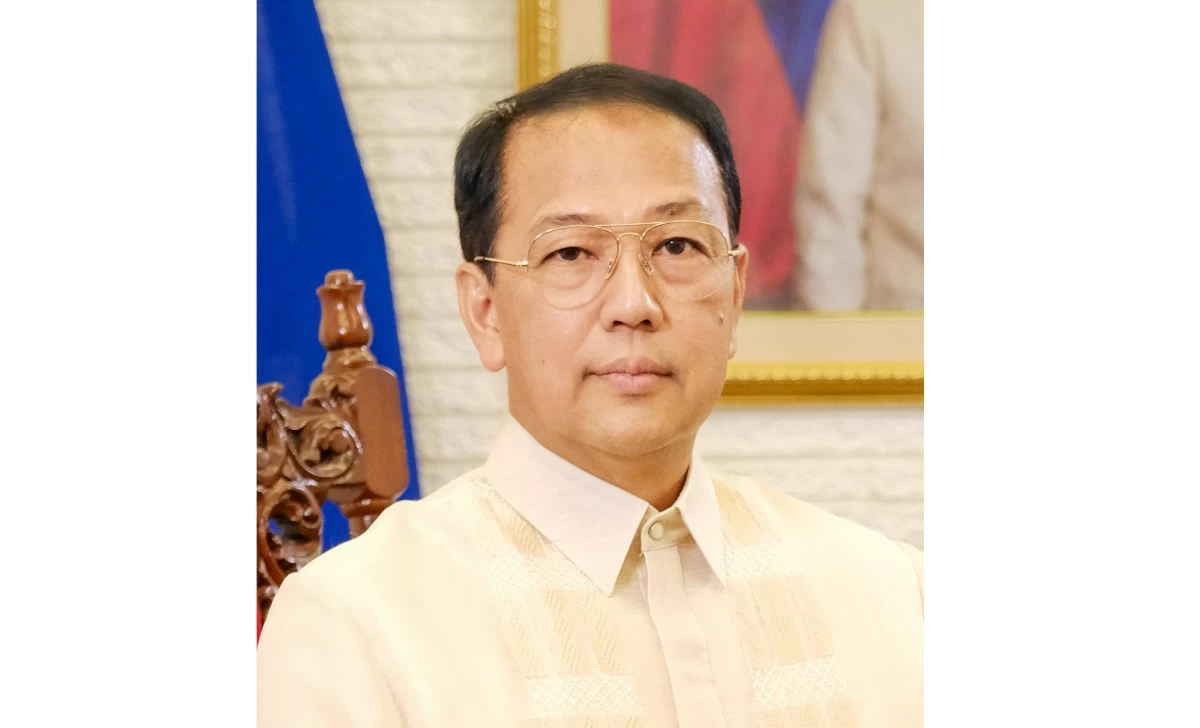
(Secretary Carlito G. Galvez, Jr., is the presidential adviser on peace, reconciliation and unity.)