






Manila Bulletin
 Business
Trade & Industry
JTI Philippines wants to produce 'reduced-risk' products at Batangas factory, eyes more export markets
Business
Trade & Industry
JTI Philippines wants to produce 'reduced-risk' products at Batangas factory, eyes more export markets
Business
Trade & Industry
JTI Philippines wants to produce 'reduced-risk' products at Batangas factory, eyes more export markets
JTI Philippines wants to produce 'reduced-risk' products at Batangas factory, eyes more export markets
Published Jun 23, 2025 12:00 am
|
Updated Jun 21, 2025 03:58 pm


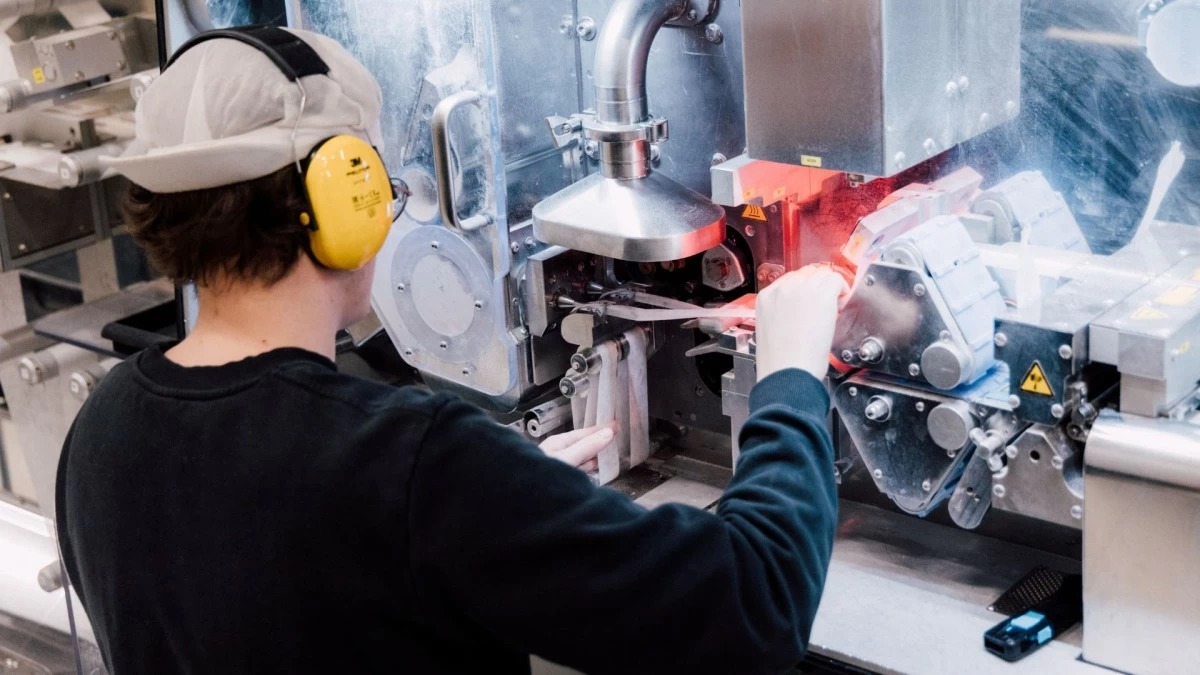
In Vargarda, Sweden, a skilled factory worker meticulously oversees the production of JTI's Nordic Spirit nicotine pouches. This precise manufacturing process ensures the high quality of this tobacco-free oral nicotine product
The Philippine unit of global tobacco giant JT International (JTI) is eyeing further expansion to potentially manufacture reduced-risk products (RRPs) at its Batangas factory for export to more markets in the region and beyond.
At present, the state-of-the-art manufacturing facility in Malvar, Batangas—which churns out traditional cigarettes—exports to at least 17 countries, mostly in Asia-Pacific, noted JTI Philippines general manager Guilherme Silva in a television interview last Friday, June 20.
Since this factory was established in 2016, it already undertook several rounds of capacity upgrades and improvements to better serve both the domestic and export markets, Silva said.
“We continue to invest in skilled production,” he said.
As for future expansion, Silva said that “when it comes to the factory, we’re really dependent on the evolution of the markets that we serve across Asia.”
“These new categories of RRPs are becoming more and more important, not only in the Philippines but also across different markets in the Asia-Pacific region. We’re definitely exploring which of these categories could we produce from the Philippines, [and] how can we export them,” Silva disclosed.
On top of possibly expanding the product line-up at its Batangas facility, JTI Philippines is also on the lookout for potential new export destinations.
“It’s a factory that has a huge footprint, but also that still has a lot of space to be increased,” Silva said.
In November last year, JTI Philippines launched the innovative heated-tobacco product Ploom X Advanced in the country, eyeing to replicate its massive success in the Japanese market.
Back then, JTI Philippines said it recognizes the “significance” of the expanding heated-tobacco product category locally, which Ploom X Advanced aims to satisfy.
In a briefing with foreign journalists in Tokyo, Japan, last November, Japan Tobacco (JT) officials mentioned that the company has no plans back then to produce Ploom’s tobacco sticks in any new location besides the existing factories in Japan and Poland.
Still, JT is not closing its doors on further Ploom manufacturing expansion in the future, especially amid a rosier outlook for heated tobacco than combustibles.
Based on JT’s midterm growth projections, heated-tobacco products like Ploom would have bigger sales than traditional cigarettes by 2035.
The global tobacco industry’s overall sales volume is seen declining by an average of one percent yearly during the period 2022 to 2035, as combustibles would drop by a faster 2.5 percent.
RRPs and the heated-tobacco segment, in particular, will nonetheless keep the industry afloat with a projected about eight-percent annual growth in the same period, based on JT estimates.