






The negotiations and discussions involving the Reciprocal Access Agreement (RAA), the Acquisition and Cross-Servicing Agreement (ACSA), and the Agreement on the Security of Information will take the partnership of the Philippines and Japan to a “higher level” as both countries aim to ensure the security of the Indo-Pacific region, Japanese Ambassador to the Philippines Endo Kazuya said.
Manila Bulletin
 Philippines
National
Japan's key agreements with PH to take partnership to 'higher level'—envoy
Philippines
National
Japan's key agreements with PH to take partnership to 'higher level'—envoy
Philippines
National
Japan's key agreements with PH to take partnership to 'higher level'—envoy
Japan's key agreements with PH to take partnership to 'higher level'—envoy
Published Jun 23, 2025 10:40 pm


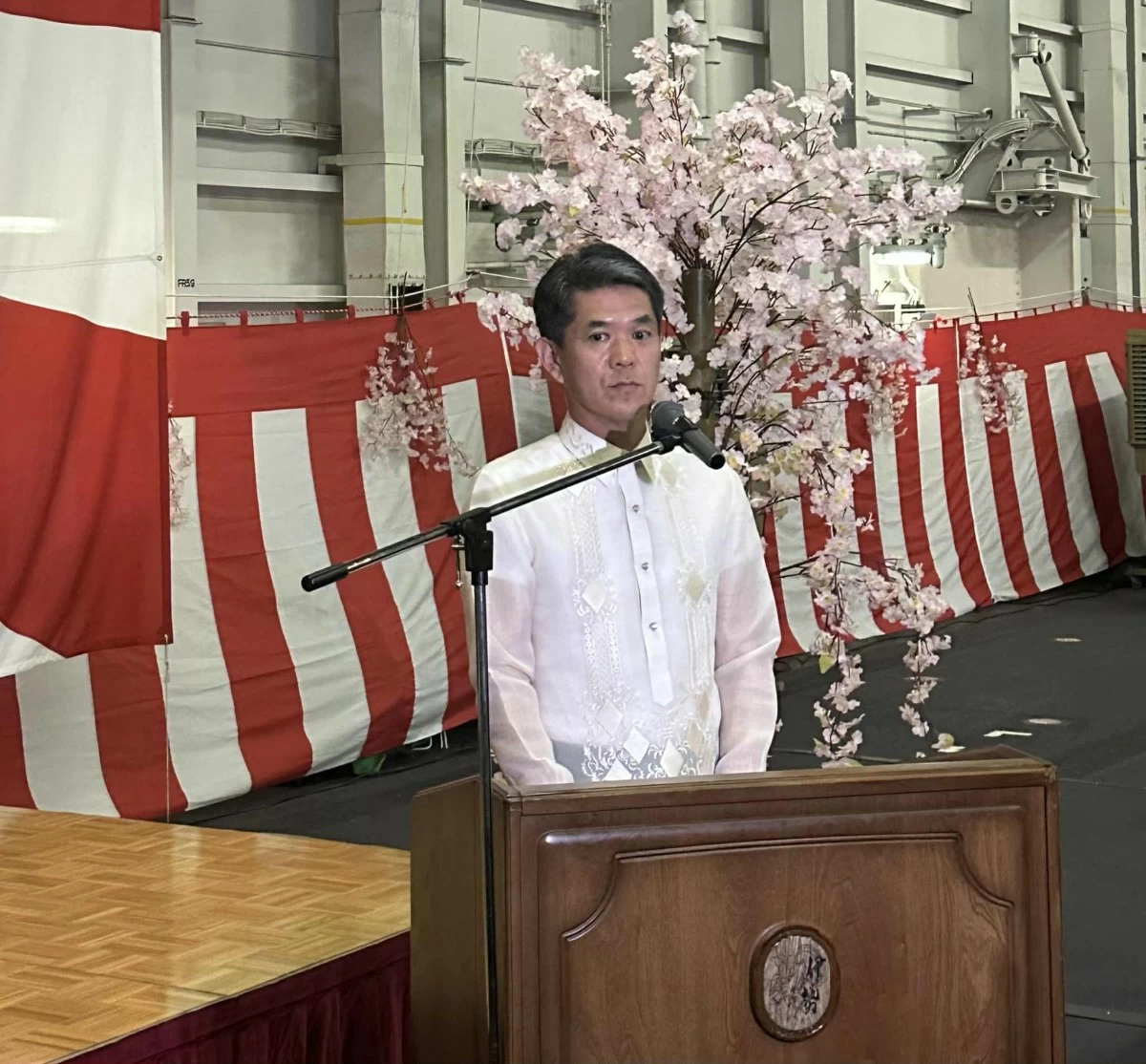
Japanese Ambassador to the Philippines Endo Kazuya speaks to reporters during a media interview aboard the JS IDE (DDH-182), a Hyuga-class helicopter destroyer that is docked at the Port of Manila, on Monday, June 23, 2025. (Raymund Antonio/MANILA BULLETIN)
Speaking onboard the JS ISE (DDH-182), a Japan Maritime Self-Defense Force (JMSDF) vessel, on Monday night, June 23, the ambassador didn’t give specific details regarding the RAA after its ratification before the Japanese Diet, but stressed that the two countries are now on the “golden age” of their relationship.
“As I mentioned, the implementation of the Japan-Philippines RAA is expected to further promote security and defense cooperation between Japan and the Philippines and to further support peace and stability in the Indo-Pacific region,” he told reporters.
“Negotiations, as I mentioned, are now underway for ACSA and the discussions for security of information is also undergoing and the frameworks for legal and operational foundation will further our defense partnership,” he added.
While he took note of how the RAA will bring the security and defense cooperation of the two countries “to a higher level” and will facilitate joint training and other activities, he also stressed that “specific plans” would need to be discussed separately and after the ratification of the RAA.
Aside from ACSA and the security of information agreement that will allow both nations to share classified information with each other, Endo also underscored Japan’s “commitment to you to forging the continued modernization of the Armed Forces of the Philippines through the transfer of defense equipment and the utilization of Japan’s official security assistance.”
“In light of the changing security environment, Japan intensely further strengthened cooperation with like-minded countries including the Philippines, which is the strategic partner of Japan,” he said.
The envoy’s speech onboard the JS ISE is part of the reception for the 71st anniversary of the Japan Self-Defense Forces (JSDF), which brought its JMSDF vessels, the JS ISE and the JS Suzunami, at the Port of Manila last June 21.
The deployment is part of the Indo-Pacific Deployment 2025 (IPD25), which aims to promote regional security and cooperation by conducting joint training exercises with naval forces across the Indo-Pacific region.
|
|
“These engagements serve to enhance the tactical capabilities of the JMSDF, foster mutual understanding and trust among participating navies, and deepen multilateral defense cooperation. Such initiatives reflect Japan’s continued commitment to maintaining peace, stability, and a rules-based maritime order in the Indo-Pacific region,” a statement from the Japanese Embassy in Manila said.
Rear Admiral Natsui Takashi, Commander of Escort Flotilla Four of the JMSDF, said during the welcome ceremony on June 21 that the port calls—the third in Manila this year—envisions a free, open, and prosperous Indo-Pacific.
“The Indo-Pacific region, including this Manila, is at the center of the world vitality, home to more than half of the world’s population. Realizing the stable and autonomous development is crucial for the stability and prosperity in the region,” he added.
Under the program, navies and maritime officers from 19 countries from the Association of Southeast Asian Nations (ASEAN), Timor-Leste, and Pacific Island countries undertook various exercises, cultivated friendship, and built network.