






Manila Bulletin
 Philippines
National
DMW: Total OFW deployment ban to Israel, Iran as alert level raised
Philippines
National
DMW: Total OFW deployment ban to Israel, Iran as alert level raised
Philippines
National
DMW: Total OFW deployment ban to Israel, Iran as alert level raised
DMW: Total OFW deployment ban to Israel, Iran as alert level raised
Published Jun 23, 2025 09:35 am


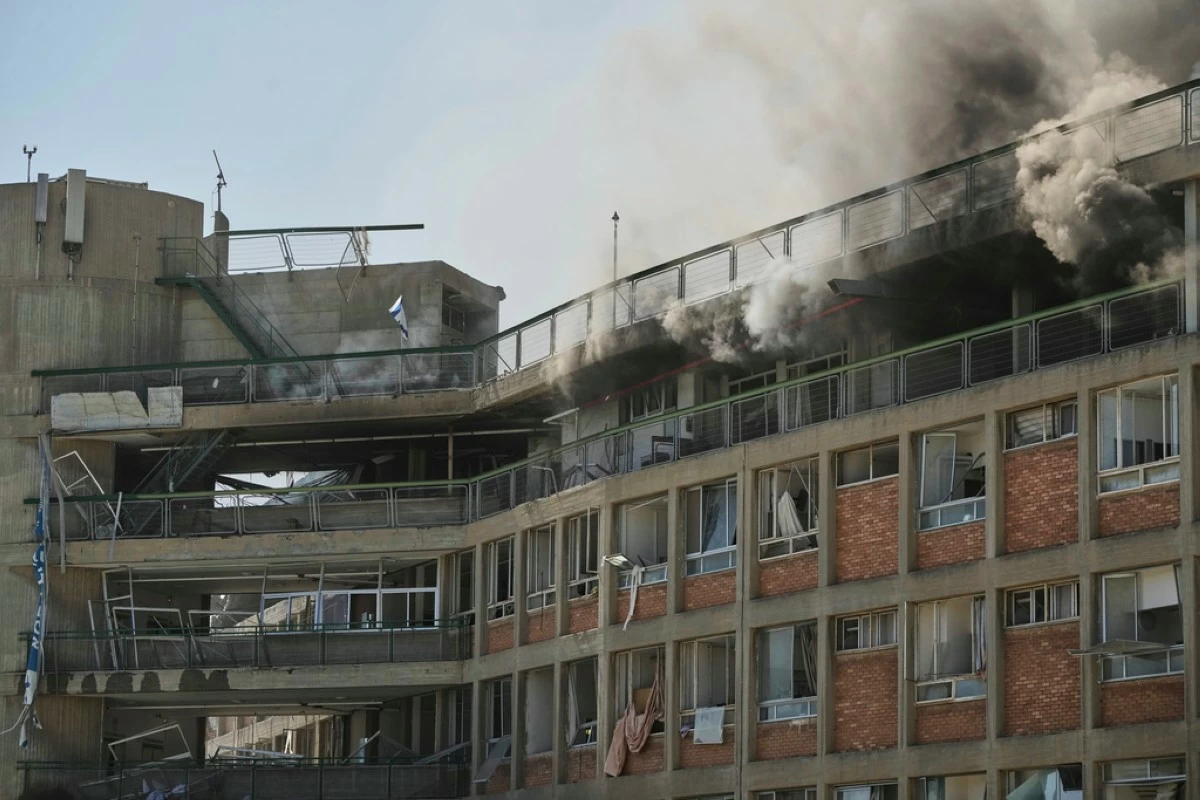
Smokes rises from a building of the Soroka hospital complex after it was hit by a missile fired from Iran in Beersheba, Israel, Thursday, June 19, 2025. (AP Photo/Leo Correa)
The Department of Migrant Workers (DMW) has advised private recruitment agencies of the total deployment ban of overseas Filipino workers (OFWs) to Israel and Iran amid the escalating air war between the two countries in the Middle East, which is seen to aggravate with the involvement of the United States in the recent bomb attacks.
DMW Secretary Hans Leo Cacdac said the OFW deployment ban to Israel and Iran, which include new hires and returning workers, comes with the declaration of Alert Level 3 by the Department of Foreign Affairs over the two countries.
“We took note of that and of course, if its Alert Level 3 that would mean total deployment ban,” said Cacdac in a press briefing on Sunday night, June 23.
Prior to the declaration of Alert Level 3, he said they already issued advisory on all private recruitment agencies to delay the deployment of their processed Filipino workers to conflict-affected countries in the Middle East to ensure their safety.
Israel was then under Alert Level 2, which means that only returning workers with valid contracts are allowed. But even those OFWs were not able proceed due to airspace closures amid the ongoing tensions in the region.
As of June 19, a total of 58 stranded OFWs — including 43 bound for Israel and 15 for Jordan — have been assisted by DMW’s Migrant Workers Offices (MWOs) in Dubai and Abu Dhabi for repatriation.
“With the alert level, we will issue the corresponding notice to all about the total deployment ban for Israel and Iran,” said Cacdac.
There are around 30,000 OFWs in Israel and around 30 Filipino workers in Israel and on Sunday night, Cacdac announced that they have already secured 26 OFWs from Israel who earlier signified to be repatriated.
They are expected to arrive in the country on Tuesday, June 24.
He said 33 more OFWs are expected to arrive from Israel to Jordan through a safe passageway and another repatriation flight will be arranged for them.
But Cacdac said they expect that the number of Filipinos who expressed interest to go back to the Philippines will continue to rise in the coming days amid the worsening security situation after the US bombing on Iran’s nuclear facilities.
From 85 OFWs in the first few days since the June 13 air assault of Israel on Iran, Cacdac said the number of OFWs who signified interest to go back to the Philippines has now reached 223, the increase was recorded in the past few days.
National reintegration
President Marcos earlier ordered the establishment of National Reintegration Network (NRN) to assist overseas Filipino workers (OFWs) caught in the escalating tension in the Middle East.
Cacdac said the NRN for OFWs and their families, consisting of various government agencies, has been mobilized for comprehensive reintegration support to OFWs who have availed themselves of the government’s voluntary repatriation program.
The DMW is still on voluntary repatriation mode, in which Cacdac reiterates his call for OFWs to avail the government’s repatriation services.
He said OFWs who will avail of the repatriation program of the government will be given financial assistance under Aksyon Fund worth P75,000 each and another P75,000 from OWWA Emergency Repatriation Fund, to mitigate their loss of income and livelihood.
Other members of NRN are set to give other forms of assistance including skills training voucher from the Technical Education and Skills Development Authority (TESDA), business opportunities from the Department of Trade and Industry (DTI), medical assistance from the Department of Health (DOH), and other assistance from the Department of Agriculture, Department of Social Welfare and Development, and Department of Science and Technology.
Cacdac said the DMW and OWWA are currently on the lookout for Filipinos who are displaced or have lost their homes as reported by the Philippine Embassy.
The Philippine government is currently looking at six areas badly hit by the missile attacks: Rehovot, Benie Brak and Yehuda, and three more areas.