







US strikes 3 Iranian nuclear sites
PH adopts 'One Country Team' approach to crisis; at least 8 Filipinos injured
Published Jun 22, 2025 02:42 pm


DUBAI, United Arab Emirates — The United States attacked three sites in Iran early Sunday, inserting itself into Israel's war aimed at destroying the country's nuclear program in a risky gambit to weaken a long-time foe that prompted fears of a wider regional conflict.
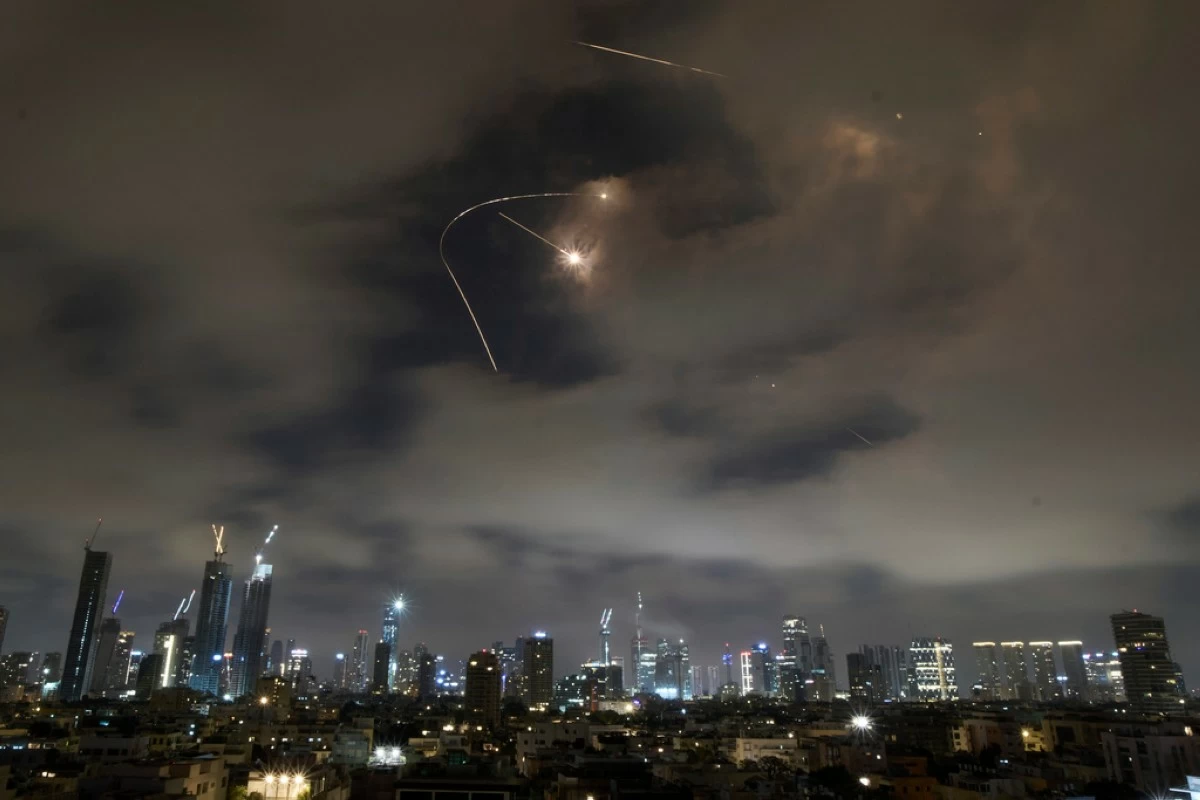
Israeli air defense system fires to intercept missiles during an Iranian attack over Tel Aviv, Israel, Saturday, June 21, 2025. (AP Photo/Leo Correa)
Addressing the nation from the White House, President Donald Trump asserted that Iran's key nuclear sites were completely and fully obliterated. There was no independent damage assessment.
Injured Filipinos
The Philippine government, through its missions in the affected areas, has adopted a unified response under the “One Country Team” approach, as the number of Filipinos injured by Iranian retaliatory missile attacks on Israel rose to eight.
Department of Foreign Affairs (DFA) Undersecretary Eduardo de Vega assured that agency personnel have adopted a “whole-of-government” approach and that the DFA had called for the de-escalation of tension and “return to the path of peace to protect our millions of kababayans in the region.”
The Philippine Embassy in Tel Aviv said that one Filipino who had “severe and life-threatening injuries” remains in critical condition, while another suffered from moderate to serious injuries and had been discharged and six already discharged from the hospital after receiving treatment for minor injuries.
The embassy shared that the Filipina in critical condition “underwent a major pulmonary surgery at Shamir Medical Center, one of Israel's most advanced hospitals,” but “she is still in the ICU and will need to undergo another surgery once stable.”
The now 10-day exchange of missiles between Israel and Iran also displaced 88 Filipinos since their homes were either hit or indirectly impacted by the attacks.
“They are currently being housed in temporary accommodations,” the embassy assured.
With crisis alert level 3 raised in both Israel and Iran, the embassy has received at least 223 initial requests for repatriation from Israel. However, only 26 of this number have confirmed and are now being processed for repatriation this week.
They will be crossing the King Hussein Border in Jordan, from where they can take flights back to Manila either via Dubai or Qatar.
The Philippine Embassy in Amman, in a separate statement, said it already welcomed a total of six Filipinos—one engineer on June 18 and four tourists and one worker on June 19–who crossed the Jordanian border.
There are no reports yet of Filipinos injured in the Iranian nuclear sites earlier bombed by the United States, DFA Assistant Secretary Robert Ferrer of the Office of Migrant Affairs said yesterday.
“Wala po akong information kung may Filipinos doon (I don’t have information yet if there are Filipinos there) but we already forewarned our kababayan (countrymen) to stay away from Iranian facilities just to be sure,” the official said in an interview over DZBB.
Similar to Israel, Iranian airspace is also closed, so Filipinos wanting to leave the Middle East country would need to cross the border to Turkmenistan, which is around 12 hours away by car.
Out of the 1,180 Filipinos in Iran, only nine have signified their intent to be repatriated after the Philippine government raised alert level 3 there and in Israel.
According to Ferrer, most of the Filipinos in Iran are Filipinas married to Iranian nationals.
“Because they are at home in Iran and Israel. In Iran, they are married to Iranian men, many of them. And many of them have established roots in Iran,” he shared.
The official added that going back to the Philippines is not the “immediate reaction” of Filipinos living and working abroad.
“First, they want to earn. So, in Israel, for example, the minimum salary there is $1,600 a month. They don't want to give that up,” Ferrer explained.
“So, it's not that easy. Ito po yung tinatawag nating diaspora natin. Yung diaspora natin, hindi sila madaling hikayatin (This is what we call diaspora. Our diaspora, they are not easy to persuade [to be repatriated]),” he said.
Filipinos abroad, the official noted, “are always looking to the host country to protect them,” something that both the foreign ministries of Iran and Israel “have committed to protect our nationals and treat our nationals the same way they would treat Iranian citizens and Israeli citizens.”
No radioactive contamination
The Atomic Energy Organization of Iran confirmed that attacks took place on its Fordo, Isfahan and Natanz sites, but it insisted that its nuclear program will not be stopped. Iran and the U.N. nuclear watchdog said there were no signs of radioactive contamination at the three locations.
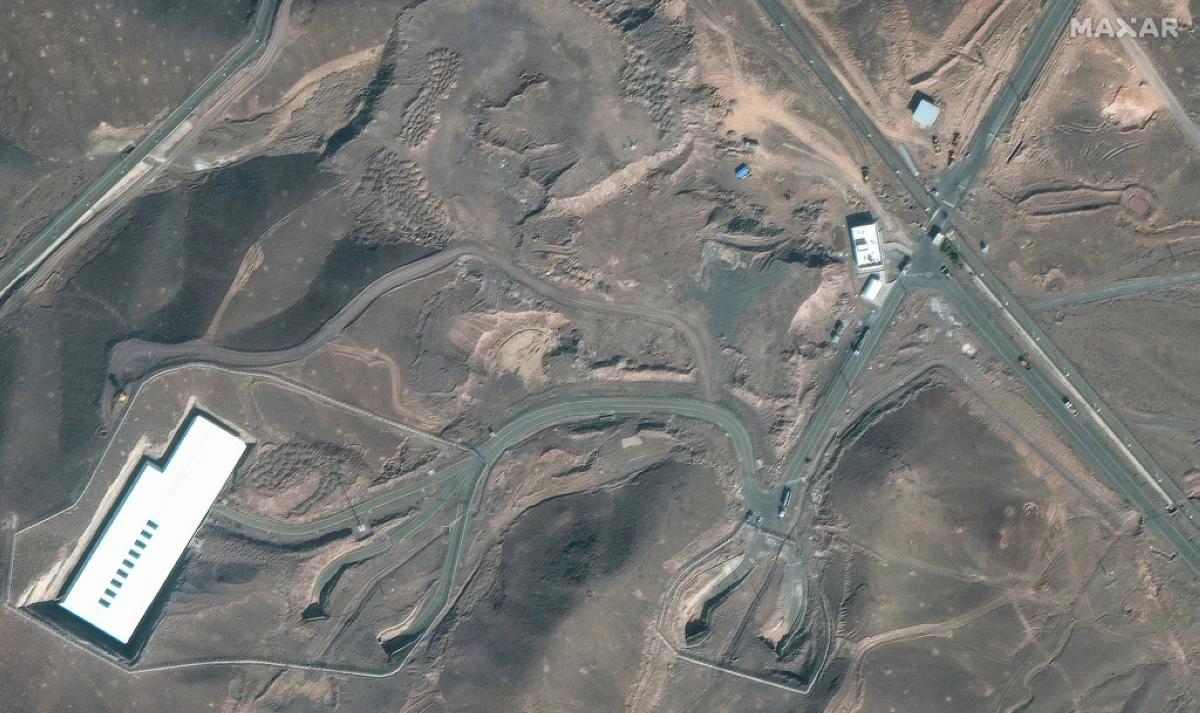
This satellite image provided by Maxar Technologies shows vehicles at the Fordo enrichment facility in Iran on Friday, June 20, 2025. (Maxar Technologies via AP)
It was not clear whether the U.S. would continue attacking Iran alongside its ally Israel, which has been engaged in a war with Iran for nine days. Trump acted without congressional authorization, and he warned that there would be additional strikes if Tehran retaliated against U.S. forces.
There will either be peace or there will be tragedy for Iran, he said.
Iran's top diplomat, Foreign Minister Abbas Araghchi, warned in a post on X that the U.S. attacks will have everlasting consequences and that Tehran reserves all options to retaliate.
Hours later, Iranian missiles struck areas in northern and central Israel, according to an Israeli rescue service. United Hatzalah said it was dispatching first responders, but there was no immediate word on casualties or damage.
US helped Israel strike Iran's toughest nuclear site
Iran has maintained that its nuclear program is for peaceful purposes only, and U.S. intelligence agencies have assessed that Tehran is not actively pursuing a bomb. However, Trump and Israeli leaders have claimed that Iran could quickly assemble a nuclear weapon, making it an imminent threat.
The decision to directly involve the U.S. in the war comes after more than a week of strikes by Israel that significantly degraded Iran's air defenses and offensive missile capabilities, and damaged its nuclear enrichment facilities. But U.S. and Israeli officials have said American B-2 stealth bombers and the 30,000-pound (13,500-kilogram) bunker-buster bomb that only they have been configured to carry offered the best chance of destroying heavily fortified sites connected to the Iranian nuclear program buried deep underground.
Trump appears to have made the calculation — at the prodding of Israeli officials and many Republican lawmakers — that Israel's operation had softened the ground and presented a perhaps unparalleled opportunity to set back Iran's nuclear program, perhaps permanently.
We have completed our very successful attack on the three Nuclear sites in Iran, including Fordow, Natanz, and Esfahan, Trump said in a post on social media, using common alternate spellings for two of the sites. All planes are now outside of Iran's space. A full payload of BOMBS was dropped on the primary site, Fordow. All planes are safely on their way home.
Trump added in a later post: This is an HISTORIC MOMENT FOR THE UNITED STATES OF AMERICA, ISRAEL, AND THE WORLD. IRAN MUST NOW AGREE TO END THIS WAR. THANK YOU!
Israel announced Sunday that it had closed its airspace to both inbound and outbound flights in the wake of the U.S. attacks.
The White House and Pentagon did not immediately elaborate on the operation. U.S. military leaders are scheduled to provide a briefing at 8 a.m. Eastern.
The attack used bunker-buster bombs on Iran's Fordo nuclear fuel enrichment plant that is built deep into a mountain, a U.S. official said. The weapons are designed to penetrate the ground before exploding. The official spoke on condition of anonymity to discuss military operations.
In addition, U.S. submarines launched about 30 Tomahawk missiles, according to another U.S. official who also spoke on condition of anonymity.
The International Atomic Energy Agency wrote on X that there has been no increase in off-site radiation levels after the strikes.
The IAEA can confirm that no increase in off-site radiation levels has been reported as of this time, it said. The IAEA will provide further assessments on the situation in Iran as more information becomes available.
Israeli Prime Minister Benjamin Netanyahu praised Trump's decision to attack in a video message directed at the American president.
Your bold decision to target Iran's nuclear facilities, with the awesome and righteous might of the United States, will change history, he said. Netanyahu said the U.S. has done what no other country on earth could do.
The military showdown with Iran comes seven years after Trump withdrew the U.S. from the Obama-administration brokered agreement in 2018, calling it the worst deal ever.
Fears of a broader war
U.N. Secretary-General Antonio Guterres said he was gravely alarmed by the dangerous escalation of American strikes.
There is a growing risk that this conflict could rapidly get out of control — with catastrophic consequences for civilians, the region and the world, he said in a statement.
Iranian-backed Houthi rebels in Yemen said they would resume attacks on U.S. vessels in the Red Sea if the Trump administration joined Israel's military campaign. The Houthis paused such attacks in May under a deal with the U.S.
Iran's Supreme Leader Ayatollah Ali Khamenei warned the United States on Wednesday that strikes targeting the Islamic Republic will result in irreparable damage for them. And Iranian Foreign Ministry spokesman Esmail Baghaei declared any American intervention would be a recipe for an all-out war in the region.
The Israeli military said Saturday it was preparing for the possibility of a lengthy war, while Iran's foreign minister warned before the U.S. attack that American military involvement would be very, very dangerous for everyone.
Israeli strikes on Iran have killed at least 865 people and wounded 3,396 others, according to the Washington-based group Human Rights Activists. The group said of those dead, it identified 363 civilians and 215 security force personnel.
Trump's decision for direct U.S. military intervention comes after his administration made an unsuccessful two-month push — including high-level, direct negotiations with the Iranians — aimed at persuading Tehran to curb its nuclear program.
‘One Country Team’ approach
“In anticipation of the arrival of more Filipino nationals through the Jordan-Israel border in the coming days, The Philippine Embassy in Amman is making necessary preparations for the next group of Overseas Filipino Workers (OFWs) set to cross. Ocular inspections of the border are currently being conducted,” the statement read.
In another statement, the embassy said that Philippine Ambassador to Jordan Wilfredo Santos activated the embassy’s Crisis Management Team (CMT) on Saturday, in response to the designation of Jordan as the primary exit point for Filipinos evacuating from Israel.
“The Philippine Embassy in Amman and the Migrant Workers Office in Jordan stand fully prepared to assist Filipinos and to provide all necessary support and repatriation assistance in line with the directive of President Ferdinand R. Marcos Jr. under Bagong Pilipinas,” Santos said as he and Labor Attaché Armi Evangel Peña called on embassy staff to adopt a unified response under the “One Country Team” approach.
De Vega underscored the importance of having “good relations with all the people in the Middle East” and expressed his gratitude to Jordan “which has been very generous to us, not prohibiting Filipinos from crossing over so that we can go home from Amman.”
He shared that no Filipino has been reported hurt in Iran as opposed to Israel because Israelis “know what their target is.”
“They know, very specific. The only casualties in Iran were deliberate,” De Vega furthered.
Most of the 1,180 Filipinos in Iran are residents and married to Iranian nationals, with only a handful of Filipinos who expressed their interest to be repatriated.
'No need to panic'
Despite raising alert level 3 in Israel, Ferrer said there’s no need for the public to panic.
Reading a message from Philippine Ambassador to Israel Aileen Mendiola-Rau, the DFA official said that there is currently no widespread disorder in Israel and that all essential services are still working, with the Israel Defense Forces (IDF) Homefront Command bringing down its security guidelines from “essential only” to “limited activity.”
“Bukas ang mga tanggapang naghahatid ng mahahalagang serbisyo. Bukas ang mga pamilihan ng pagkain at mahalagang pangangailangan, sapat ang kuryente, tubig at gasolina. Sa Israel, walang patid ang internet, telepono at iba pang utilities (Offices delivering essential services are open. Markets and other stores of basic needs are open, power supply, water, and fuel are sufficient. In Israel, internet connectivity, telephone, and other utilities are stable),” he quoted.
“Panatag at mahinahon naman ang mga mamamayan ng Israel kabilang ang mga Pilipino. Natutugunan din nang mabilis ang mga nasalanta at nangangailangan ng tulong. Bukas ang mga mall, restaurant at mga park (Israelites and Filipinos are calm and collected. The needs of those who are affected are also being addressed on time. Malls, restaurants, and parks are also open),” the official added.
Quoting Mendiola-Rau, Ferrer shared that the security guidelines may change every hour, but offices with existing bomb shelters are still open and 60 percent of public transportation is still operational.
Gatherings of up to 30 people are also allowed, although schools in all levels and public beaches remain closed.
However, Israelites have since returned to their normal outdoor activities, such as jogging, dog walking, and picnics, among others.