ADVERTISEMENT

Inside the Japanese warship JS Ise, a floating fortress

Published Jun 22, 2025 02:32 pm
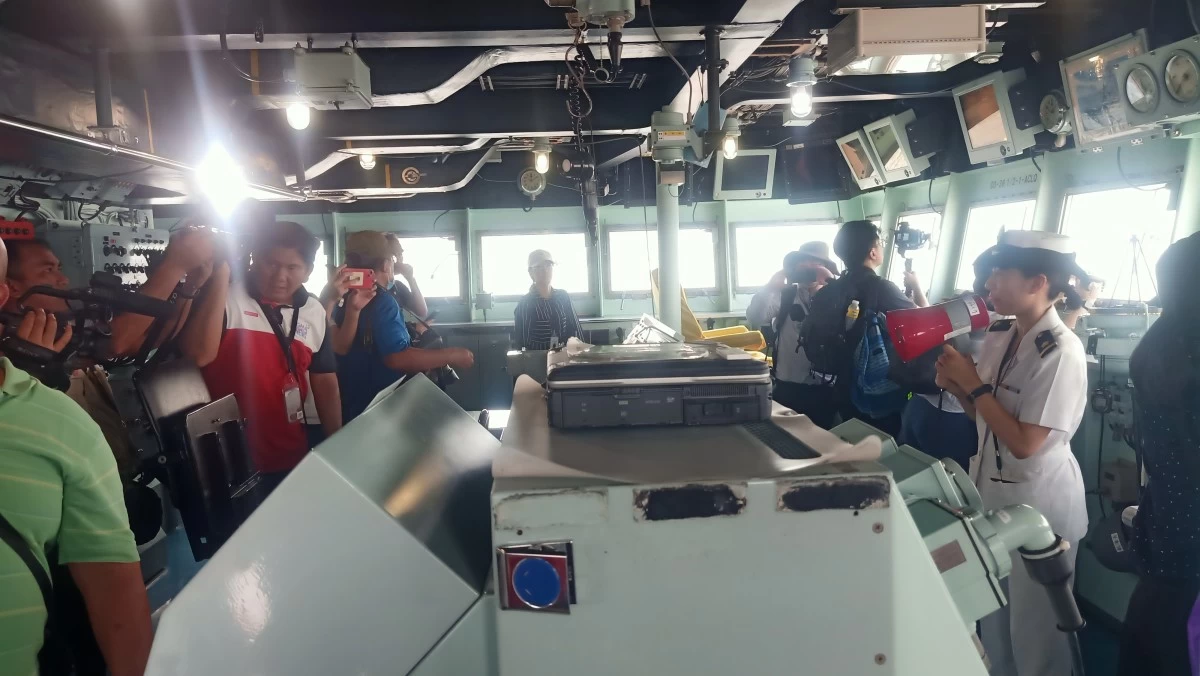
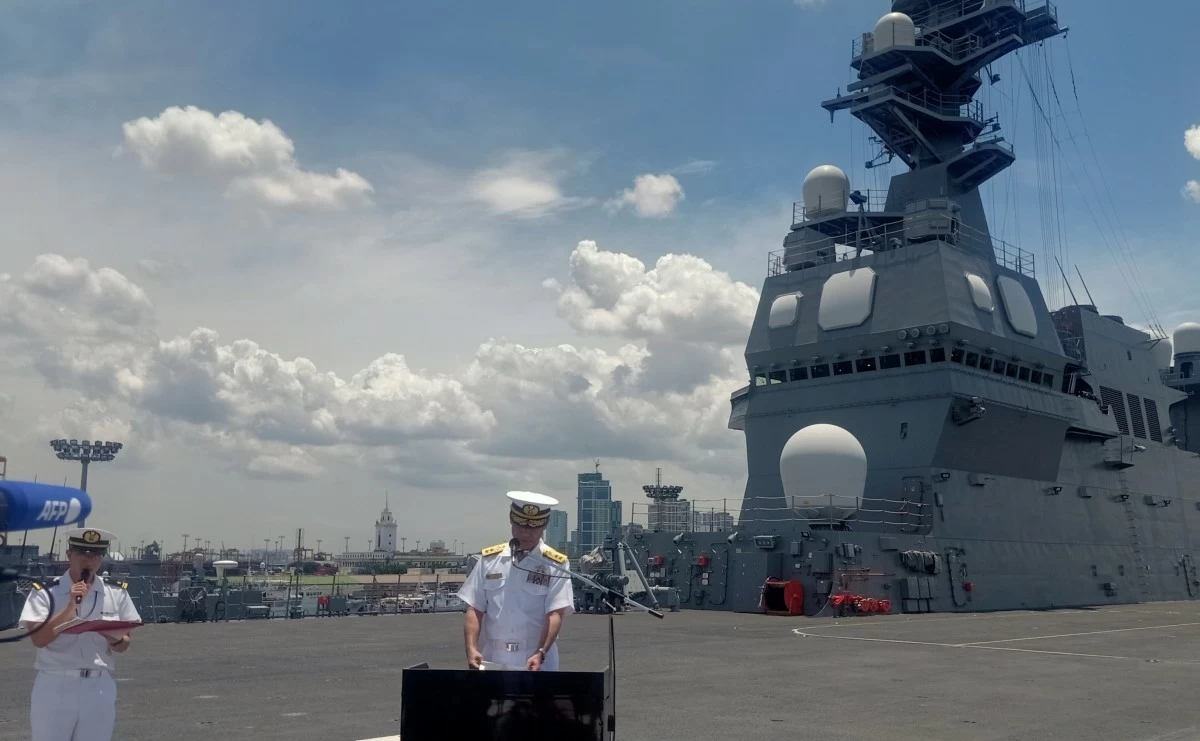
A Japan Maritime Self-Defense Force (JMSDF) personnel briefs the media onboard Japanese destroyer JS Ise while she was docked at Pier 15 in Port Area, Manila on June 21, 2025. (Photo: Martin A. Sadongdong / MANILA BULLETIN)
A massive warship sat calmly at the dock of Pier 15 in Port Area, Manila on Saturday, June 21. She had just arrived after a seven-day-long journey from Japan, and was on a three-day port visit to Manila.
Japanese ship (JS) Ise (DDH-182), a Hyuga-class helicopter destroyer, is recognized as one of the most advanced and versatile warships of the Japan Maritime Self-Defense Force (JMSDF) fleet. Docked nearby on the opposite side of the pier was her companion ship, JS Suzunami (DD-114), another destroyer belonging to the Takanami class.
The Manila Bulletin, along with select members of the media, was given the opportunity to tour the massive JS Ise — a warship equipped with state-of-the-art technology and powerful weaponry, earning her the reputation of a floating fortress that reflects Japan’s expanding maritime influence.
Hybrid giant
JS Ise is named after Ise Province, a historical region in Japan. According to Japan’s National Tourism Organization (JNTO), Ise Province is regarded as the “home of the deity likened to the sun and the Shinto faith's dynamic heart.”
Shinto is a Japanese indigenous religion and Ise-Jingu (Ise Shrine) is composed of 125 shrines including Naiku, a main sanctuary and the most sacred site where Amaterasu Omikami, the deity likened to the sun, is enshrined.
Upon entering JS Ise, what was immediately noticeable was its massive size. She stretches 197 meters in length and displaces over 19,000 tons at full load. In comparison, the biggest Philippine Navy ship is the landing dock BRP Tarlac (LD-601) which is 123 meters long and has a displacement of 11,500 tons at full load.
JS Ise also has various sensors and radars for anti-aircraft warfare, anti-submarine warfare, electronic warfare, and surface search.
Her sleek design must not be mistaken for its lethality since she is armed with Mk 41 Vertical Launch System (VLS) , which is capable of firing anti-air and anti-submarine missiles. She is also equipped with two Phalanx CIWS turrets, the last line of defense against incoming missiles, and torpedo tubes designed to take on underwater threats.
She is also equipped with a sophisticated electronic warfare and tracking systems such as the FCS-3A combat system, which can track multiple aerial and maritime threats simultaneously.
Below her flight deck, a hangar that houses two SH-60K Seahawk anti-submarine warfare (ASW) helicopters could be seen but the vessel is capable of operating up to 11 helicopters. These are often used for anti-submarine warfare and other maritime missions such as search and rescue.
Members of the media were surprised that a spacious area below the deck was a huge elevator that brought the visiting Filipino and Japanese journalists to the flight deck in an instant.
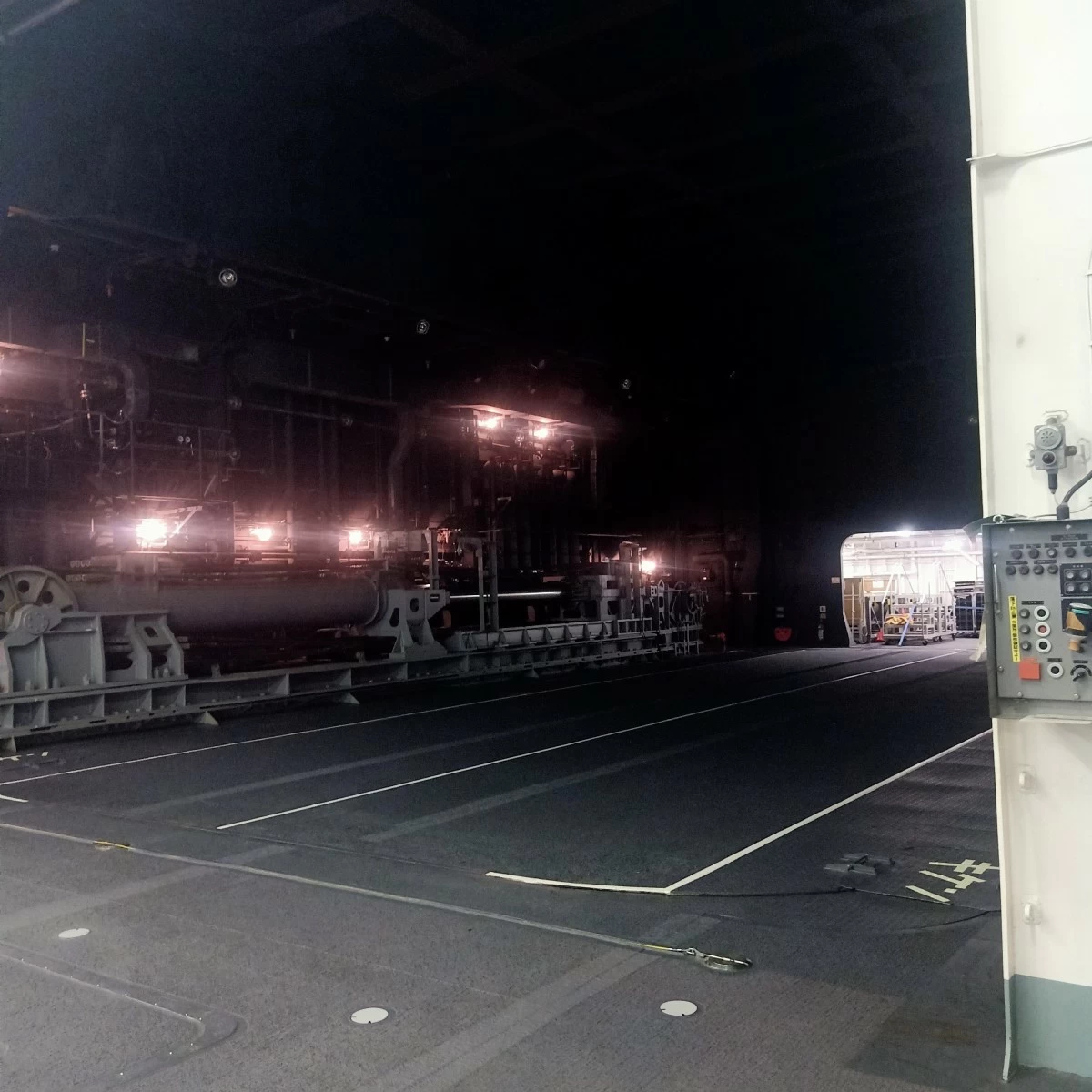
JS ISe features a huge elevator (characterized by white lines) which takes helicopters and personnel of the Japan Maritime Self-Defense Force straight to the flight deck in an instant. (Photo: Martin A. Sadongdong / MANILA BULLETIN)
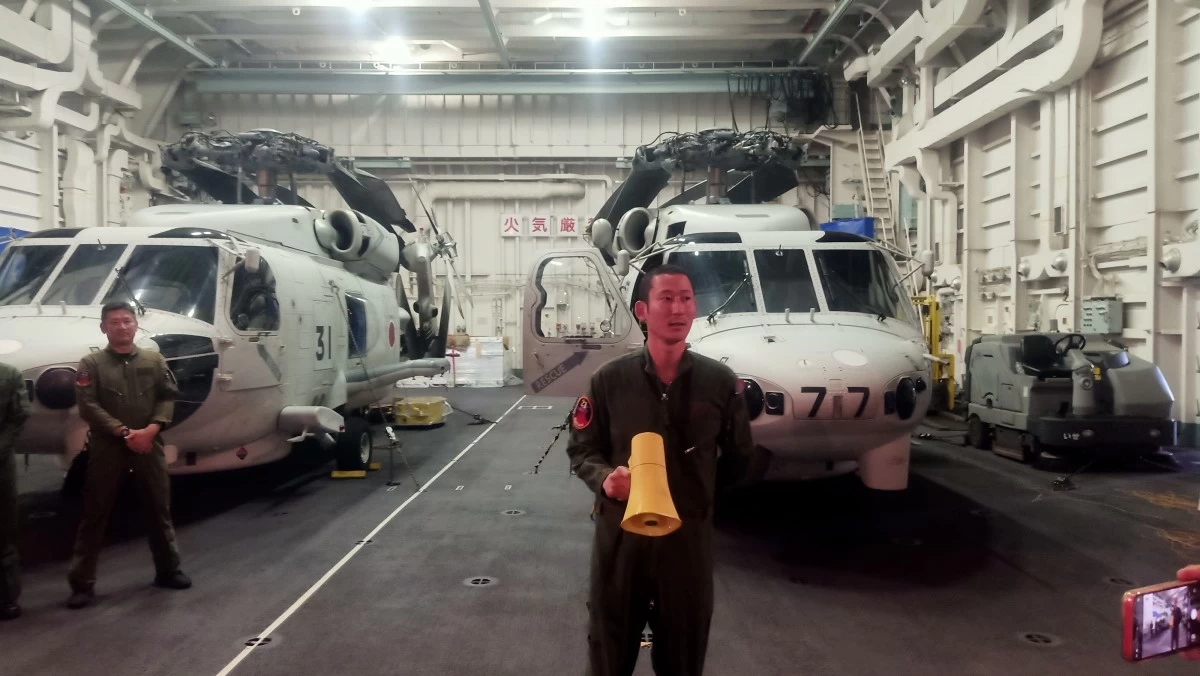
A Japan Maritime Self-Defense Force (JMSDF) personnel briefs the media at the hangar of Japanese destroyer JS Ise while she was docked at Pier 15 in Port Area, Manila on June 21, 2025. Shown behind are two SH-60K Seahawk helicopters. (Photo: Martin A. Sadongdong / MANILA BULLETIN)
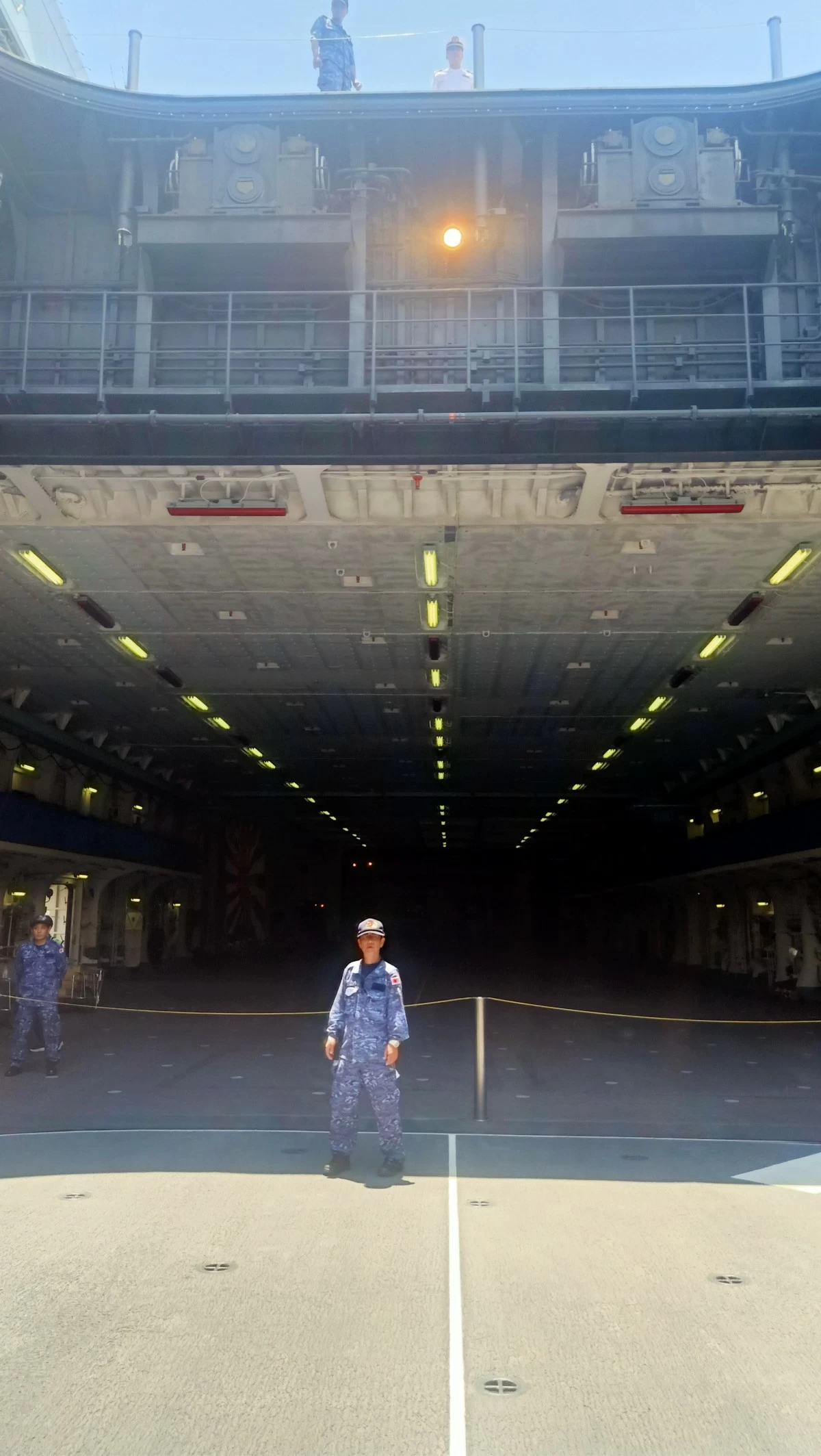
Personnel of the Japan Maritime Self-Defense Force (JMSDF) survey the Japanese destroyer JS Ise while she was docked at Pier 15 in Port Area, Manila on June 21, 2025. (Photo: Martin A. Sadongdong / MANILA BULLETIN)
Rear Admiral Natsui Takashi, commander of Japan Maritime Self-Defense Force Escort Flotilla Four, speaks during a media interview on the flight deck of JS Ise on June 21, 2025. (Photo: Martin A. Sadongdong / MANILA BULLETIN)
Rear Admiral Natsui Takashi, commander of JMSDF Escort Flotilla Four, said during a media interview on the flight deck of JS Ise that the presence of JS Ise and JS Suzunami in Manila forms part of JMSDF’s Indo-Pacific Deployment 2025 (IPD25), which aims to promote regional security and cooperation.
Through the program, the JMSDF engages with regional partners through joint exercises and port calls, including the Philippine Navy.
The IPD25 also emphasizes a “Free and Open Indo-Pacific” and includes a Ship Rider Cooperation Program where officers from Southeast Asia and the Pacific participate in onboard training.
“The vision of a Free and Open Indo-Pacific is to aim to facilitate free and robust economic activity throughout the Indo-Pacific and to realize the prosperity in the entire region,” he said.
“The Indo-Pacific region, including this Manila, is at the center of the world vitality, home to more than half of the world’s population. Realizing the stable and autonomous development is crucial for the stability and prosperity in the region,” he added.
After departing Manila on June 24, the JMSDF will participate in various exercises with other navies of Indo-Pacific nations to strengthen their interoperability.
“I believe that through this opportunity, we’ll build an even stronger multilateral relationships among Indo-Pacific countries as ‘reliable and inevitable partners’ sharing the fundamental values and strategic interests,” the Japanese admiral said.

Related Tags

JS Ise JMSDF Philippine Navy Manila RAA
ADVERTISEMENT
.most-popular .layout-ratio{ padding-bottom: 79.13%; } @media (min-width: 768px) and (max-width: 1024px) { .widget-title { font-size: 15px !important; } }

{{ articles_filter_1561_widget.title }}

.most-popular .layout-ratio{ padding-bottom: 79.13%; } @media (min-width: 768px) and (max-width: 1024px) { .widget-title { font-size: 15px !important; } }

{{ articles_filter_1562_widget.title }}

.most-popular .layout-ratio{ padding-bottom: 79.13%; } @media (min-width: 768px) and (max-width: 1024px) { .widget-title { font-size: 15px !important; } }

{{ articles_filter_1563_widget.title }}

{{ articles_filter_1564_widget.title }}

.mb-article-details { position: relative; } .mb-article-details .article-body-preview, .mb-article-details .article-body-summary{ font-size: 17px; line-height: 30px; font-family: "Libre Caslon Text", serif; color: #000; } .mb-article-details .article-body-preview iframe , .mb-article-details .article-body-summary iframe{ width: 100%; margin: auto; } .read-more-background { background: linear-gradient(180deg, color(display-p3 1.000 1.000 1.000 / 0) 13.75%, color(display-p3 1.000 1.000 1.000 / 0.8) 30.79%, color(display-p3 1.000 1.000 1.000) 72.5%); position: absolute; height: 200px; width: 100%; bottom: 0; display: flex; justify-content: center; align-items: center; padding: 0; } .read-more-background a{ color: #000; } .read-more-btn { padding: 17px 45px; font-family: Inter; font-weight: 700; font-size: 18px; line-height: 16px; text-align: center; vertical-align: middle; border: 1px solid black; background-color: white; } .hidden { display: none; }
function initializeAllSwipers() { // Get all hidden inputs with cms_article_id document.querySelectorAll('[id^="cms_article_id_"]').forEach(function (input) { const cmsArticleId = input.value; const articleSelector = '#article-' + cmsArticleId + ' .body_images'; const swiperElement = document.querySelector(articleSelector); if (swiperElement && !swiperElement.classList.contains('swiper-initialized')) { new Swiper(articleSelector, { loop: true, pagination: false, navigation: { nextEl: '#article-' + cmsArticleId + ' .swiper-button-next', prevEl: '#article-' + cmsArticleId + ' .swiper-button-prev', }, }); } }); } setTimeout(initializeAllSwipers, 3000); const intersectionObserver = new IntersectionObserver( (entries) => { entries.forEach((entry) => { if (entry.isIntersecting) { const newUrl = entry.target.getAttribute("data-url"); if (newUrl) { history.pushState(null, null, newUrl); let article = entry.target; // Extract metadata const author = article.querySelector('.author-section').textContent.replace('By', '').trim(); const section = article.querySelector('.section-info ').textContent.replace(' ', ' '); const title = article.querySelector('.article-title h1').textContent; // Parse URL for Chartbeat path format const parsedUrl = new URL(newUrl, window.location.origin); const cleanUrl = parsedUrl.host + parsedUrl.pathname; // Update Chartbeat configuration if (typeof window._sf_async_config !== 'undefined') { window._sf_async_config.path = cleanUrl; window._sf_async_config.sections = section; window._sf_async_config.authors = author; } // Track virtual page view with Chartbeat if (typeof pSUPERFLY !== 'undefined' && typeof pSUPERFLY.virtualPage === 'function') { try { pSUPERFLY.virtualPage({ path: cleanUrl, title: title, sections: section, authors: author }); } catch (error) { console.error('ping error', error); } } // Optional: Update document title if (title && title !== document.title) { document.title = title; } } } }); }, { threshold: 0.1 } ); function showArticleBody(button) { const article = button.closest("article"); const summary = article.querySelector(".article-body-summary"); const body = article.querySelector(".article-body-preview"); const readMoreSection = article.querySelector(".read-more-background"); // Hide summary and read-more section summary.style.display = "none"; readMoreSection.style.display = "none"; // Show the full article body body.classList.remove("hidden"); } document.addEventListener("DOMContentLoaded", () => { let loadCount = 0; // Track how many times articles are loaded const offset = [1, 2, 3, 4, 5, 6, 7, 8, 9, 10]; // Offset values const currentUrl = window.location.pathname.substring(1); let isLoading = false; // Prevent multiple calls if (!currentUrl) { console.log("Current URL is invalid."); return; } const sentinel = document.getElementById("load-more-sentinel"); if (!sentinel) { console.log("Sentinel element not found."); return; } function isSentinelVisible() { const rect = sentinel.getBoundingClientRect(); return ( rect.top < window.innerHeight && rect.bottom >= 0 ); } function onScroll() { if (isLoading) return; if (isSentinelVisible()) { if (loadCount >= offset.length) { console.log("Maximum load attempts reached."); window.removeEventListener("scroll", onScroll); return; } isLoading = true; const currentOffset = offset[loadCount]; window.loadMoreItems().then(() => { let article = document.querySelector('#widget_1690 > div:nth-last-of-type(2) article'); intersectionObserver.observe(article) loadCount++; }).catch(error => { console.error("Error loading more items:", error); }).finally(() => { isLoading = false; }); } } window.addEventListener("scroll", onScroll); });

Sign up by email to receive news.