






There are no reports yet of Filipinos injured in the Iranian nuclear sites earlier bombed by the United States, Department of Foreign Affairs (DFA) Assistant Secretary Robert Ferrer of the Office of Migrant Affairs said on Sunday, June 22.
Manila Bulletin
 Philippines
National
DFA exec says no info yet if Filipinos affected in US-hit Iranian nuclear sites
Philippines
National
DFA exec says no info yet if Filipinos affected in US-hit Iranian nuclear sites
Philippines
National
DFA exec says no info yet if Filipinos affected in US-hit Iranian nuclear sites
DFA exec says no info yet if Filipinos affected in US-hit Iranian nuclear sites
Published Jun 22, 2025 02:08 pm


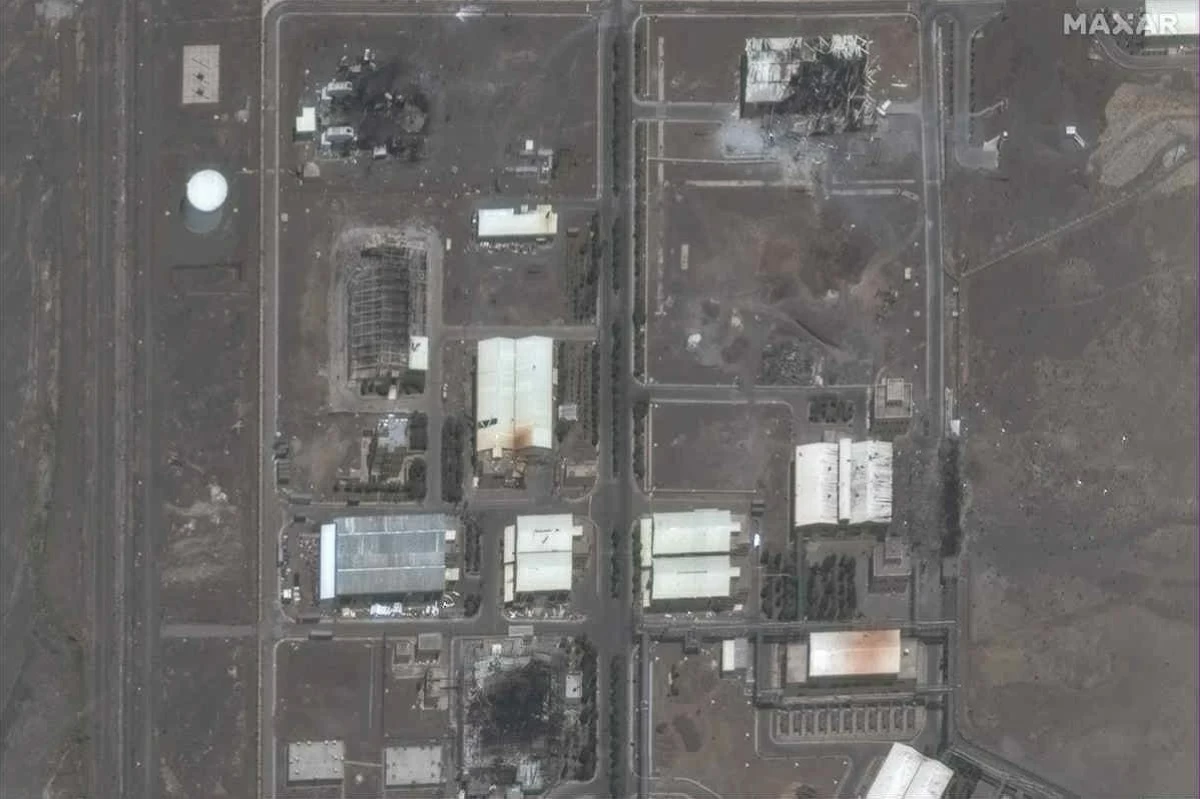
This satellite image provided by Maxar Technologies shows the Natanz nuclear enrichment facility, where multiple buildings were destroyed from recent Israeli airstrikes, 135 miles southeast of Tehran, Iran, Saturday, June 14, 2025. (Maxar Technologies via AP)
“Wala po akong information kung may Filipinos doon (I don’t have information yet if there are Filipinos there) but we already forewarned our kababayan (countrymen) to stay away from Iranian facilities just to be sure,” the official said in an interview over DZBB.
Similar with Israel, Iranian airspace is also closed, so Filipinos wanting to leave the Middle East country would need to cross the border to Turkmenistan, which is around 12 hours away by car.
Out of the 1,180 Filipinos in Iran, only nine have signified their intent to be repatriated after the Philippine government raised alert level 3 there and in Israel.
According to Ferrer, most of the Filipinos in Iran are Filipinas married to Iranian nationals.
“Because they are at home in Iran and Israel. In Iran, they are married to Iranian men, many of them. And many of them have established roots in Iran,” he shared.
The official added that going back to the Philippines is not the “immediate reaction” of Filipinos living and working abroad.
“First, they want to earn. So, in Israel, for example, the minimum salary there is $1,600 a month. They don't want to give that up,” Ferrer explained.
“So it's not that easy. Ito po yung tinatawag nating diaspora natin. Yung diaspora natin, hindi sila madaling hikayatin (This is what we call diaspora. Our diaspora, they are not easy to persuade [to be repatriated]),” he said.
Filipinos abroad, the official noted, “are always looking to the host country to protect them,” something that both the foreign ministries of Iran and Israel “have committed to protect our nationals and treat our nationals the same way they would treat Iranian citizens and Israeli citizens.”
The escalating tension between Israel and Iran that started after Israel attacked Iran’s nuclear sites last Friday is expected to intensify after US President Donald Trump said that US forces have conducted “very successful” strikes on Iranian nuclear facilities at Fordow, Natanz, and Isfahan.
Iran has earlier warned the US against intervening in its ongoing clash with Israel, while United Nations Secretary-General Antonio Guterres expressed alarm over the “use of force” by the US against Iran.
“This is a dangerous escalation in a region already on the edge - and a direct threat to international peace and security,” he wrote on social media, calling on UN member-states “to de-escalate and to uphold their obligations under the UN Charter and other rules of international law.”