ADVERTISEMENT

Yoga in a Zimbabwe tavern is the latest mental health outreach in a struggling country

Published Jun 21, 2025 11:14 am
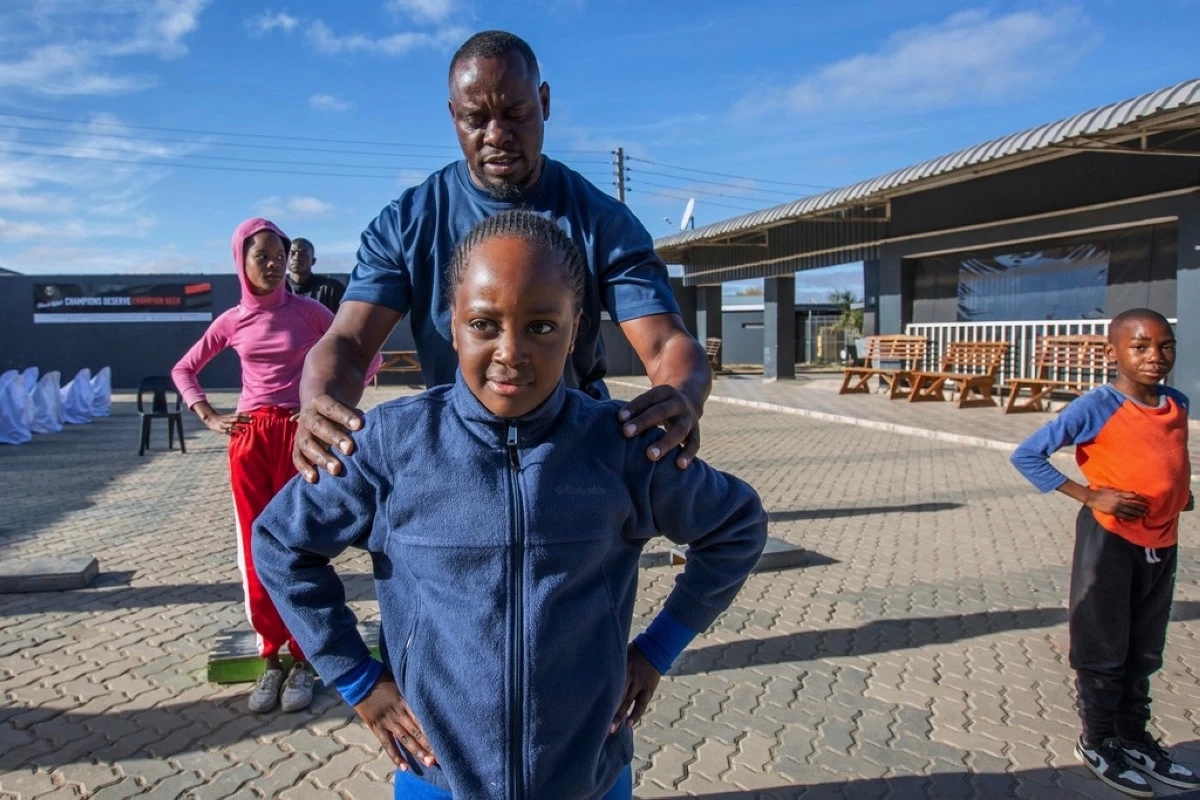
Actions Winya, a yoga instructor assists a young girl in perfecting her pose at Socialite Bar in Chitungwiza on the outskirts of Harare, Zimbabwe, Friday, June 20, 2025. (AP Photo/Aaron Ufumeli)
CHITUNGWIZA, Zimbabwe (AP) — It's before sunrise on a Saturday and a small group has gathered at Socialite Bar in on the outskirts of Zimbabwe's capital. Instead of nursing hangovers, they sit with eyes closed and bodies in meditative poses on the bare floor.
It's an unlikely setting for a yoga class. In Zimbabwe, the practice is rare and mostly found in the wealthy suburbs. Yet it is quietly taking root here in a beer tavern in Chitungwiza, a low-income town 30 kilometers (18 miles) outside the capital, Harare.
The initiative is led by Actions Winya, a yoga instructor who saw how economic hardship and social pressures were damaging the mental health of people in his hometown.
Yoga is expensive … but we also got humans in the ghetto. They need mental wellness, said Winya, who usually teaches in affluent areas, charging between $30 and $100 a month. That's an impossible cost for most, especially in a country where many survive through informal jobs.
Since 2023, Winya has been offering free weekend classes to some of those hardest hit by Zimbabwe's economic problems.
The sessions have become a source of relief for people navigating relentless challenges. Authorities acknowledge a growing societal crisis worsened by drug abuse, domestic violence and poverty, compounded by a shortage of public health services and therapists.
I am a coach, so they bring the stuff that they face within families (to me). This is where we come in and say, 'Guys, come and try yoga, it can help somehow,' Winya said.
Yoga, an ancient Indian practice, has become a multibillion-dollar industry and a daily ritual for millions around the world. The United Nations over a decade ago designated June 21 as International Day of Yoga.
In Africa, other countries like Kenya and South Africa are introducing yoga to poorer communities, with the Indian government promoting its spread across the continent.
Inside the tavern in Zimbabwe, mellow music played as about a dozen participants moved through poses. They had no mats, just a cold brick floor, but plenty of determination for inner peace. One mother tried to stay focused as her toddler dashed around, disrupting her poses.
For 47-year-old John Mahwaya, the practice has been transforming. A father of four, he also supports relatives in the countryside, a responsibility he said once weighed heavily on his mental health.
My head was always spinning. I thought I was losing my mind, and the stress started causing back pains, he said. Yoga helps me relax and clear my mind. I sleep peacefully these days.
He said many Zimbabwean men bottle up their emotions, afraid to show weakness in a highly patriarchal society that prizes toughness.
We focus on physical fitness, forgetting the mind, he said. We suffer slowly, but what suffers first is the mind, and from there, it becomes a slow death.
Edinah Makosa, 24, joined the class earlier this year and said it gave her hope.
I used to be depressed a lot. You know, for people my age, our main stressors are unemployment and relationships, she said.
Yoga changed my mindset. I used to think negatively all the time. Now I have started selling beauty products to earn a living. As for romance, well if it works, it works; if it doesn't, it doesn't. I no longer stress about men. I go with the flow.
As they practiced, the sounds of township life seeped in. Taxi drivers shouted for passengers. Vendors pushed carts, calling out to potential customers.
We need a proper environment and studio. But we are trying, Winya said.
For participants like Mahwaya, the location didn't matter nearly as much as the healing.
We need to promote yoga in the communities because everyone has a mind. And fitness of the mind is the responsibility of everyone, regardless of where you live, he said.
ADVERTISEMENT
.most-popular .layout-ratio{ padding-bottom: 79.13%; } @media (min-width: 768px) and (max-width: 1024px) { .widget-title { font-size: 15px !important; } }

{{ articles_filter_1561_widget.title }}

.most-popular .layout-ratio{ padding-bottom: 79.13%; } @media (min-width: 768px) and (max-width: 1024px) { .widget-title { font-size: 15px !important; } }

{{ articles_filter_1562_widget.title }}

.most-popular .layout-ratio{ padding-bottom: 79.13%; } @media (min-width: 768px) and (max-width: 1024px) { .widget-title { font-size: 15px !important; } }

{{ articles_filter_1563_widget.title }}

{{ articles_filter_1564_widget.title }}

.mb-article-details { position: relative; } .mb-article-details .article-body-preview, .mb-article-details .article-body-summary{ font-size: 17px; line-height: 30px; font-family: "Libre Caslon Text", serif; color: #000; } .mb-article-details .article-body-preview iframe , .mb-article-details .article-body-summary iframe{ width: 100%; margin: auto; } .read-more-background { background: linear-gradient(180deg, color(display-p3 1.000 1.000 1.000 / 0) 13.75%, color(display-p3 1.000 1.000 1.000 / 0.8) 30.79%, color(display-p3 1.000 1.000 1.000) 72.5%); position: absolute; height: 200px; width: 100%; bottom: 0; display: flex; justify-content: center; align-items: center; padding: 0; } .read-more-background a{ color: #000; } .read-more-btn { padding: 17px 45px; font-family: Inter; font-weight: 700; font-size: 18px; line-height: 16px; text-align: center; vertical-align: middle; border: 1px solid black; background-color: white; } .hidden { display: none; }
function initializeAllSwipers() { // Get all hidden inputs with cms_article_id document.querySelectorAll('[id^="cms_article_id_"]').forEach(function (input) { const cmsArticleId = input.value; const articleSelector = '#article-' + cmsArticleId + ' .body_images'; const swiperElement = document.querySelector(articleSelector); if (swiperElement && !swiperElement.classList.contains('swiper-initialized')) { new Swiper(articleSelector, { loop: true, pagination: false, navigation: { nextEl: '#article-' + cmsArticleId + ' .swiper-button-next', prevEl: '#article-' + cmsArticleId + ' .swiper-button-prev', }, }); } }); } setTimeout(initializeAllSwipers, 3000); const intersectionObserver = new IntersectionObserver( (entries) => { entries.forEach((entry) => { if (entry.isIntersecting) { const newUrl = entry.target.getAttribute("data-url"); if (newUrl) { history.pushState(null, null, newUrl); let article = entry.target; // Extract metadata const author = article.querySelector('.author-section').textContent.replace('By', '').trim(); const section = article.querySelector('.section-info ').textContent.replace(' ', ' '); const title = article.querySelector('.article-title h1').textContent; // Parse URL for Chartbeat path format const parsedUrl = new URL(newUrl, window.location.origin); const cleanUrl = parsedUrl.host + parsedUrl.pathname; // Update Chartbeat configuration if (typeof window._sf_async_config !== 'undefined') { window._sf_async_config.path = cleanUrl; window._sf_async_config.sections = section; window._sf_async_config.authors = author; } // Track virtual page view with Chartbeat if (typeof pSUPERFLY !== 'undefined' && typeof pSUPERFLY.virtualPage === 'function') { try { pSUPERFLY.virtualPage({ path: cleanUrl, title: title, sections: section, authors: author }); } catch (error) { console.error('ping error', error); } } // Optional: Update document title if (title && title !== document.title) { document.title = title; } } } }); }, { threshold: 0.1 } ); function showArticleBody(button) { const article = button.closest("article"); const summary = article.querySelector(".article-body-summary"); const body = article.querySelector(".article-body-preview"); const readMoreSection = article.querySelector(".read-more-background"); // Hide summary and read-more section summary.style.display = "none"; readMoreSection.style.display = "none"; // Show the full article body body.classList.remove("hidden"); } document.addEventListener("DOMContentLoaded", () => { let loadCount = 0; // Track how many times articles are loaded const offset = [1, 2, 3, 4, 5, 6, 7, 8, 9, 10]; // Offset values const currentUrl = window.location.pathname.substring(1); let isLoading = false; // Prevent multiple calls if (!currentUrl) { console.log("Current URL is invalid."); return; } const sentinel = document.getElementById("load-more-sentinel"); if (!sentinel) { console.log("Sentinel element not found."); return; } function isSentinelVisible() { const rect = sentinel.getBoundingClientRect(); return ( rect.top < window.innerHeight && rect.bottom >= 0 ); } function onScroll() { if (isLoading) return; if (isSentinelVisible()) { if (loadCount >= offset.length) { console.log("Maximum load attempts reached."); window.removeEventListener("scroll", onScroll); return; } isLoading = true; const currentOffset = offset[loadCount]; window.loadMoreItems().then(() => { let article = document.querySelector('#widget_1690 > div:nth-last-of-type(2) article'); intersectionObserver.observe(article) loadCount++; }).catch(error => { console.error("Error loading more items:", error); }).finally(() => { isLoading = false; }); } } window.addEventListener("scroll", onScroll); });

Sign up by email to receive news.