







Israel-Iran war stretches into second week without diplomatic breakthrough
Published Jun 21, 2025 03:50 pm


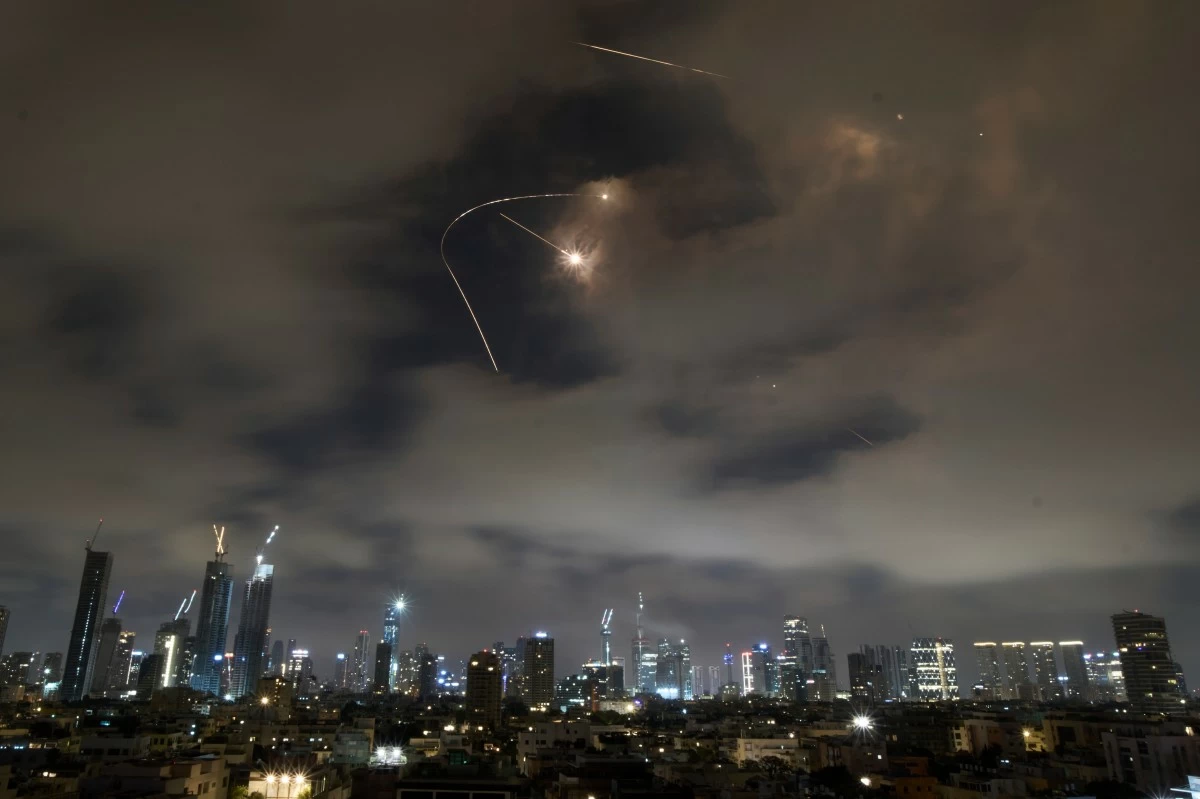
ISRAELI air defense system fires to intercept missiles during an Iranian attack over Tel Aviv, Israel on Saturday. (AP)
TEL AVIV, Israel (AP) – Hours of talks aimed at de-escalating fighting between Israel and Iran failed to produce a diplomatic breakthrough as the war entered its second week with a fresh round of strikes between the two adversaries.
European ministers and Iran's top diplomat met for four hours Friday in Geneva, as President Donald Trump continued to weigh US military involvement and worries rose over potential strikes on nuclear reactors.
European officials expressed hope for future negotiations and Iranian Foreign Minister Abbas Araghchi said he was open to further dialogue while emphasizing that Tehran had no interest in negotiating with the US while Israel continued attacking.
Iran is ready to consider diplomacy if aggression ceases and the aggressor is held accountable for its committed crimes, he told reporters.
No date was set for the next round of talks.
Israeli Prime Minister Benjamin Netanyahu said Israel's military operation in Iran would continue for as long as it takes to eliminate what he called the existential threat of Iran's nuclear program and arsenal of ballistic missiles. Israel's top general echoed the warning, saying the Israeli military was ready for a prolonged campaign.
But Netanyahu's goal could be out of reach without US help. Iran's underground Fordo uranium enrichment facility is considered to be out of reach to all but America's bunker-buster bombs. Trump said he would put off deciding whether to join Israel's air campaign against Iran for up to two weeks.
The war between Israel and Iran erupted June 13, with Israeli airstrikes targeting nuclear and military sites, top generals, and nuclear scientists. At least 657 people, including 263 civilians, have been killed in Iran and more than 2,000 wounded, according to a Washington-based Iranian human rights group.
Iran has retaliated by firing 450 missiles and 1,000 drones at Israel, according to Israeli army estimates. Most have been shot down by Israel's multitiered air defenses, but at least 24 people in Israel have been killed and hundreds wounded.
Israel's defense minister said Saturday it killed a commander in Iran's paramilitary Revolutionary Guard who financed and armed Hamas in preparation for the Oct 7, 2023 attack on Israel that sparked the 20-month long war in Gaza. Israel said Saeed Izadi was commander of the Palestine Corps for the Iranian Quds Force, an elite arm of the Guard that conducts military and intelligence operations outside Iran, and that he was killed in an apartment in the city of Qom.
Addressing an emergency meeting of the UN Security Council, the head of the International Atomic Energy Agency warned against attacks on Iran's nuclear reactors, particularly its only commercial nuclear power plant in the southern city of Bushehr.
I want to make it absolutely and completely clear: In case of an attack on the Bushehr nuclear power plant, a direct hit would result in a very high release of radioactivity to the environment, said Rafael Grossi, chief of the UN nuclear watchdog. This is the nuclear site in Iran where the consequences could be most serious.
Israel has not targeted Iran's nuclear reactors, instead focusing its strikes on the main uranium enrichment facility at Natanz, centrifuge workshops near Tehran, laboratories in Isfahan, and the country's Arak heavy water reactor southwest of the capital. Grossi has warned repeatedly that such sites should not be military targets.
After initially reporting no visible damage from Israel's Thursday strikes on the Arak heavy water reactor, the IAEA on Friday said it had assessed key buildings at the facility were damaged, including the distillation unit.
The reactor was not operational and contained no nuclear material, so the damage posed no risk of contamination, the watchdog said.
Iran previously agreed to limit its uranium enrichment and allow international inspectors access to its nuclear sites under a 2015 deal with the US, France, China, Russia, Britain, and Germany in exchange for sanctions relief. But after Trump pulled the US unilaterally out of the deal during his first term, Iran began enriching uranium up to 60 percent – a short, technical step away from weapons-grade levels of 90 percent – and restricting access to its nuclear facilities.
Iran has long maintained its nuclear program is for peaceful purposes, but it is the only non-nuclear-weapon state to enrich uranium up to 60 percent. Israel is widely believed to be the only Middle Eastern country with a nuclear weapons program but has never acknowledged it.
Israel said its warplanes hit dozens of military targets across Iran on Friday, including missile-manufacturing facilities, while an Iranian missile hit Israel's northern city of Haifa, sending plumes of smoke billowing over the Mediterranean port and wounding at least 31 people.
Iranian state media reported explosions from Israeli strikes in an industrial area of Rasht, along the coast of the Caspian Sea. Israel's military had warned Iranians to evacuate the area around Rasht's Industrial City, southwest of the city's downtown. But with Iran's internet shut off – now for more than 48 hours – it's unclear how many people could see the message.
The Israeli military believes it has destroyed most of Iran's ballistic missile launchers, contributing to the steady decline in Iranian attacks.
But several of the roughly three dozen missiles that Israel said Iran fired on Friday slipped through the country's aerial defense system, setting off air-raid sirens across the country and sending shrapnel flying into a residential area in the southern city of Beersheba, a frequent target of Iranian missiles where a hospital was hit Thursday.