






Manila Bulletin
 Opinion
Barangay power in nation-building: Beyond health centers and sports programs
Opinion
Barangay power in nation-building: Beyond health centers and sports programs
Opinion
Barangay power in nation-building: Beyond health centers and sports programs
Barangay power in nation-building: Beyond health centers and sports programs
Published Jun 21, 2025 12:05 am
|
Updated Jun 20, 2025 06:03 pm


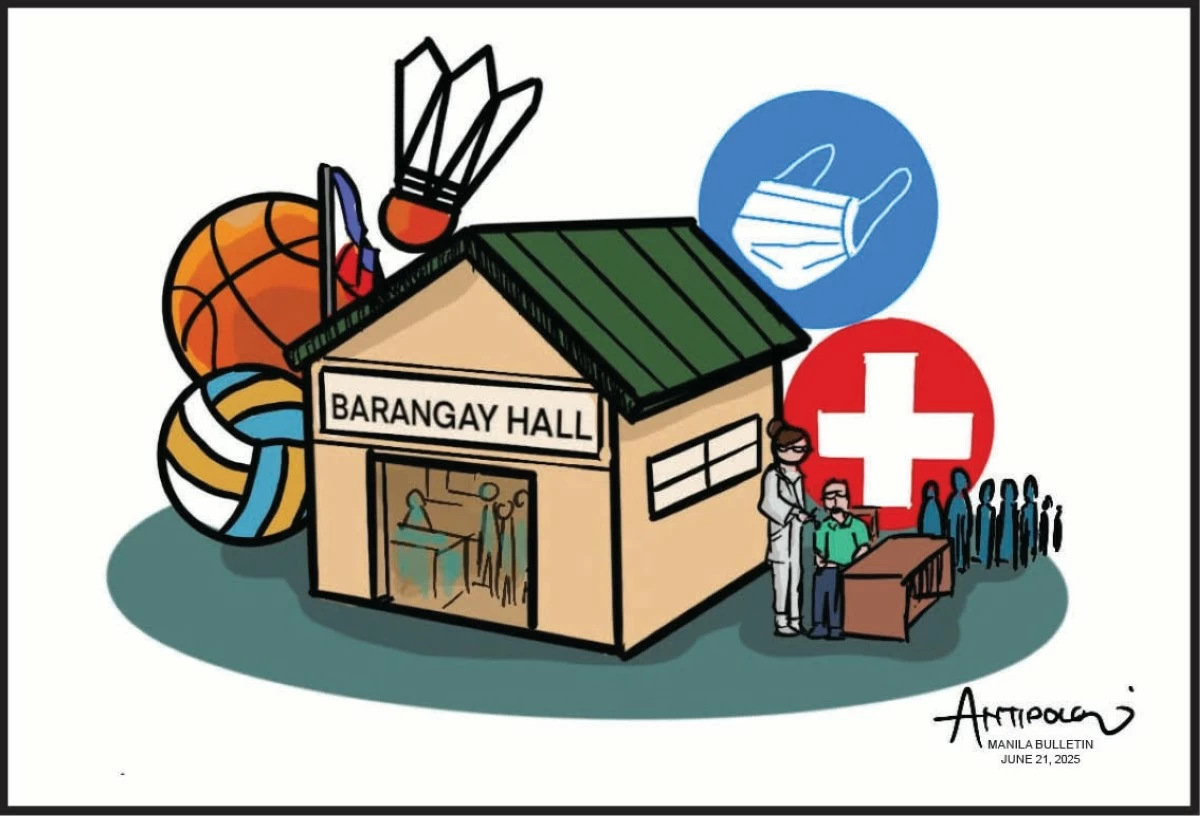
Barangays are the frontline of Philippine governance. They are the first point of contact for citizens seeking help, assistance, or redress. Their importance to the community was highlighted during the pandemic when the barangay health workers and the barangay system played a key role in keeping order to prevent the spread of the virus.
Yet, for many barangays, their role has been limited, often reduced to maintaining peace and order, building basketball courts, and occasionally handing out aid during calamities.
But barangays can, and must, do more.
With over 42,000 barangays across the country, the grassroots potential of these small political units is staggering. If empowered with vision, training, and resources, barangay leaders could become vital agents of nation-building, capable of leading efforts in climate resilience, community health, digital access, and youth development. And if the community members are encouraged to participate, the barangay becomes a stronger unit in nation building.
This is not a new idea. Republic Act No. 7160, or the Local Government Code, already mandates barangays to be self-reliant communities. But many are still hampered by outdated priorities, traditional politics, and limited financial autonomy. As a result, most barangay projects revolve around small-scale infrastructure—waiting sheds, gates, and multipurpose halls—with little focus on long-term development.
Now is the time to shift that mindset – and get all involved.
Climate change alone demands urgent attention at the barangay level. From localized flooding to coastal erosion and heatwaves, barangays are on the frontline of climate impacts. All barangay leaders should be enabled to prepare for them by identifying high-risk zones, creating evacuation systems, and raising awareness among residents. Some barangays have already piloted urban gardening, waste segregation, and plastic bans—examples worth replicating nationwide.
Health and education also deserve more strategic attention. Barangay Health Workers (BHWs) are often overworked and underpaid, but they are essential in vaccination drives, health monitoring, and now even mental health referrals. Meanwhile, barangay learning centers can be expanded to include digital literacy and livelihood skills, helping youth and out-of-school adults alike.
National agencies have recognized the power of barangay governance. The Department of the Interior and Local Government (DILG), for instance, is rolling out capacity-building programs to equip barangay officials with better management and planning skills. But these efforts need more support, not just from government but also from civil society, academic institutions, and the private sector.
The path forward lies in reimagining what barangay leadership looks like. Barangay captains are not just peacekeepers—they are community builders, public servants, and local leaders of change. If every barangay began with a clear, locally adapted development plan, thousands of small communities can be transformed to powerful building blocks of a stronger nation.
The barangay can be made stronger with the active support of the community. Many residents choose to be silent members. Their only engagement with the barangay is when the garbage collectors do not come on time. To have a stronger barangay, the community is needed to be active participants. For example, a member’s interest in reading can create a reading program to help slow learners. A member’s talent in craft- making can teach members a skill for a livelihood.
More barangay leaders and members should be encouraged to think beyond health centers and basketball courts. The barangay is not just the smallest unit of government. It is the seedbed of national progress.