






Manila Bulletin
 Philippines
National
2 Japanese destroyers dock in Manila; Chinese ships shoot BFAR vessels with water cannon
Philippines
National
2 Japanese destroyers dock in Manila; Chinese ships shoot BFAR vessels with water cannon
Philippines
National
2 Japanese destroyers dock in Manila; Chinese ships shoot BFAR vessels with water cannon
2 Japanese destroyers dock in Manila; Chinese ships shoot BFAR vessels with water cannon
Published Jun 21, 2025 02:12 pm


Rear Adm. Natsui Takashi, commander of Japan Maritime Self Defense Force (JMSDF) Escort Flotilla 4, delivers a speech aboard JS Ise (DDH-182) in Port Area, Manila on June 21, 2025. The Japanese helicopter destroyer is on a three-day port visit in Manila. (Photo: Martin A. Sadongdong / MANILA BULLETIN)
Two destroyers of the Japan Maritime Self-Defense Force (JMSDF) anchored in Port Area, Manila on Saturday, June 21, for a three-day port visit, signaling the deepening ties between the naval forces of the two countries following the ratification of the Reciprocal Access Agreement (RAA).
As this developed, the Philippine Coast Guard (PCG) said a China Coast Guard (CCG) ship fired a water cannon and conducted dangerous maneuvers towards civilian vessels of the Bureau of Fisheries and Aquatic Resources (BFAR) while they were on a humanitarian mission in Panatag Shoal (Scarborough Shoal or Bajo de Masinloc).
JS Ise (DDH-182), a Hyuga-class helicopter destroyer, and JS Suzunami (DD-114), a Takanami-class destroyer, arrived at Manila’s Port Area around 10:30 a.m. as part of the Japan Maritime Self-Defense Force's (JMSDF) Indo-Pacific Deployment (IPD) 2025, an initiative that aims to strengthen its cooperation with allied and partner navies in the Indo-Pacific region through joint exercises.
They were welcomed by Philippine Navy (PN) personnel, including the Navy Band, which played Japanese anime theme songs such as One Piece and Slam Dunk among others.
Rear Adm. Natsui Takashi, commander of JMSDF Escort Flotilla Four, said the port call symbolizes Japan’s commitment to support Manila and other like-minded nations in keeping a “free and open” Indo-Pacific region.
He said attempts to unilaterally change the status quo in the South China Sea by force are “serious challenges” to the rules-based international order.
“I recognize that unilateral changes in the status quo by force are serious challenges to the international order based on the rule of law,” he told reporters aboard JS Ise. It was the third time that the JMSDF visited the Philippines this year. As for JS Ise, it is the ship's second visit to the country; the first one being in Subic in 2017.
“This deployment is not targeted at any specific country,” Admiral Takashi clarified. “I hope this opportunity will promote multi-layered bilateral defense cooperation and exchanges to realize a free and open Indo-Pacific.”
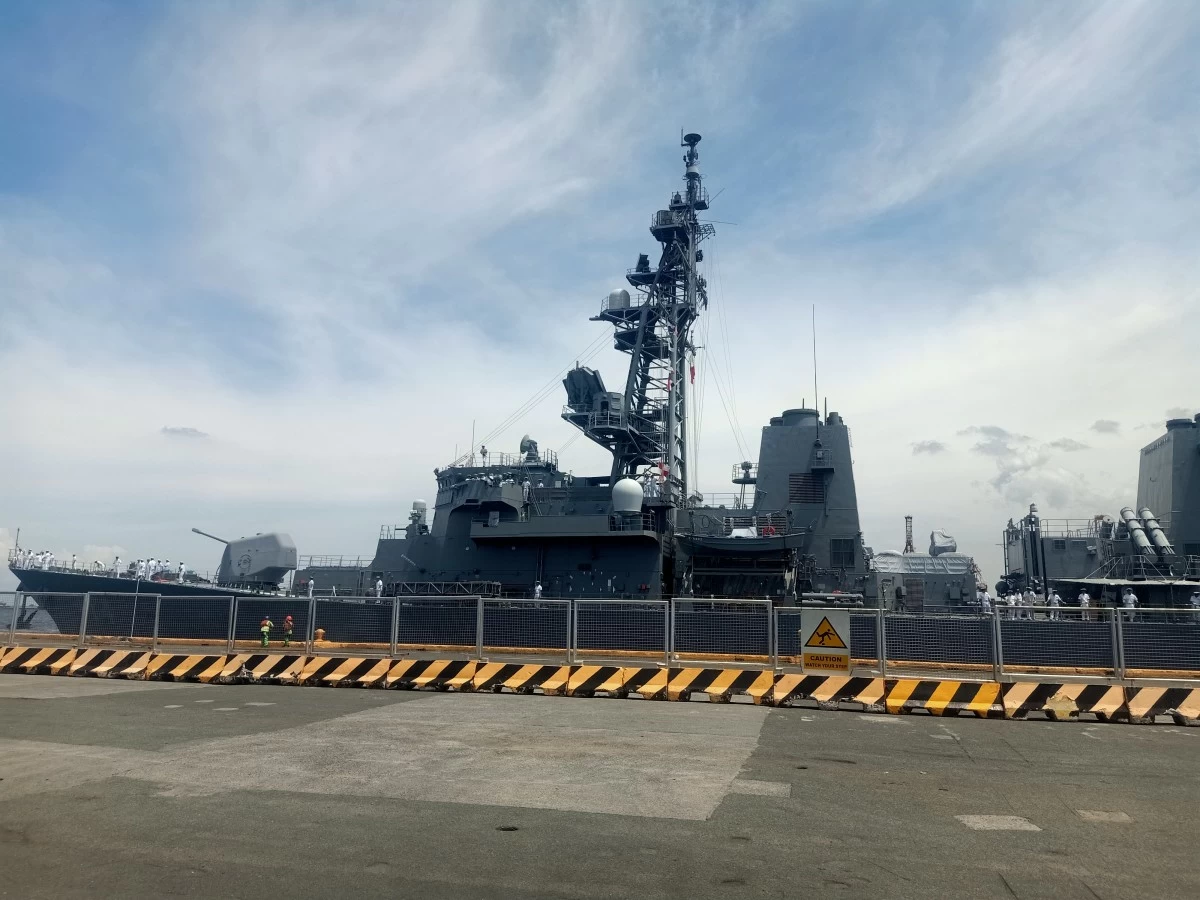
JS Suzunami (DD-114), a Takanami-class destroyer, anchors in Port Area, Manila on June 21, 2025 for a three-day port visit. (Photo: Martin A. Sadongdong / MANILA BULLETIN)
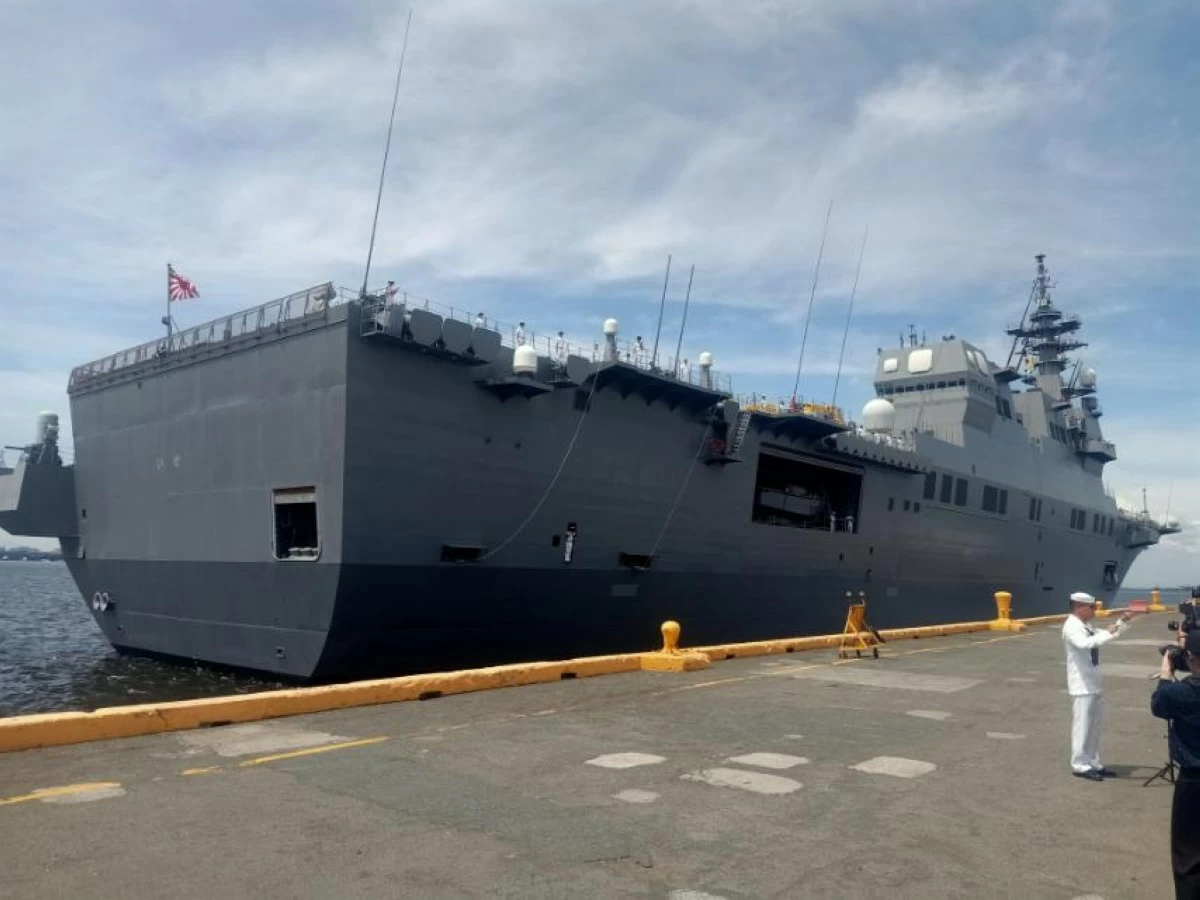
JS Ise (DDH-182), a Hyuga-class helicopter destroyer, anchors in Port Area, Manila on June 21, 2025 for a three-day port visit. (Photo: Martin A. Sadongdong / MANILA BULLETIN)
He said the JMSDF will hold naval exercises with the Philippine Navy to strengthen their interoperability, and even hinted at more naval engagements with their Philippine counterparts due to the ratification of the RAA.
The Japanese admiral hailed the National Diet's ratification of the RAA last June 6. The agreement allows Manila and Tokyo to send military forces and equipment to each other’s territory for joint exercises.
“Through this agreement, we can simplify the procedures for mutual cooperative activities. I understand that it will make two countries cooperate more smoothly. I hope that the relationship between the JMSDF and the Philippine Navy will be more strengthened,” he said.
Water cannon attack
Meanwhile, PCG spokesperson for West Philippine Sea (WPS) Commodore Jay Tarriela said BRP Datu Tamblot, BRP Datu Taradapit, BRP Datu Bankaya, and BRP Datu Daya were distributing subsidies to more than 20 local fishing boats in Panatag Shoal on June 20 when they were shadowed by a CCG vessel with bow number “4203”.
He said the Chinese ship approached BRP Datu Taradapit within 600 yards and fired a water cannon approximately 15.6 nautical miles southwest of Panatag Shoal.
Due to the attack, the port quarter of BRP Datu Tarapidit was struck by jets of water although the PCG crew manning the BFAR vessel managed to quickly maneuver to avoid significant damage.
Then, another CCG vessel with bow number “3105” targeted BRP Datu Tamblot with water cannon from a distance of 18.1 nautical miles southeast of the shoal, but the attack missed its mark.
Tarriela said that throughout the operation, six CCG vessels, two People’s Liberation Army-Navy (PLA-N) warships, and “multiple” Chinese maritime militia vessels were monitored in Panatag Shoal.
Admiral Takashi said the JMSDF is “watching” China’s naval activities in the South China Sea, including in waters within the Philippines’ exclusive economic zone (EEZ).
“I recognize China has recently activated military activities. I also recognize unilateral changes to the status quo by force in such attempts,” he said. “The JMSDF has continued to watch Chinese naval activities and take preparations for ISR [intelligence, surveillance, reconnaissance].”