ADVERTISEMENT

US remittance levy will deeply hurt Filipino families

Published Jun 20, 2025 12:05 am  |  Updated Jun 19, 2025 04:53 pm
The act of sending money home is one of the most enduring symbols of Filipino resilience and devotion. More than anything, each remittance from an overseas Filipino is a quiet act of love, a testament to selflessness, and a pillar of survival for millions of families. Now, this lifeline is facing a serious threat.
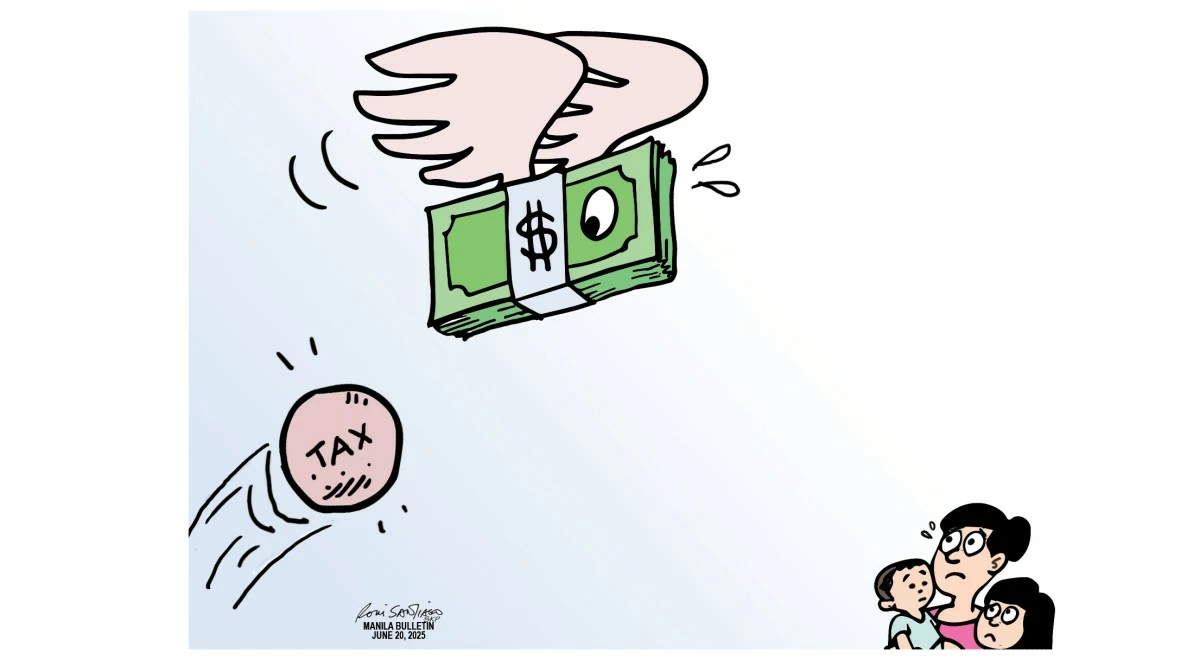
Under a sweeping tax and immigration reform package championed by United States President Donald Trump is a proposed 3.5 percent excise tax on remittances sent abroad by non-US citizens that will have devastating consequences for the Philippines. If signed into law, the measure will significantly impact Filipino families and the national economy.
In 2024 alone, Filipinos abroad remitted a record $38.34 billion, according to the Bangko Sentral ng Pilipinas. Of that total, approximately $15.7 billion, or 41 percent, came from the United States, the Philippines’ single largest source of remittances. Should the tax be implemented, it could withhold an estimated $549.5 million, or roughly ₱30.88 billion, from families in the Philippines a year. For the Filipino family, this excise tax from the remittances represent tuition unpaid, medicines left unbought, and meals that may never be served.
Once implemented, the impact would be felt immediately and acutely. Remittances form the backbone of local economies around the country. They contribute nearly nine percent to the national GDP and drive consumption, savings, and investment. A significant reduction in these flows could ripple through industries such as retail, real estate, and education, dampening economic momentum and disproportionately hurting low- and middle-income families.
The policy is especially cruel when viewed in the aspect of human dignity. It targets the very individuals who, while not US citizens, contribute immensely to American society—as nurses, caregivers, laborers, and service workers. Many already pay taxes, abide by US laws, and perform essential roles within the American economy. To tax the money they send to their families is, in effect, to tax sacrifice itself and a sort of double taxation on income.
The Philippine government must act with urgency and resolve. It must present a clear, reasoned case to its strategic ally, the United States, underscoring the punitive and regressive nature of this policy. This is not a tax on luxury or speculation—it is a levy on love and compassion. The Department of Foreign Affairs and the Philippine Embassy in Washington, D.C., must engage counterparts in both the legislative and executive branches, invoking both diplomatic and humanitarian appeals.
At the same time, the government must prepare for the worst. It must work to insulate vulnerable families from the potential shock. Financial literacy programs for remittance-receiving households should be expanded, enabling better money management and resilience. OWWA and the Department of Migrant Workers must explore support mechanisms such as emergency relief, subsidized insurance, and remittance-matching schemes. Financial institutions should be encouraged to develop lower-cost channels and explore legal workarounds that could reduce the tax burden.
For overseas Filipinos and their families, this moment calls for vigilance, adaptability, and unity. They must seek reliable financial advice, consider diversifying income sources, and engage in collective advocacy against the measure—especially through US-based Filipino organizations that can influence local and national policy.
This proposed tax measure, part of the fiscal policy of the Trump administration, raises a moral question. Should the price of supporting one’s family be raised by the very nations that benefit from migrant labor? The Philippines must make its voice heard, loudly and clearly, before Filipinos pay the price in full.
The government must protect the hard-earned money of the Filipino migrant workers. They deserve nothing less.
ADVERTISEMENT
.most-popular .layout-ratio{ padding-bottom: 79.13%; } @media (min-width: 768px) and (max-width: 1024px) { .widget-title { font-size: 15px !important; } }

{{ articles_filter_1561_widget.title }}

.most-popular .layout-ratio{ padding-bottom: 79.13%; } @media (min-width: 768px) and (max-width: 1024px) { .widget-title { font-size: 15px !important; } }

{{ articles_filter_1562_widget.title }}

.most-popular .layout-ratio{ padding-bottom: 79.13%; } @media (min-width: 768px) and (max-width: 1024px) { .widget-title { font-size: 15px !important; } }

{{ articles_filter_1563_widget.title }}

{{ articles_filter_1564_widget.title }}

.mb-article-details { position: relative; } .mb-article-details .article-body-preview, .mb-article-details .article-body-summary{ font-size: 17px; line-height: 30px; font-family: "Libre Caslon Text", serif; color: #000; } .mb-article-details .article-body-preview iframe , .mb-article-details .article-body-summary iframe{ width: 100%; margin: auto; } .read-more-background { background: linear-gradient(180deg, color(display-p3 1.000 1.000 1.000 / 0) 13.75%, color(display-p3 1.000 1.000 1.000 / 0.8) 30.79%, color(display-p3 1.000 1.000 1.000) 72.5%); position: absolute; height: 200px; width: 100%; bottom: 0; display: flex; justify-content: center; align-items: center; padding: 0; } .read-more-background a{ color: #000; } .read-more-btn { padding: 17px 45px; font-family: Inter; font-weight: 700; font-size: 18px; line-height: 16px; text-align: center; vertical-align: middle; border: 1px solid black; background-color: white; } .hidden { display: none; }
function initializeAllSwipers() { // Get all hidden inputs with cms_article_id document.querySelectorAll('[id^="cms_article_id_"]').forEach(function (input) { const cmsArticleId = input.value; const articleSelector = '#article-' + cmsArticleId + ' .body_images'; const swiperElement = document.querySelector(articleSelector); if (swiperElement && !swiperElement.classList.contains('swiper-initialized')) { new Swiper(articleSelector, { loop: true, pagination: false, navigation: { nextEl: '#article-' + cmsArticleId + ' .swiper-button-next', prevEl: '#article-' + cmsArticleId + ' .swiper-button-prev', }, }); } }); } setTimeout(initializeAllSwipers, 3000); const intersectionObserver = new IntersectionObserver( (entries) => { entries.forEach((entry) => { if (entry.isIntersecting) { const newUrl = entry.target.getAttribute("data-url"); if (newUrl) { history.pushState(null, null, newUrl); let article = entry.target; // Extract metadata const author = article.querySelector('.author-section').textContent.replace('By', '').trim(); const section = article.querySelector('.section-info ').textContent.replace(' ', ' '); const title = article.querySelector('.article-title h1').textContent; // Parse URL for Chartbeat path format const parsedUrl = new URL(newUrl, window.location.origin); const cleanUrl = parsedUrl.host + parsedUrl.pathname; // Update Chartbeat configuration if (typeof window._sf_async_config !== 'undefined') { window._sf_async_config.path = cleanUrl; window._sf_async_config.sections = section; window._sf_async_config.authors = author; } // Track virtual page view with Chartbeat if (typeof pSUPERFLY !== 'undefined' && typeof pSUPERFLY.virtualPage === 'function') { try { pSUPERFLY.virtualPage({ path: cleanUrl, title: title, sections: section, authors: author }); } catch (error) { console.error('ping error', error); } } // Optional: Update document title if (title && title !== document.title) { document.title = title; } } } }); }, { threshold: 0.1 } ); function showArticleBody(button) { const article = button.closest("article"); const summary = article.querySelector(".article-body-summary"); const body = article.querySelector(".article-body-preview"); const readMoreSection = article.querySelector(".read-more-background"); // Hide summary and read-more section summary.style.display = "none"; readMoreSection.style.display = "none"; // Show the full article body body.classList.remove("hidden"); } document.addEventListener("DOMContentLoaded", () => { let loadCount = 0; // Track how many times articles are loaded const offset = [1, 2, 3, 4, 5, 6, 7, 8, 9, 10]; // Offset values const currentUrl = window.location.pathname.substring(1); let isLoading = false; // Prevent multiple calls if (!currentUrl) { console.log("Current URL is invalid."); return; } const sentinel = document.getElementById("load-more-sentinel"); if (!sentinel) { console.log("Sentinel element not found."); return; } function isSentinelVisible() { const rect = sentinel.getBoundingClientRect(); return ( rect.top < window.innerHeight && rect.bottom >= 0 ); } function onScroll() { if (isLoading) return; if (isSentinelVisible()) { if (loadCount >= offset.length) { console.log("Maximum load attempts reached."); window.removeEventListener("scroll", onScroll); return; } isLoading = true; const currentOffset = offset[loadCount]; window.loadMoreItems().then(() => { let article = document.querySelector('#widget_1690 > div:nth-last-of-type(2) article'); intersectionObserver.observe(article) loadCount++; }).catch(error => { console.error("Error loading more items:", error); }).finally(() => { isLoading = false; }); } } window.addEventListener("scroll", onScroll); });

Sign up by email to receive news.