






Manila Bulletin
 Business
Banking & Finance
BSP chief warns inflation could top 5% amid oil, peso woes
Business
Banking & Finance
BSP chief warns inflation could top 5% amid oil, peso woes
Business
Banking & Finance
BSP chief warns inflation could top 5% amid oil, peso woes
BSP chief warns inflation could top 5% amid oil, peso woes
By Derco Rosal
Published Jun 20, 2025 03:19 pm


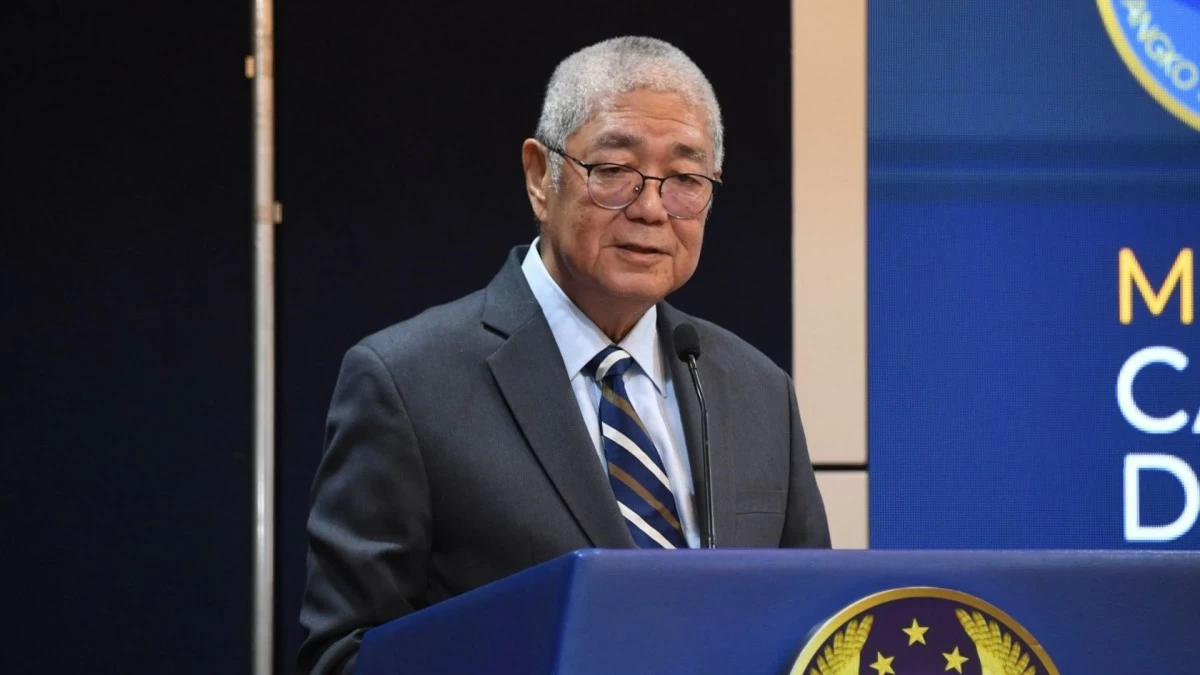
Governor Eli M. Remolona Jr.
Bangko Sentral ng Pilipinas (BSP) Governor Eli M. Remolona Jr. warned that rising global oil prices and the peso’s depreciation streak could push inflation above five percent, a level last seen nearly two years ago.
“We do scenario analysis today [Friday] in which we focus on particular risks. Oil is one of the big risks that we worry about. We have a bad scenario, if I may call it that, in which our inflation rate could exceed five percent,” Remola said in a OneNews interview on Friday, June 20.
“But we hope it doesn’t happen and we’re carefully watching that,” he added.
The last time inflation accelerated faster than five percent was in September 2023, when it posted a 6.1 percent rate. It then gradually declined throughout the year until May 2025, when it clocked in at 1.3 percent — its slowest in nearly six years since November 2019.
Remolona cited the combination of rising Dubai crude oil prices and the sharp devaluation of the local currency as the major contributors to a spike in consumer prices.
For oil prices, the BSP governor said “There is a risk that the Strait of Hormuz will be closed. That would be a big risk.” The Strait of Hormuz is one of the world’s major shipping routes and the only waterway connecting the Persian Gulf to the open sea.
Closing the passage, Remolona said, “would mean much higher oil prices, and that would mean higher inflation in the Philippines. So those are the big risks that we worry about.”
Remolona earlier said that some of the major factors considered in the latest decision to trim the key borrowing costs by a quarter point to 5.25 percent were the slowdown in the global economy due to the tariff-led trade policies by the United States (US) and the mounting tensions between Israel and Iran.
He said these developments could slow the Philippine economic activity, adding that hikes in oil prices, electricity rates, coupled with higher rice tariffs, “would add to inflationary pressures.”
According to Remolona, if the bad scenario does not push through, the policy-setting Monetary Board (MB) could continue shaving off another 25 basis points (bps).
“What we need to see is for the bad scenario not to materialize. If things are going the way they’ve been going, I think we can continue to cut,” Remolona said.
Meanwhile, Dutch financial giant ING expects two additional quarter-point cuts by year‑end, bringing rates down to 4.75 percent from the latest rate of 5.25 percent. Further cuts would be driven by “a lower-than-expected inflation trajectory and downside risks to domestic growth.”
Remolona said that while local gross domestic product (GDP) growth “remains robust, I think it's not as strong as it could be,” noting that this was among the reasons the central bank decided to further slash rates.
If realized, ING’s quarter-point cut prediction would result in a total of 175 bps in cuts since the policy easing began in August last year.
“However, risks are currently skewed towards fewer rate cuts given the Philippines’ vulnerability to higher oil prices,” said Deepali Bhargava, regional head of research at ING Asia-Pacific.
Bhargava added that tariff-related concerns, which escalated quickly after the comeback of US President Donal Trump in power, is expected to be dragged through the third quarter. The three-month pause the US imposed across the board is set to end by early July.
This, alongside the ongoing global tensions, is expected to result in a more cautious approach of the BSP to cutting rates.