ADVERTISEMENT

'The shelter was full': Filipino workers face ordeal over missile attacks in Israel

Published Jun 19, 2025 11:32 am  |  Updated Jun 19, 2025 03:59 pm
A Filipino worker recalled the ordeal of having to evacuate his residence in Israel because of a missile attack from Iran, lamenting how at least three of the shelters he initially went to were already full of people trying to stay safe from the escalating conflict between the long-standing enemies.

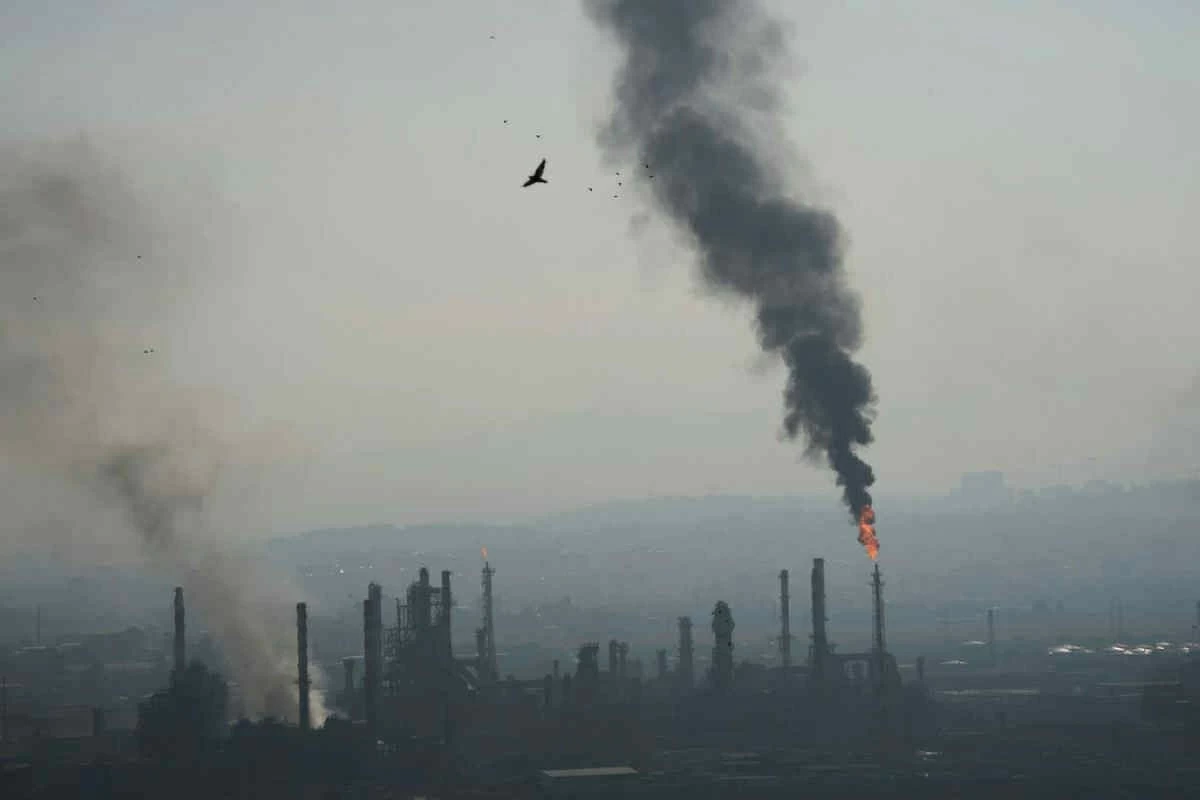
Smoke billows after an Iranian missile struck an oil refinery in Haifa, northern Israel, early Monday, June 16, 2025. (AP Photo/Ariel Schalit)

Danilo Pagkalinawan II, a Filipino student assistant for special children in Israel, told One News that he and other Filipino workers had to transfer to a hostel provided by the Philippine Embassy in Tel Aviv because their residence was damaged by the ongoing missile attack from Iran.

“Kagabi two times na nagkaroon ulit ng alarm… in the middle of the night. Napaka-hirap po dahil lagi kami gulat (Last night, the alarm went off again two times…It’s so difficult because we are always being surprised),” he said on Wednesday, June 18.

“We went to three shelters since midnight until early morning, all the shelters are full. So, we feel that what happened to our house will happen again,” he added in Filipino.

As social workers, Pagkalinawan said they were supposed to be relocated by the Israeli government in a hotel in Jerusalem for one month, but they refused the assistance because they would be farther from their jobs.

“At itong embahada, yan po sila po yung nagsagot ng hostel na malapit po dito sa location po ng mga trabaho po namin (And the embassy then provided for our hostel near the location of our jobs),” he furthered.

He also shared that some Filipinos, like a friend of his, would rather stay in the bunk shelter because it was getting hard to evacuate their homes in the middle of the night when the alarm goes off.

A report from the Philippine Embassy in Tel Aviv also on Wednesday said that 67 Filipinos already lost their homes after they were hit or damaged by Iranian missiles.

“So, Israel is providing help in the shelter. The Philippine Embassy can also help if needed,” Department of Foreign Affairs’ (DFA) Undersecretary Eduardo de Vega told One News.

De Vega also reported that more than 150 Filipinos in Israel have expressed their intention to be repatriated. The number also includes those who have signified their interest to be back in the Philippines because of the continuing war between Israel and Hamas in Gaza.

Israel’s airspace is currently close because of the missile attacks, which meant that Filipinos can only be evacuated through the land border with Jordan.

The 21 Philippine government officials who were in Israel for a study program also left through Jordan’s King Hussein Border. From Jordan, they are expected to take a flight to either Dubai or Qatar, then to Manila.

According to the Philippine Embassy in Tel Aviv, there were some seven Filipinos who were injured—one in critical condition, one sustained moderate injuries, and five have been discharged from the hospital—due to the Iranian missiles that hit Israel.

There are more than 30,000 Filipinos in Israel, with some 1,333 repatriated since the war with Gaza started on Oct. 7, 2023.

The embassy has received at least 178 requests for repatriation, but only 26 have since confirmed and their papers are now being processed for evacuation from Israel.

In Iran, De Vega said there are some 1,000 to 1,200 Filipinos, most of whom are spouses of Iranian nationals and their children.

He added that there may be 20 or 30 OFWs in Iran who have entered the country indirectly.

“There were 14 of them in our embassy. They were given a shelter. They were hoping to get out. So, our embassy is planning by land to go to Turkmenistan,” he explained.

Related Tags

Israel-Iran attacks DFA Philippine Embassy in Israel missile attacks OFWs
ADVERTISEMENT
.most-popular .layout-ratio{ padding-bottom: 79.13%; } @media (min-width: 768px) and (max-width: 1024px) { .widget-title { font-size: 15px !important; } }

{{ articles_filter_1561_widget.title }}

.most-popular .layout-ratio{ padding-bottom: 79.13%; } @media (min-width: 768px) and (max-width: 1024px) { .widget-title { font-size: 15px !important; } }

{{ articles_filter_1562_widget.title }}

.most-popular .layout-ratio{ padding-bottom: 79.13%; } @media (min-width: 768px) and (max-width: 1024px) { .widget-title { font-size: 15px !important; } }

{{ articles_filter_1563_widget.title }}

{{ articles_filter_1564_widget.title }}

.mb-article-details { position: relative; } .mb-article-details .article-body-preview, .mb-article-details .article-body-summary{ font-size: 17px; line-height: 30px; font-family: "Libre Caslon Text", serif; color: #000; } .mb-article-details .article-body-preview iframe , .mb-article-details .article-body-summary iframe{ width: 100%; margin: auto; } .read-more-background { background: linear-gradient(180deg, color(display-p3 1.000 1.000 1.000 / 0) 13.75%, color(display-p3 1.000 1.000 1.000 / 0.8) 30.79%, color(display-p3 1.000 1.000 1.000) 72.5%); position: absolute; height: 200px; width: 100%; bottom: 0; display: flex; justify-content: center; align-items: center; padding: 0; } .read-more-background a{ color: #000; } .read-more-btn { padding: 17px 45px; font-family: Inter; font-weight: 700; font-size: 18px; line-height: 16px; text-align: center; vertical-align: middle; border: 1px solid black; background-color: white; } .hidden { display: none; }
function initializeAllSwipers() { // Get all hidden inputs with cms_article_id document.querySelectorAll('[id^="cms_article_id_"]').forEach(function (input) { const cmsArticleId = input.value; const articleSelector = '#article-' + cmsArticleId + ' .body_images'; const swiperElement = document.querySelector(articleSelector); if (swiperElement && !swiperElement.classList.contains('swiper-initialized')) { new Swiper(articleSelector, { loop: true, pagination: false, navigation: { nextEl: '#article-' + cmsArticleId + ' .swiper-button-next', prevEl: '#article-' + cmsArticleId + ' .swiper-button-prev', }, }); } }); } setTimeout(initializeAllSwipers, 3000); const intersectionObserver = new IntersectionObserver( (entries) => { entries.forEach((entry) => { if (entry.isIntersecting) { const newUrl = entry.target.getAttribute("data-url"); if (newUrl) { history.pushState(null, null, newUrl); let article = entry.target; // Extract metadata const author = article.querySelector('.author-section').textContent.replace('By', '').trim(); const section = article.querySelector('.section-info ').textContent.replace(' ', ' '); const title = article.querySelector('.article-title h1').textContent; // Parse URL for Chartbeat path format const parsedUrl = new URL(newUrl, window.location.origin); const cleanUrl = parsedUrl.host + parsedUrl.pathname; // Update Chartbeat configuration if (typeof window._sf_async_config !== 'undefined') { window._sf_async_config.path = cleanUrl; window._sf_async_config.sections = section; window._sf_async_config.authors = author; } // Track virtual page view with Chartbeat if (typeof pSUPERFLY !== 'undefined' && typeof pSUPERFLY.virtualPage === 'function') { try { pSUPERFLY.virtualPage({ path: cleanUrl, title: title, sections: section, authors: author }); } catch (error) { console.error('ping error', error); } } // Optional: Update document title if (title && title !== document.title) { document.title = title; } } } }); }, { threshold: 0.1 } ); function showArticleBody(button) { const article = button.closest("article"); const summary = article.querySelector(".article-body-summary"); const body = article.querySelector(".article-body-preview"); const readMoreSection = article.querySelector(".read-more-background"); // Hide summary and read-more section summary.style.display = "none"; readMoreSection.style.display = "none"; // Show the full article body body.classList.remove("hidden"); } document.addEventListener("DOMContentLoaded", () => { let loadCount = 0; // Track how many times articles are loaded const offset = [1, 2, 3, 4, 5, 6, 7, 8, 9, 10]; // Offset values const currentUrl = window.location.pathname.substring(1); let isLoading = false; // Prevent multiple calls if (!currentUrl) { console.log("Current URL is invalid."); return; } const sentinel = document.getElementById("load-more-sentinel"); if (!sentinel) { console.log("Sentinel element not found."); return; } function isSentinelVisible() { const rect = sentinel.getBoundingClientRect(); return ( rect.top < window.innerHeight && rect.bottom >= 0 ); } function onScroll() { if (isLoading) return; if (isSentinelVisible()) { if (loadCount >= offset.length) { console.log("Maximum load attempts reached."); window.removeEventListener("scroll", onScroll); return; } isLoading = true; const currentOffset = offset[loadCount]; window.loadMoreItems().then(() => { let article = document.querySelector('#widget_1690 > div:nth-last-of-type(2) article'); intersectionObserver.observe(article) loadCount++; }).catch(error => { console.error("Error loading more items:", error); }).finally(() => { isLoading = false; }); } } window.addEventListener("scroll", onScroll); });

Sign up by email to receive news.