ADVERTISEMENT

Philippines still lags most ASEAN peers in foreign investments

Published Jun 19, 2025 07:00 pm
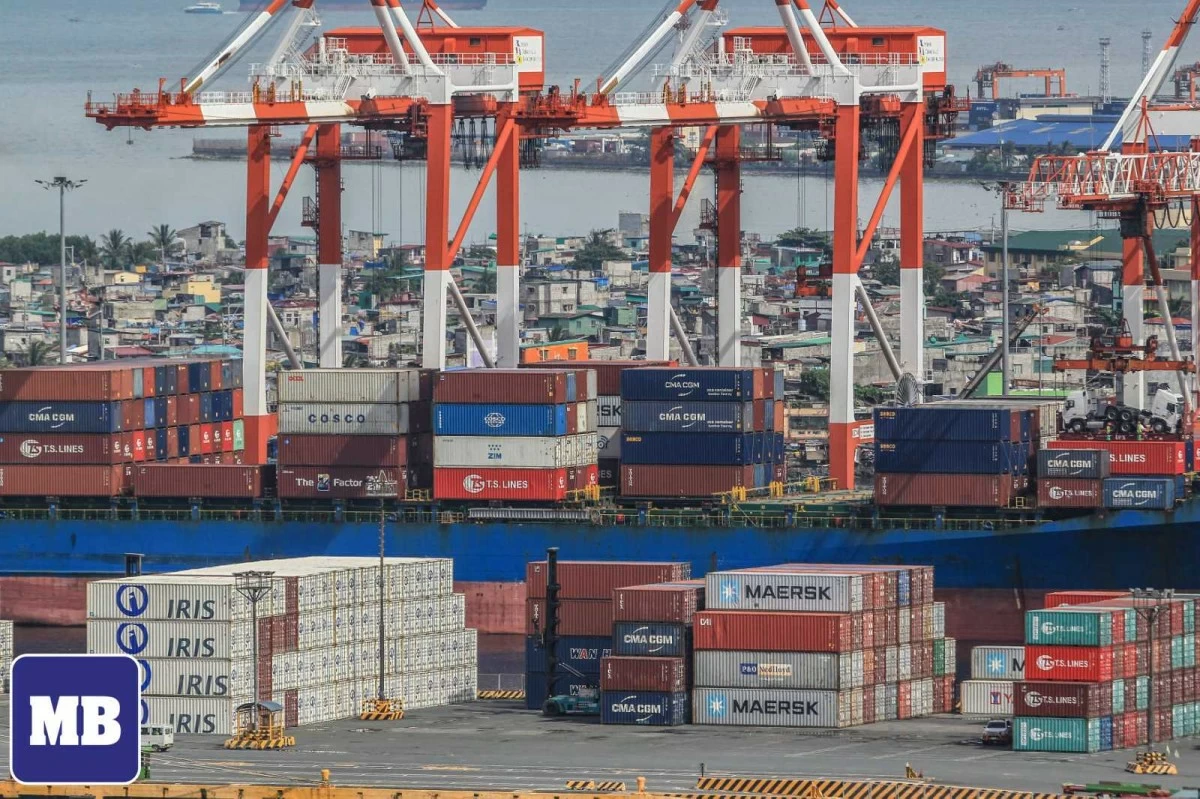
(Manila Bulletin file photo)
The Philippines posted a substantial increase in net inflows of foreign direct investments (FDIs) last year, even as it held on to the sixth spot among Association of Southeast Asian Nations (ASEAN) members for the fourth consecutive year, according to the United Nations Conference on Trade and Development (UNCTAD).
Based on its 2025 World Investment Report launched on Thursday, June 19, UNCTAD said the Philippines saw FDI net inflows surge 38.5 percent to $8.94 billion in 2024 from $6.45 billion in the previous year.
Despite the increase, the Philippines remained the sixth highest in ASEAN in terms of value of net FDI inflows—a ranking the country has kept since 2021. In 2019 and 2020, it ranked a notch higher, at fifth place.
UNCTAD data showed that Singapore took the top spot in net inflows in 2024, with $143.35 billion.
Rounding off the top five are Indonesia ($24.21 billion), Vietnam ($20.17 billion), Malaysia ($11.26 billion), and Thailand ($10.58 billion).
UNCTAD cited the five countries for powering FDI growth across ASEAN, as the 10-member bloc reported a total of $225 billion in net inflows last year, up 10 percent from $205 billion in 2023.
The Philippines was only able to surpass Cambodia ($4.4 billion), Myanmar ($1.1 billion), Laos ($988 million), and Brunei Darussalam ($26 million). Timor Leste, which is applying to be an ASEAN member, reported $247 million.
While ASEAN remained an attractive destination for foreign capital, Asia as a whole saw FDI net inflows fall three percent to $605 billion in 2024 from $622 billion in the prior year.
At the global level, inflows dipped 11 percent to $1.53 trillion last year from $1.64 trillion in 2023—its second straight year of contraction.
For this year, UNCTAD is expecting a more negative outlook for global FDI despite initial expectations of “modest growth” at the start of the year.
It noted that its previously positive forecast has since been “overtaken by rising economic and policy uncertainty.”
“The escalation of a new tariff war, along with deteriorating investor sentiment, has led to downward revisions in key FDI determinants: global GDP [gross domestic product] growth, capital formation, trade and exchange rate stability,” the report read.
UNCTAD particularly highlighted the new tariff policy of the United States (US), which includes the imposition of a baseline 10-percent tariff on incoming goods, as well as the much higher reciprocal tariffs.
Suspended until next month, the US government slapped tariffs against its key trading partners to supposedly address unfair trade practices and protect domestic industries.
While negotiations between the Philippine government and the US could still change the tariff rate, the country is currently set to face a 17-percent tax.
“The escalation of global trade tensions over the past year—driven by reciprocal tariff measures, evolving trade negotiations and heightened economic policy uncertainty—has significantly reshaped the landscape for international investment,” UNCTAD said.
It stated that these tensions will likely dampen global economic and trade growth, with substantial spillovers to global FDI flows.
On top of this dim outlook for the year, UNCTAD has also flagged the sharp decline in international project finance (IPF), which are investments critical for large-scale infrastructure and development.
Based on UNCTAD data, IPF projects declined by 27 percent from 2,713 in 2023 to 1,988 in 2024.
In terms of value, IPF stood at $909 billion last year, down 26 percent from $1.23 trillion in the previous year.
In Asia, the number of projects fell by 27 percent, with the total value dropping by a steep 43 percent.
“This disproportionate decline suggests that the global downturn in IPF deals is affecting emerging markets more severely, due to higher risk perceptions and elevated capital costs, with negative implications for investment in infrastructure and the energy transition,” the report read.
UNCTAD said the decline in the value of IPF deals was most pronounced in ASEAN, with the Philippines sliding 61 percent.
This spells trouble for the Philippines as the majority of its infrastructure projects, particularly in the transportation sector, rely on foreign financing.
UNCTAD is calling on policymakers to take on “bold reforms and coordinated action” to reverse the global downturn in FDI and IPF.
“Only by reshaping the rules and incentives that guide global capital can countries unlock leapfrog opportunities and turn today’s volatility into tomorrow’s development gains,” it said.

Related Tags

United Nations Conference on Trade and Development (UNCTAD) foreign direct investment (FDI)
ADVERTISEMENT
.most-popular .layout-ratio{ padding-bottom: 79.13%; } @media (min-width: 768px) and (max-width: 1024px) { .widget-title { font-size: 15px !important; } }

{{ articles_filter_1561_widget.title }}

.most-popular .layout-ratio{ padding-bottom: 79.13%; } @media (min-width: 768px) and (max-width: 1024px) { .widget-title { font-size: 15px !important; } }

{{ articles_filter_1562_widget.title }}

.most-popular .layout-ratio{ padding-bottom: 79.13%; } @media (min-width: 768px) and (max-width: 1024px) { .widget-title { font-size: 15px !important; } }

{{ articles_filter_1563_widget.title }}

{{ articles_filter_1564_widget.title }}

.mb-article-details { position: relative; } .mb-article-details .article-body-preview, .mb-article-details .article-body-summary{ font-size: 17px; line-height: 30px; font-family: "Libre Caslon Text", serif; color: #000; } .mb-article-details .article-body-preview iframe , .mb-article-details .article-body-summary iframe{ width: 100%; margin: auto; } .read-more-background { background: linear-gradient(180deg, color(display-p3 1.000 1.000 1.000 / 0) 13.75%, color(display-p3 1.000 1.000 1.000 / 0.8) 30.79%, color(display-p3 1.000 1.000 1.000) 72.5%); position: absolute; height: 200px; width: 100%; bottom: 0; display: flex; justify-content: center; align-items: center; padding: 0; } .read-more-background a{ color: #000; } .read-more-btn { padding: 17px 45px; font-family: Inter; font-weight: 700; font-size: 18px; line-height: 16px; text-align: center; vertical-align: middle; border: 1px solid black; background-color: white; } .hidden { display: none; }
function initializeAllSwipers() { // Get all hidden inputs with cms_article_id document.querySelectorAll('[id^="cms_article_id_"]').forEach(function (input) { const cmsArticleId = input.value; const articleSelector = '#article-' + cmsArticleId + ' .body_images'; const swiperElement = document.querySelector(articleSelector); if (swiperElement && !swiperElement.classList.contains('swiper-initialized')) { new Swiper(articleSelector, { loop: true, pagination: false, navigation: { nextEl: '#article-' + cmsArticleId + ' .swiper-button-next', prevEl: '#article-' + cmsArticleId + ' .swiper-button-prev', }, }); } }); } setTimeout(initializeAllSwipers, 3000); const intersectionObserver = new IntersectionObserver( (entries) => { entries.forEach((entry) => { if (entry.isIntersecting) { const newUrl = entry.target.getAttribute("data-url"); if (newUrl) { history.pushState(null, null, newUrl); let article = entry.target; // Extract metadata const author = article.querySelector('.author-section').textContent.replace('By', '').trim(); const section = article.querySelector('.section-info ').textContent.replace(' ', ' '); const title = article.querySelector('.article-title h1').textContent; // Parse URL for Chartbeat path format const parsedUrl = new URL(newUrl, window.location.origin); const cleanUrl = parsedUrl.host + parsedUrl.pathname; // Update Chartbeat configuration if (typeof window._sf_async_config !== 'undefined') { window._sf_async_config.path = cleanUrl; window._sf_async_config.sections = section; window._sf_async_config.authors = author; } // Track virtual page view with Chartbeat if (typeof pSUPERFLY !== 'undefined' && typeof pSUPERFLY.virtualPage === 'function') { try { pSUPERFLY.virtualPage({ path: cleanUrl, title: title, sections: section, authors: author }); } catch (error) { console.error('ping error', error); } } // Optional: Update document title if (title && title !== document.title) { document.title = title; } } } }); }, { threshold: 0.1 } ); function showArticleBody(button) { const article = button.closest("article"); const summary = article.querySelector(".article-body-summary"); const body = article.querySelector(".article-body-preview"); const readMoreSection = article.querySelector(".read-more-background"); // Hide summary and read-more section summary.style.display = "none"; readMoreSection.style.display = "none"; // Show the full article body body.classList.remove("hidden"); } document.addEventListener("DOMContentLoaded", () => { let loadCount = 0; // Track how many times articles are loaded const offset = [1, 2, 3, 4, 5, 6, 7, 8, 9, 10]; // Offset values const currentUrl = window.location.pathname.substring(1); let isLoading = false; // Prevent multiple calls if (!currentUrl) { console.log("Current URL is invalid."); return; } const sentinel = document.getElementById("load-more-sentinel"); if (!sentinel) { console.log("Sentinel element not found."); return; } function isSentinelVisible() { const rect = sentinel.getBoundingClientRect(); return ( rect.top < window.innerHeight && rect.bottom >= 0 ); } function onScroll() { if (isLoading) return; if (isSentinelVisible()) { if (loadCount >= offset.length) { console.log("Maximum load attempts reached."); window.removeEventListener("scroll", onScroll); return; } isLoading = true; const currentOffset = offset[loadCount]; window.loadMoreItems().then(() => { let article = document.querySelector('#widget_1690 > div:nth-last-of-type(2) article'); intersectionObserver.observe(article) loadCount++; }).catch(error => { console.error("Error loading more items:", error); }).finally(() => { isLoading = false; }); } } window.addEventListener("scroll", onScroll); });

Sign up by email to receive news.