ADVERTISEMENT

New standard in public safety: 5-minute police response

Published Jun 19, 2025 12:00 am  |  Updated Jun 18, 2025 06:14 pm
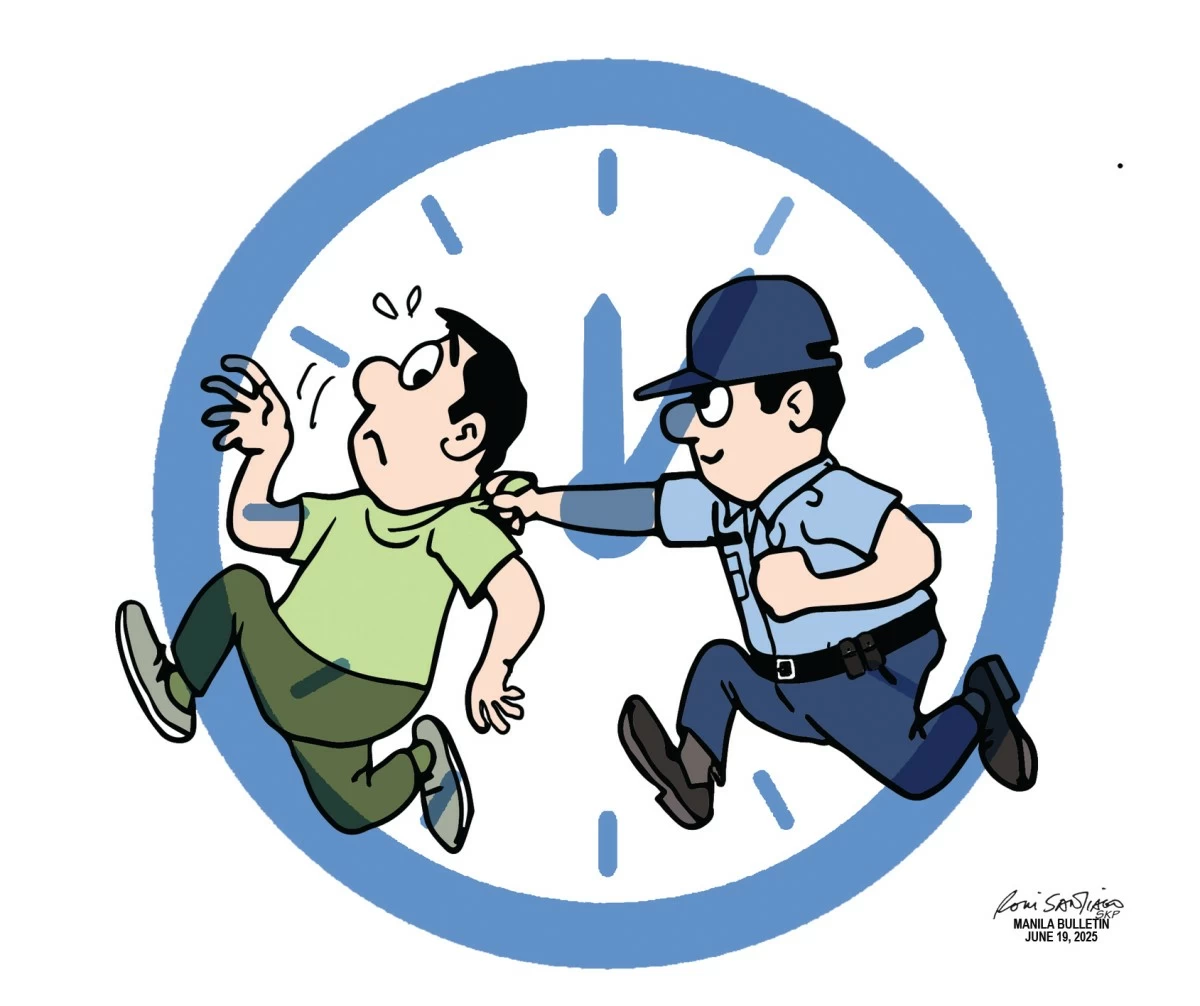
The five-minute police response policy is not a drill. That’s what citizens — and the police force — have realized after eight police commanders in Metro Manila were sacked from their posts recently for failing to comply with the five-minute police response policy. And more are expected to be relieved if they fail to guide their men to ensure quick response to calls for assistance, said Philippine National Police (PNP) chief Gen. Nicolas Torre III early this week.
The PNP chief had implemented the same five-minute response time when he was the director of the Quezon City Police District (QCPD). Now, as PNP chief, Gen. Torre is expanding this policy across Metro Manila and major urban centers, and soon around the country.
It’s not merely a matter of punctuality — it’s a matter of trust. A five-minute response time means crime scenes are not left unguarded, victims are not left alone, and perpetrators do not get a head start to cover their tracks. Every minute counts. And Torre’s firm approach— relieving commanders who fail to meet the standard — is a clear message: police leadership must be competent, visible, and accountable.
This policy is expected to shift public perception. It offers a real possibility of reversing the public’s skepticism toward police capability and responsiveness. Malacañang has lauded the PNP’s quicker deployment, noting that swift responses are key to deterring crime and restoring community trust.
Equally important is the technology now supporting this mission. The PNP, in coordination with the Metropolitan Manila Development Authority (MMDA), is tapping into the extensive network of high-resolution CCTV cameras previously used for the No-Contact Apprehension Policy (NCAP). These cameras — most of them equipped with artificial intelligence —will be part of a joint initiative to monitor urban roads for both traffic and criminal activity.
From mere traffic regulation tools, the PNP aims to make the NCAP CCTVs as an “eye in the sky” for law enforcement. Integrated with the PNP’s command centers, these cameras would allow for real-time coordination and immediate dispatch of mobile units, especially in Metro Manila’s most crime-prone corridors. As Torre pointed out, the presence of PNP personnel at MMDA’s command center ensures that radioed instructions can be swiftly acted upon.
This integration of human readiness and technological surveillance offers a strategic edge against criminal elements. Criminals no longer have the comfort of knowing police response may be delayed. As Torre has ordered policemen to “walk the streets,” and always be on their radios, citizens are assured that they can be contacted anytime to respond to reports on criminal activity. This is part of the PNP’s broader strategy to modernize law enforcement and ensure an immediate police presence in critical situations, improving peace and order, and making streets safer.
Supporting the fast response of the police force will be the new 911 emergency system which will be unveiled in July initially in Metro Manila, the Bangsamoro Autonomous Region in Muslim Mindanao, the Ilocos Region, and Central Visayas — and will soon be operational around the country. The system will use advanced technology to connect emergency calls directly to frontline responders, such as the PNP and the Bureau of Fire Protection.
Critics might say that five minutes is overly ambitious. But Torre is not backing down — in fact, he’s aiming to reduce it to three minutes.
When citizens believe their emergency call will be answered in minutes— not hours — they will begin to feel safe again. That renewed trust will be the most important outcome of all.
ADVERTISEMENT
.most-popular .layout-ratio{ padding-bottom: 79.13%; } @media (min-width: 768px) and (max-width: 1024px) { .widget-title { font-size: 15px !important; } }

{{ articles_filter_1561_widget.title }}

.most-popular .layout-ratio{ padding-bottom: 79.13%; } @media (min-width: 768px) and (max-width: 1024px) { .widget-title { font-size: 15px !important; } }

{{ articles_filter_1562_widget.title }}

.most-popular .layout-ratio{ padding-bottom: 79.13%; } @media (min-width: 768px) and (max-width: 1024px) { .widget-title { font-size: 15px !important; } }

{{ articles_filter_1563_widget.title }}

{{ articles_filter_1564_widget.title }}

.mb-article-details { position: relative; } .mb-article-details .article-body-preview, .mb-article-details .article-body-summary{ font-size: 17px; line-height: 30px; font-family: "Libre Caslon Text", serif; color: #000; } .mb-article-details .article-body-preview iframe , .mb-article-details .article-body-summary iframe{ width: 100%; margin: auto; } .read-more-background { background: linear-gradient(180deg, color(display-p3 1.000 1.000 1.000 / 0) 13.75%, color(display-p3 1.000 1.000 1.000 / 0.8) 30.79%, color(display-p3 1.000 1.000 1.000) 72.5%); position: absolute; height: 200px; width: 100%; bottom: 0; display: flex; justify-content: center; align-items: center; padding: 0; } .read-more-background a{ color: #000; } .read-more-btn { padding: 17px 45px; font-family: Inter; font-weight: 700; font-size: 18px; line-height: 16px; text-align: center; vertical-align: middle; border: 1px solid black; background-color: white; } .hidden { display: none; }
function initializeAllSwipers() { // Get all hidden inputs with cms_article_id document.querySelectorAll('[id^="cms_article_id_"]').forEach(function (input) { const cmsArticleId = input.value; const articleSelector = '#article-' + cmsArticleId + ' .body_images'; const swiperElement = document.querySelector(articleSelector); if (swiperElement && !swiperElement.classList.contains('swiper-initialized')) { new Swiper(articleSelector, { loop: true, pagination: false, navigation: { nextEl: '#article-' + cmsArticleId + ' .swiper-button-next', prevEl: '#article-' + cmsArticleId + ' .swiper-button-prev', }, }); } }); } setTimeout(initializeAllSwipers, 3000); const intersectionObserver = new IntersectionObserver( (entries) => { entries.forEach((entry) => { if (entry.isIntersecting) { const newUrl = entry.target.getAttribute("data-url"); if (newUrl) { history.pushState(null, null, newUrl); let article = entry.target; // Extract metadata const author = article.querySelector('.author-section').textContent.replace('By', '').trim(); const section = article.querySelector('.section-info ').textContent.replace(' ', ' '); const title = article.querySelector('.article-title h1').textContent; // Parse URL for Chartbeat path format const parsedUrl = new URL(newUrl, window.location.origin); const cleanUrl = parsedUrl.host + parsedUrl.pathname; // Update Chartbeat configuration if (typeof window._sf_async_config !== 'undefined') { window._sf_async_config.path = cleanUrl; window._sf_async_config.sections = section; window._sf_async_config.authors = author; } // Track virtual page view with Chartbeat if (typeof pSUPERFLY !== 'undefined' && typeof pSUPERFLY.virtualPage === 'function') { try { pSUPERFLY.virtualPage({ path: cleanUrl, title: title, sections: section, authors: author }); } catch (error) { console.error('ping error', error); } } // Optional: Update document title if (title && title !== document.title) { document.title = title; } } } }); }, { threshold: 0.1 } ); function showArticleBody(button) { const article = button.closest("article"); const summary = article.querySelector(".article-body-summary"); const body = article.querySelector(".article-body-preview"); const readMoreSection = article.querySelector(".read-more-background"); // Hide summary and read-more section summary.style.display = "none"; readMoreSection.style.display = "none"; // Show the full article body body.classList.remove("hidden"); } document.addEventListener("DOMContentLoaded", () => { let loadCount = 0; // Track how many times articles are loaded const offset = [1, 2, 3, 4, 5, 6, 7, 8, 9, 10]; // Offset values const currentUrl = window.location.pathname.substring(1); let isLoading = false; // Prevent multiple calls if (!currentUrl) { console.log("Current URL is invalid."); return; } const sentinel = document.getElementById("load-more-sentinel"); if (!sentinel) { console.log("Sentinel element not found."); return; } function isSentinelVisible() { const rect = sentinel.getBoundingClientRect(); return ( rect.top < window.innerHeight && rect.bottom >= 0 ); } function onScroll() { if (isLoading) return; if (isSentinelVisible()) { if (loadCount >= offset.length) { console.log("Maximum load attempts reached."); window.removeEventListener("scroll", onScroll); return; } isLoading = true; const currentOffset = offset[loadCount]; window.loadMoreItems().then(() => { let article = document.querySelector('#widget_1690 > div:nth-last-of-type(2) article'); intersectionObserver.observe(article) loadCount++; }).catch(error => { console.error("Error loading more items:", error); }).finally(() => { isLoading = false; }); } } window.addEventListener("scroll", onScroll); });

Sign up by email to receive news.