






Manila Bulletin
 Philippines
National
Allocate 6 percent of GDP to education sector, ACT Teachers tells gov't
Philippines
National
Allocate 6 percent of GDP to education sector, ACT Teachers tells gov't
Philippines
National
Allocate 6 percent of GDP to education sector, ACT Teachers tells gov't
Allocate 6 percent of GDP to education sector, ACT Teachers tells gov't
Published Jun 19, 2025 02:07 pm


At A Glance
- ACT Teachers Party-list is calling on President Marcos to allocate six percent of the country's gross domestic product (GDP) to the education sector's budget in a bid to address the perennial problem of classroom shortage.
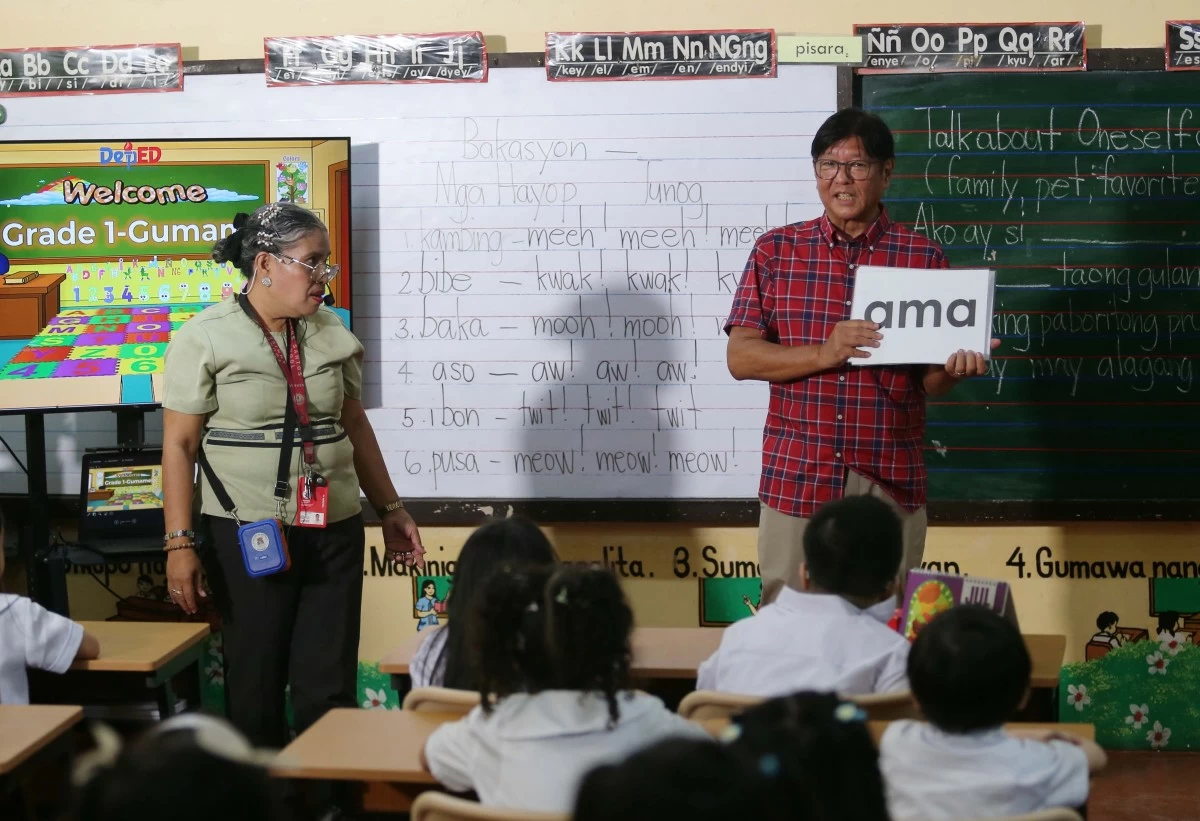
ACT Teachers Party-list is calling on President Marcos to allocate six percent of the country's gross domestic product (GDP) to the education sector's budget in a bid to address the perennial problem of classroom shortage.
Both the party-list's outgoing and incoming representatives, France Castro and Antonio Tinio, respectively, stressed the need for systemic reform in education funding and infrastructure development.
This, after a congressional commission study revealed that severe classroom congestion persists across the National Capital Region, CALABARZON, Region XII, and BARMM.
Some areas even showed that 90 percent of elementary students were enrolled in overcrowded schools, with student-classroom ratios of at least 1:50, a study conducted by the congressional committee called EDCOM II added.
The current budget allocation is clearly insufficient to address our education crisis. We need to double our commitment to education by allocating 6 percent of GDP to ensure we can build the classrooms our children desperately need, Tinio said.
In 2024, the Commission on Audit (COA) disclosed that the Department of Education (DepEd), which was then under the helm of Vice President Sara Duterte, completed only 192 classrooms out of a target of 6,379 rooms in 2023.
This is absolutely unacceptable. Habang may learning crisis na tayo, pinalala pa ng dating administrasyon ng DepEd ang sitwasyon ng ating mga estudyante (While we already have learning crisis, our students' situation was even made worse by the previous DepEd administration), Castro said.
Both Castro and Tinio pointed out that even with declining fertility rates offering some relief, the Philippines could still lack 58,000 to 81,000 classrooms by 2040 if no new construction occurs after 2021.
Current projections show it could take 55 years to resolve the classroom shortage under business-as-usual approaches, they said.
Sa aming pag-iikot sa Balik-Eskwela noong Lunes ay nakita natin ang matinding siksikan, ang kakulangan ng silid-aralan, at ang nakapapagod na shifting schedules na direktang bunga ng kapabayaan ng administrasyon (When we made rounds during the start of the school year, we witnessed overcrowding, lack of available classrooms and tiring shifting schedules in schools that were actually caused by the previous administration), they added.
They said that the government must not allow another generation of Filipino children to suffer from overcrowded classrooms and inadequate learning environments.
The Marcos administration must prioritize education infrastructure and dramatically increase annual classroom construction targets, they said.