







The 28 legacy continues: A review of '28 Years Later'
Published Jun 18, 2025 11:44 am


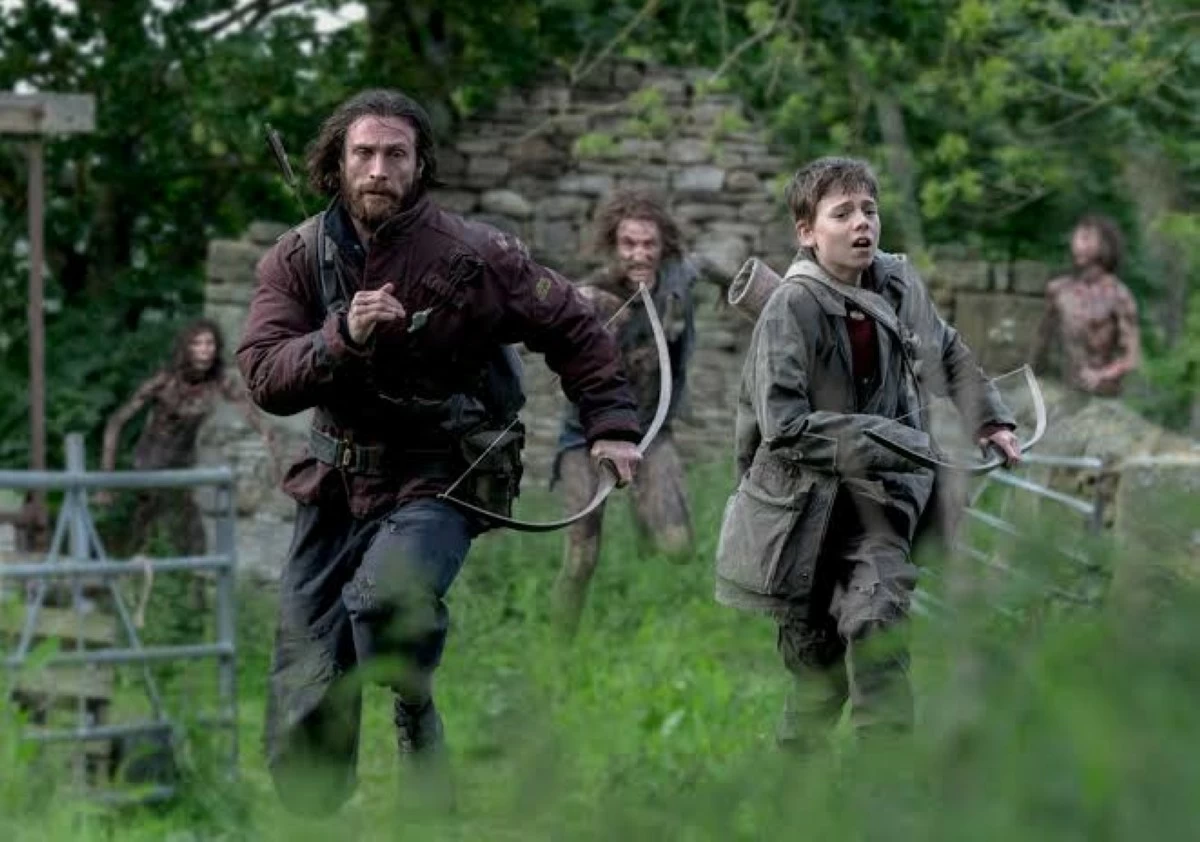
A scene from '28 Years Later'
When director Danny Boyle and writer Alex Garland released 28 Days Later in 2002 (2003 in the United States), it became a favorite of both critics and the general audience. It helped revolutionize the post-apocalyptic zombie genre, setting a high benchmark for the films that would follow, copy, and/or be inspired by this seminal film: a rogue virus, societal breakdown, compelling lead characters, and lots of grisly action. A sequel, 28 Weeks Later, was produced in 2007, and while the critics loved this concept of a safe zone for the Rage Virus, neither Boyle nor Garland was involved.
So, it does make this new film, 28 Years Later, something of a homecoming for both Boyle and Garland; and sets the franchise on an energized path, as in January 2026, a 28 Years Later Part II: The Bone Temple, is set for release as the second of a planned trilogy. But first things first, 28 Years Later opened in cinemas on June 18, 2025, and here’s all you need to know.
Chronicling the survival of the human race nearly thirty years after the Rage virus broke, we’re brought to a small island that, during low tide, has a causeway connection to the mainland. It’s here that we meet the nuclear family of Jamie (Aaron Taylor-Johnson), his sick wife Isla (Jodie Comer), and 12-year-old son, Spike (Alfie Williams). They’re part of the island community, and one rite of passage is for all the young males to be taken by their father to the mainland, to get their first kill of an ‘infected’. That there are different types of ‘infected’ helps raise the gross-out quotient, adding to the suspense of the film.
If the first part sees this bonding activity between father and son, what’s interesting to note is how the second half of the film is an odyssey taken by son with mother, as Spike wants to find the renegade medical doctor who’s burning corpses on the mainland, building a monument to the dead made of skulls. This doctor would be the mysterious Dr. Kelson (Ralph Fiennes).
Providing much-needed shafts of humor is the introduction of a Swedish soldier named Erik (Edvin Ryding). After all the building tension, visceral and disgusting scenes, and blood-letting, the comedic moments supplied by Erik come as much-needed relief from the suffocating, relentless suspense.
There’s even a crazy prologue featuring the Teletubbies that sets the tone for this film and heralds the entry of another main character - but that’s more for whetting our appetite for Part 2 of the trilogy.
What’s nice to note is how Boyle has cast consummate actors in this film, the type who could read off a label of canned sardines and still find depth, emotion, and spark in the delivery of those lines. Initially, it seems that Taylor-Johnson will be doing the heavy lifting. Still, it merely misleads us, as the narrative then focuses on Jodie Comer’s Isla and onto Fiennes’ Dr. Kelson.
I want to give a special shout-out to the young actor Alfie Williams. He is the one carrying the whole film, and this is his first feature film work, having previously done a TV series. Boyle teases out an excellent performance from the lad, and I won’t be surprised if many film reviewers in the forthcoming week will single him out as being the best thing in this film. And what’s impressive is how he manages this with the three heavyweight thespians who are on board.
There’s the horror and the suspense as a given for this cult franchise, but look out for the human drama and the emotional impact. It’s Boyle and Garland elevating the film, and rising above its genre.