







Staggered fuel price increases loom as oil supply fears mount
Published Jun 18, 2025 04:29 pm


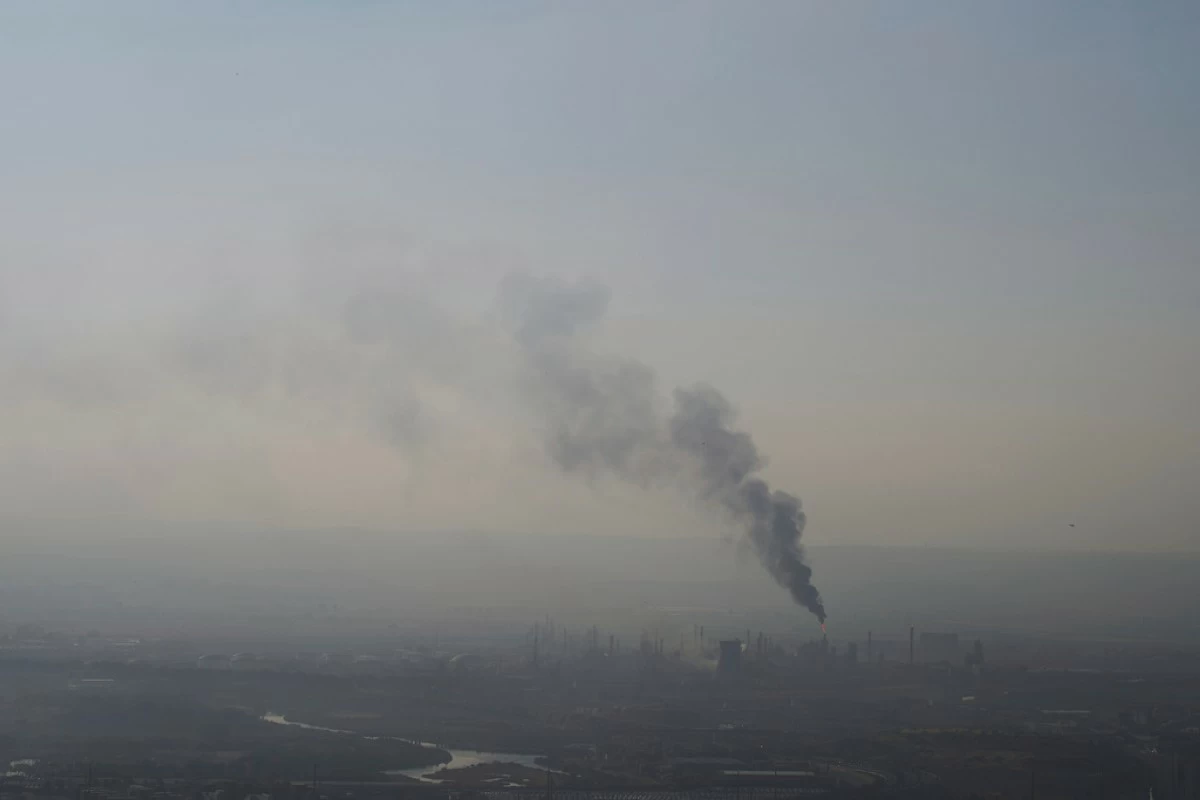
Smoke billows after an Iranian missile struck an oil refinery in Haifa, northern Israel, early Monday, June 16, 2025. (AP Photo/Ariel Schalit)
The market is on edge due to the recent geopolitical tensions between Iran and Israel, prompting the Philippines to brace for potential price increases at gas pumps next week.
Jetti Petroleum has indicated that the escalating conflict could impact the supply and transportation of crude oil products.
The growing uncertainty around the Iran-Israel hostilities and concerns that the conflict may intensify and disrupt supply, particularly in the Strait of Hormuz, has further pushed up the prices of crude oil and refined fuel products, stated Leo Bellas, Jetti president.
As the country anticipates these price adjustments, Jetti Petroleum has affirmed its support for the Department of Energy’s (DOE) call for a possible staggered implementation of next week's price increase. Bellas confirmed, “For the possible staggered implementation of next week’s price increase, we will abide by any directive from the DOE.”
Based on the Mean of Platts Singapore (MOPS) average from June 16 to 17, diesel prices could rise by as much as ₱3.40 to ₱3.60 per liter, while gasoline could spike between ₱2.30 to ₱2.50 per liter. However, these figures are not yet the final adjustments for next week.
Diversified Energy Sources Sought
While analysts continue to assess the effects of the ongoing Middle Eastern conflict, Michael Ricafort, chief economist of Rizal Commercial Banking Corp. (RCBC), has outlined strategies the country might consider to mitigate the impact of escalating oil prices.
If there is an escalation of the Israel-Iran war, that could further lead to higher global oil prices and inflation, Ricafort told Manila Bulletin. He also cited other contributing factors to rising inflation, such as the weakening of the Peso to ₱56.90 per dollar and global crude oil prices hitting $75 per barrel.
Motorists are not the only consumers affected; Ricafort noted that a slight pick-up in inflation could lead to an increase in the country’s trade deficit, import prices, and overall trade. Some pick-up in prices, especially oil/energy, could reduce disposable income or spending power of consumers, as consumer spending accounts for about 75 percent of the economy, Ricafort explained.
Potential solutions, according to the economist, include hedging oil and imports, diversifying oil sources, and supporting the growth of cleaner energy sources such as electric vehicles (EVs). He elaborated, “There is a need to properly hedge the country’s oil and other import requirements amid risk of volatile world oil and other commodity prices that could lead to higher prices/inflation, as well as further diversify sources of oil/energy, on top of conservation measures and further shift to renewable energy to help structurally reduce dependence of the country on imported oil/petroleum.”
Ricafort also emphasized the need to boost renewable energy (RE) integration, highlighting the DOE's recent efforts to expand its EV charging network to nearly 1,000 stations nationwide. He concluded, “Now with increased shift to REs such as wind/offshore wind, solar, geothermal, and hydro… Many companies/businesses and governments commit to reduce carbon emissions/footprint in the coming years.”