

ADVERTISEMENT

Marcos renews frustration with K-12, vows focus on employability, teacher support

Published Jun 18, 2025 10:01 am

At A Glance

  • Marcos said his directive to the Department of Education (DepEd) is to make the most of the current setup by ensuring curriculum relevance and employability.
President Marcos said the government will keep pushing for improvements in the K-12 system as long as the law remains in place, even as he echoed growing frustrations about its effectiveness and cost.
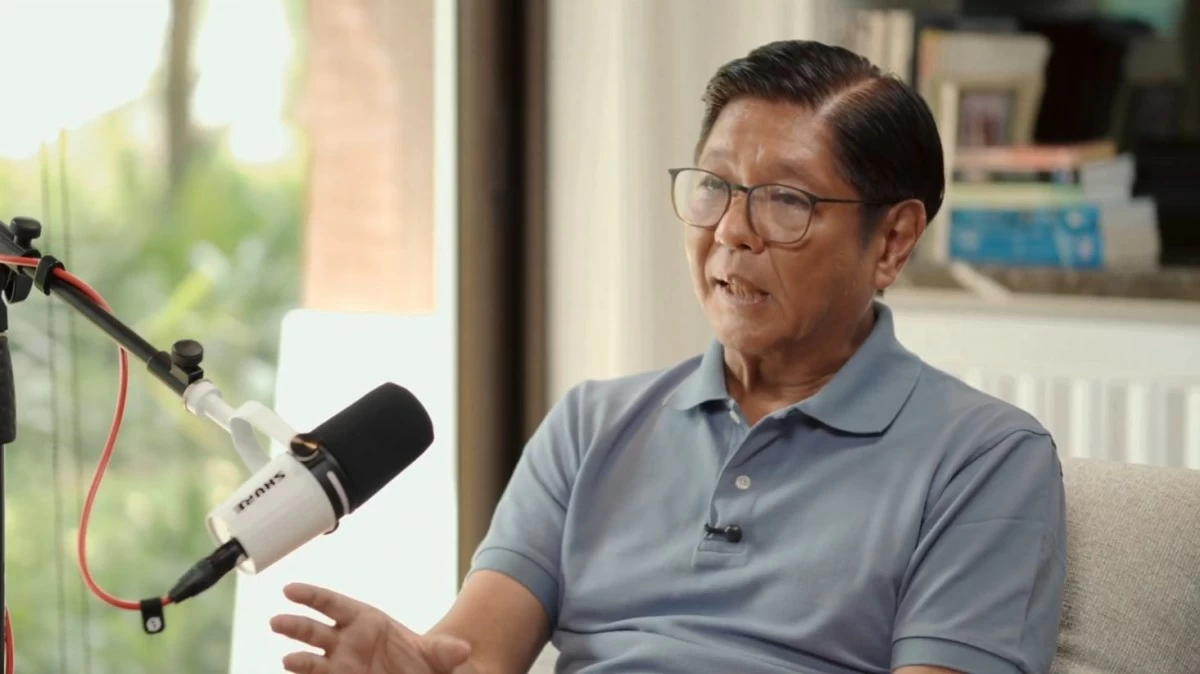
President Ferdinand 'Bongbong' Marcos Jr. (PCO Screenshot)
In his podcast released on Wednesday, June 18, the President reiterated his concerns that the K-12 basic education program burdened parents while not serving its purpose.
It's costing more for the parents kasi nadagdagan ng two years pa. Magmamatrikulasyon pa 'yan, maraming school supplies, bibili ng libro lahat (It's costing more for the parents because we added two more years. They have to pay tuition, buy school supplies, buy books),” he said.
Sa 10 years wala namang advantage. Wala naman naging advantage, hindi rin nakukuha sa trabaho, eh (After 10 years, there was no advantage. There was no improvement, and graduates still can't find jobs),” he added.
Marcos said that while some lawmakers now want to scrap or amend senior high school, his directive to the Department of Education (DepEd) is to make the most of the current setup by ensuring curriculum relevance and employability.
Basta ang sinabi ko kay Sec. Sonny Angara: pagandahin natin nang husto hanggang nandiyan pa 'yan (I told Secretary Sonny Angara to make the most of it while it’s still there),” he said.
According to the President, the solution lies in closer partnerships with the private sector. He said some companies are even willing to conduct training themselves to ensure a job match.

More classrooms, less admin work

President Marcos also said that addressing teacher and infrastructure issues is central to improving education outcomes.
Isipin mo, 160,000 ang kulang natin na classroom. Paano nangyari yun (Can you imagine, we’re short by 160,000 classrooms. How did that happen)?” he said.
He lamented the continued use of aging Marcos-type classrooms from the 1970s, which only had a 20- to 30-year lifespan.
“Pinabayaan talaga ang edukasyon (Education was really neglected). That's what happened,” he said.
To speed up repairs and new construction, Marcos said school building projects are now being done through public-private partnerships.
“Kung gobyerno lang ang gagawa, kakaunti lang ang magagawa natin (We can only make a few if the government will do it alone),” he said.
“In fairness to the private sector, very cooperative sila. Naglalabas talaga sila ng pera, very willing sila na tumulong (they’re very cooperative. They spend money and they’re willing to help),” he added.

Support for teachers key to reform

For Marcos, improving teacher welfare is just as crucial. He also cited efforts to reduce administrative workload and increase teacher hiring.
We put in place a program for the retraining, re-education of our teachers, he said.
The President also acknowledged that some teachers feel pressured to pass students to avoid negative performance reviews.
Kahit na hindi marunong magbasa, ipasa mo na. Yun ang nangyayari (Even if they can’t read, they’re passed. That’s what’s happening),” he lamented.
He said new standards would focus on actual student performance.
It's going to be based on the students' actual performance in tests,” he added.

A message to teachers

Asked for his message to teachers with the opening of the new school year, Marcos reiterated his admiration for teachers.
Kayo ang mga bayani para sa akin (You are heroes in my eyes. They are leaders of their communities. They take care of our children. My God! We have to support them, he said.
Kayo ang nagbibigay ng dangal sa ating education system. Tutulungan namin kayo hangga't maaari (You give dignity to our education system. We will support you however we can),” he added.
The President even described public school teachers as the hardest-working government workers.
“I always say the public school teachers are the hardest-working public servants in the whole of government. Magalit na silang lahat sa akin (I don’t mind if others get mad at me), but I believe that,” he said.
“They really are the most busy. Ang daming ginagawa kahit wala na sa job description nila, kung anong ginagawa (They’re doing a lot even beyond their job description),” he added.

Related Tags

President Marcos Bongbong Marcos K to 12 program
ADVERTISEMENT
.most-popular .layout-ratio{ padding-bottom: 79.13%; } @media (min-width: 768px) and (max-width: 1024px) { .widget-title { font-size: 15px !important; } }

{{ articles_filter_1561_widget.title }}

.most-popular .layout-ratio{ padding-bottom: 79.13%; } @media (min-width: 768px) and (max-width: 1024px) { .widget-title { font-size: 15px !important; } }

{{ articles_filter_1562_widget.title }}

.most-popular .layout-ratio{ padding-bottom: 79.13%; } @media (min-width: 768px) and (max-width: 1024px) { .widget-title { font-size: 15px !important; } }

{{ articles_filter_1563_widget.title }}

{{ articles_filter_1564_widget.title }}

.mb-article-details { position: relative; } .mb-article-details .article-body-preview, .mb-article-details .article-body-summary{ font-size: 17px; line-height: 30px; font-family: "Libre Caslon Text", serif; color: #000; } .mb-article-details .article-body-preview iframe , .mb-article-details .article-body-summary iframe{ width: 100%; margin: auto; } .read-more-background { background: linear-gradient(180deg, color(display-p3 1.000 1.000 1.000 / 0) 13.75%, color(display-p3 1.000 1.000 1.000 / 0.8) 30.79%, color(display-p3 1.000 1.000 1.000) 72.5%); position: absolute; height: 200px; width: 100%; bottom: 0; display: flex; justify-content: center; align-items: center; padding: 0; } .read-more-background a{ color: #000; } .read-more-btn { padding: 17px 45px; font-family: Inter; font-weight: 700; font-size: 18px; line-height: 16px; text-align: center; vertical-align: middle; border: 1px solid black; background-color: white; } .hidden { display: none; }
function initializeAllSwipers() { // Get all hidden inputs with cms_article_id document.querySelectorAll('[id^="cms_article_id_"]').forEach(function (input) { const cmsArticleId = input.value; const articleSelector = '#article-' + cmsArticleId + ' .body_images'; const swiperElement = document.querySelector(articleSelector); if (swiperElement && !swiperElement.classList.contains('swiper-initialized')) { new Swiper(articleSelector, { loop: true, pagination: false, navigation: { nextEl: '#article-' + cmsArticleId + ' .swiper-button-next', prevEl: '#article-' + cmsArticleId + ' .swiper-button-prev', }, }); } }); } setTimeout(initializeAllSwipers, 3000); const intersectionObserver = new IntersectionObserver( (entries) => { entries.forEach((entry) => { if (entry.isIntersecting) { const newUrl = entry.target.getAttribute("data-url"); if (newUrl) { history.pushState(null, null, newUrl); let article = entry.target; // Extract metadata const author = article.querySelector('.author-section').textContent.replace('By', '').trim(); const section = article.querySelector('.section-info ').textContent.replace(' ', ' '); const title = article.querySelector('.article-title h1').textContent; // Parse URL for Chartbeat path format const parsedUrl = new URL(newUrl, window.location.origin); const cleanUrl = parsedUrl.host + parsedUrl.pathname; // Update Chartbeat configuration if (typeof window._sf_async_config !== 'undefined') { window._sf_async_config.path = cleanUrl; window._sf_async_config.sections = section; window._sf_async_config.authors = author; } // Track virtual page view with Chartbeat if (typeof pSUPERFLY !== 'undefined' && typeof pSUPERFLY.virtualPage === 'function') { try { pSUPERFLY.virtualPage({ path: cleanUrl, title: title, sections: section, authors: author }); } catch (error) { console.error('ping error', error); } } // Optional: Update document title if (title && title !== document.title) { document.title = title; } } } }); }, { threshold: 0.1 } ); function showArticleBody(button) { const article = button.closest("article"); const summary = article.querySelector(".article-body-summary"); const body = article.querySelector(".article-body-preview"); const readMoreSection = article.querySelector(".read-more-background"); // Hide summary and read-more section summary.style.display = "none"; readMoreSection.style.display = "none"; // Show the full article body body.classList.remove("hidden"); } document.addEventListener("DOMContentLoaded", () => { let loadCount = 0; // Track how many times articles are loaded const offset = [1, 2, 3, 4, 5, 6, 7, 8, 9, 10]; // Offset values const currentUrl = window.location.pathname.substring(1); let isLoading = false; // Prevent multiple calls if (!currentUrl) { console.log("Current URL is invalid."); return; } const sentinel = document.getElementById("load-more-sentinel"); if (!sentinel) { console.log("Sentinel element not found."); return; } function isSentinelVisible() { const rect = sentinel.getBoundingClientRect(); return ( rect.top < window.innerHeight && rect.bottom >= 0 ); } function onScroll() { if (isLoading) return; if (isSentinelVisible()) { if (loadCount >= offset.length) { console.log("Maximum load attempts reached."); window.removeEventListener("scroll", onScroll); return; } isLoading = true; const currentOffset = offset[loadCount]; window.loadMoreItems().then(() => { let article = document.querySelector('#widget_1690 > div:nth-last-of-type(2) article'); intersectionObserver.observe(article) loadCount++; }).catch(error => { console.error("Error loading more items:", error); }).finally(() => { isLoading = false; }); } } window.addEventListener("scroll", onScroll); });

Sign up by email to receive news.