






Manila Bulletin
 Philippines
National
DepEd highlights urgent reforms in education as School Year 2025–2026 opens
Philippines
National
DepEd highlights urgent reforms in education as School Year 2025–2026 opens
Philippines
National
DepEd highlights urgent reforms in education as School Year 2025–2026 opens
DepEd highlights urgent reforms in education as School Year 2025–2026 opens
Education Secretary Sonny Angara said DepEd is ramping up classroom construction, teacher hiring amid learning crisis and health concerns
Published Jun 18, 2025 01:56 pm


At A Glance
- DepEd said the worsening classroom shortage in public schools need prompt and urgent action. Education Secretary Sonny Angara is urging government intervention for land acquisition or leasing to fast-track the construction of both temporary and permanent learning spaces.
- DepEd also said teacher hiring and training are being expanded to ease the shortage.
- To address pandemic-exacerbated learning gaps, Angara said DepEd is tackling the learning crisis through reforms in health, curriculum, and technology.
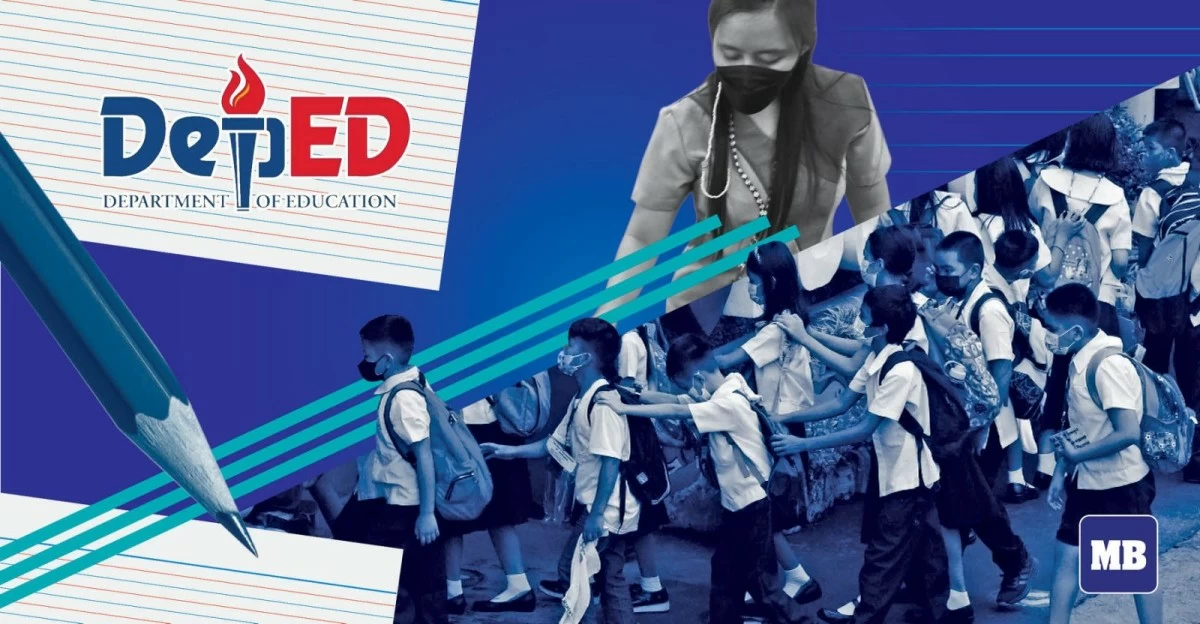
With the same old problems resurfacing this school opening, DepEd is pushing for urgent reforms to address the learning crisis. (DepEd / MB Visual Content Group)
As public schools welcomed a new school year this week, Department of Education (DepEd) Secretary Sonny Angara on Wednesday, June 18, addressed the agency’s urgent priorities, tackling critical issues such as classroom shortages, teacher hiring, learning recovery, and student health—in coordination with other government agencies.
Angara, along with Department of Health (DOH) Secretary Ted Herbosa, visited Esteban Abada Elementary School in Quezon City to monitor the check-ups of 500 students and teachers. The initiative was conducted in partnership with PhilHealth and 1Life, a private healthcare provider.
Classroom shortage worsens
One of the main concerns during the school opening is the persistent shortage of classrooms in many public schools nationwide.
In Naic, Cavite—a relocation hub for families from Metro Manila—Angara revealed that public school enrollment surged by 900 percent, overwhelming existing facilities. Makeshift tents now serve as classrooms, located on private property.
“Yung kinalalagyan ng tents, private property, so ang hinihingi namin, baka puwedeng i-lease or bilhin ng government kasi ready na kami mag-construct, kahit temporary learning space para hindi nauulanan at hindi nababasa ‘yung mga bata at mas permanente ang mga istruktura (The area where the tents are located is private property. We are requesting that the government consider leasing or purchasing the land, as we are ready to begin construction. Even a temporary learning space would help ensure that children are not exposed to rain and that the structures are more permanent),” Angara said.
DepEd estimated the need for 20 to 30 new classrooms—or more—in Naic alone.
Angara also cited broader challenges in rapidly urbanizing areas, where buildable space is scarce, and DepEd lacks both the authority and the budget to expropriate land.
To manage the shortage, he said some schools have resorted to double- or triple-shift class schedules.
In a separate case, a school building damaged by fire in Quezon City will be replaced by a P180-million, four-story, 36-classroom structure, according to the Department of Public Works and Highways (DPWH), with completion targeted within a year.
DepEd teacher shortage to ‘decline’ as hiring expands
Aside from classroom shortages, the lack of teachers remains a pressing concern at the start of the school year.
Angara highlighted progress in addressing the long-standing teacher shortage, which stood at over 90,000 two years ago.
With 20,000 new teaching positions funded for 2025 under President Marcos’ directive, the shortage is expected to drop to 36,000.
He emphasized the importance of teacher training, now guided by research-based, systematic approaches. Tools like AI-powered platforms are being introduced to help educators plan lessons more efficiently and ensure instructional accuracy.
Revised SHS curriculum pilot enters implementation phase
One of the key highlights of this school year’s opening is the pilot implementation of the Strengthened Senior High School (SHS) curriculum.
DepEd is rolling out a year-long pilot of the revised SHS curriculum in 800 selected schools that have the capacity to implement the changes.
“It will be a year-long assessment,” Angara said. “That’s why we picked those 800 schools, kasi we assessed their capacity to implement. So ‘yung pinili namin, ‘yung may kapasidad Talaga (We chose schools that truly have the capacity),” he added.
Teachers have undergone intensive training over the past month as part of the pilot’s phased approach, according to Angara.
Tackling the learning crisis: Basics, health, and technology
Responding to UNICEF’s findings that many Filipino students are performing below grade level, Angara reaffirmed the administration’s commitment to addressing the learning crisis, which worsened during the pandemic.
“Some students still cannot read. They were given worksheets during lockdowns, but they couldn’t read them. No intervention happened,” Angara explained, speaking in a mix of English and Filipino.
To address this, DepEd implemented summer reading programs ahead of the school opening.
Herbosa also underscored the importance of addressing health-related issues among the youth, which he said could be underlying causes of the learning crisis.
“Some of [these problems] are the cause of the learning crisis,” Herbosa said in a mix of English and Filipino.
He noted that malnutrition and stunting remain major barriers to learning, prompting the expansion of the school-based feeding program for all early-grade learners.
“Students often come to school hungry. How can they focus? Some learning difficulties stem from undernutrition,” he added.
Health and safety measures amid rainy season, dengue surge
In collaboration with DepEd, Herbosa said DOH has increased efforts to protect students during the rainy season, including distributing mosquito net-treated window screens to schools and training teachers on mosquito breeding prevention.
“Sumama kami sa Brigada [Eskwela] at tinuturuan ang mga teachers kung saan ang pinamumugaran ng lamok at namimigay din kami ng mosquito net-treated screen na inilalagay sa windows para maprotektahan ang mga bata (We joined Brigada Eskwela and trained teachers to identify mosquito breeding sites. We also distributed mosquito net-treated screens for windows to protect the children),” Herbosa said.
Citing DOH monitoring, Herbosa said dengue cases rose by 56 percent in early 2025 compared to last year.
DOH is anticipating another increase during the wet season, triggering school-level monitoring and interventions.
“We have to make sure that the students are safe. Kaya pag may clustering of cases sa isang school, pinupuntahan ng aming regional office (That’s why, when there is a clustering of cases in a school, our regional office conducts an on-site visit),” he added.
Herbosa also pointed out other youth-related issues—including HIV and mental health—that are now being addressed by both DOH and DepEd through curriculum integration.
With rising HIV cases among 15- to 24-year-olds, Herbosa said DepEd and DOH are aligning the curriculum to better address health risks. According to the DOH, 30 percent of new HIV infections daily fall within this age range.
“Many youth health issues—nutrition, HIV, mental health, even unplanned pregnancies—impact learning,” Herbosa said. “We’re working closely with DepEd to integrate solutions,” he added.
Artificial Intelligence enters classrooms and teacher training
Meanwhile, Angara confirmed that President Marcos has authorized the creation of an AI Research Center within DepEd.
Modules are also being developed for AI-assisted learning and teacher training, with the initial rollout targeting teachers to build readiness.
“We want students to learn critical thinking,” Angara said in a mix of English and Filipino. “With misinformation and AI-generated content on the rise, being discerning is essential,” he added.
Angara noted that AI tools and platforms are now available to teachers to streamline lesson planning and enhance instructional delivery.
Whole-of-government support for school opening, DepEd budget push
Following President Marcos’ directive to ensure a smooth school opening, Angara said all government agencies were mobilized during the first week of classes.
He cited close coordination with DOH, DPWH, and local governments as crucial in managing classrooms, health, and logistics.
Looking ahead, the proposed P800-billion DepEd budget for 2026 will prioritize teacher salaries. However, Angara stressed the need for increased funding for school infrastructure, modernization, and digital learning.
On addressing the learning crisis and other gaps in basic education, Angara expressed optimism that significant progress is possible under the current administration.
“We can’t solve everything in two or three years,” Angara said. “But with enough support, we can make significant progress,” he added.