

ADVERTISEMENT

Boulter reveals threats as report into online abuse highlights dark side of tennis betting

Published Jun 18, 2025 10:39 am

At A Glance

  • LONDON (AP) — British tennis player Katie Boulter says she received death threats during the French Open targeting her and her family, as the WTA and ITF on Tuesday, June 17, called on betting companies to do more to stem the flood of online abuse players face on social media.
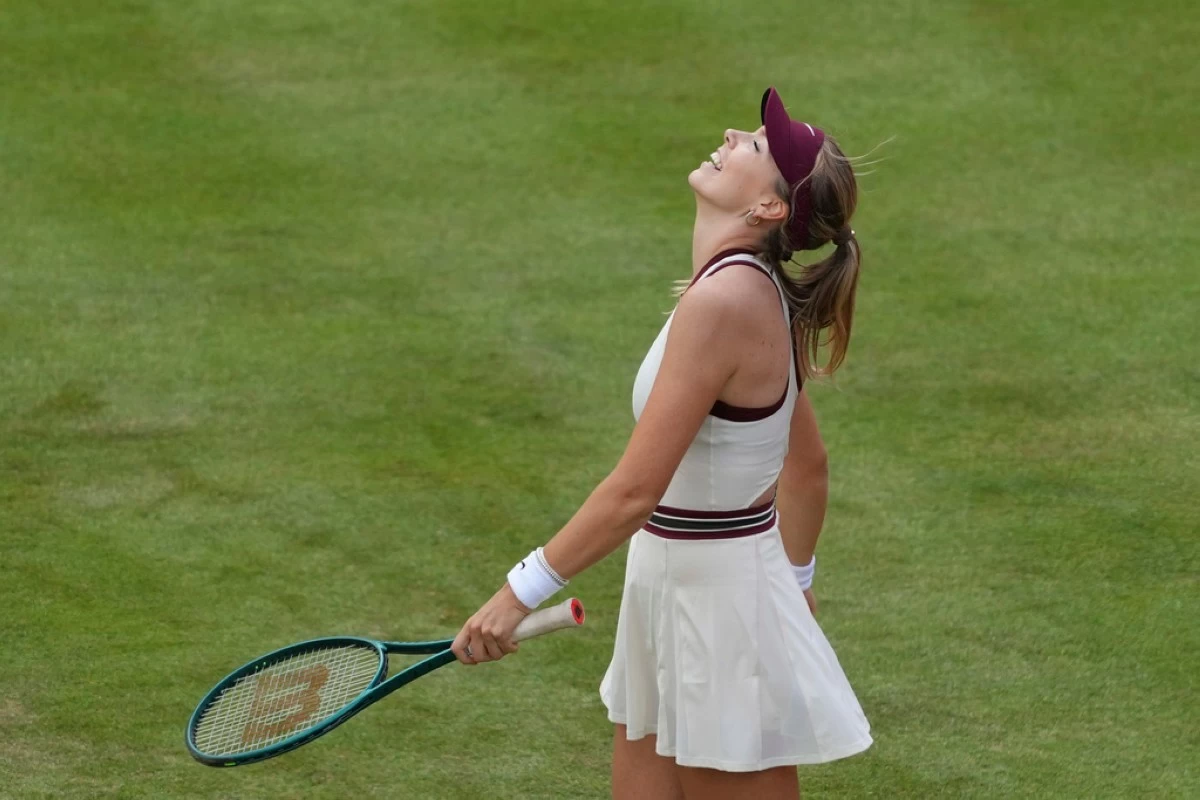
Britain's Katie Boulter celebrates after defeating Australia's Ajla Tomljanovic during her women's singles match at the Queens Club grass court tennis championships in London, Tuesday, June 10, 2025. (AP Photo/Joanna Chan)
LONDON (AP) — British tennis player Katie Boulter says she received death threats during the French Open targeting her and her family, as the WTA and ITF on Tuesday, June 17, called on betting companies to do more to stem the flood of online abuse players face on social media.
Boulter told the BBC in an interview that online abuse has become the norm and that she thinks many of the messages are sent by people who are placing bets on tennis matches.
Her comments coincided with the WTA and ITF publishing a first season-wide report into online abuse, showing that 458 tennis players were targeted by more than 8,000 abusive comments and posts on social media in 2024. The report said 40% of the abuse came from angry gamblers.
The 39th-ranked Boulter said the messages threatening her loved ones was sent during her French Open first-round match against Carole Monnet on May 29. After losing the first-set tie-breaker, Boulter won the match 6-7 (4), 6-1. 6-1.
But the loss of the tiebreaker prompted the outrage.
Hope you get cancer, said one message. Another mentioned damaging her grandmother's grave if she's not dead by tomorrow and candles and a coffin for your entire family. A third said: Go to hell, I lost money my mother sent me.
Boulter, who showed the BBC screenshots of the messages, said she is worried about the toll the widespread abuse takes on younger players.
As a tennis player, I just want to see and protect some of the younger players that come through and try to find a way around this whole situation, Boulter said. It becomes more apparent every single time you go on your phone. ... I think it increases in number and it also increases in the level of things that people say. I don't think there's anything off the cards now.
Many other players have previously reported online abuse. In a bid to try to protect athletes, the International Tennis Federation (ITF), Women's Tennis Association (WTA), All England Lawn Tennis Club and United States Tennis Association in 2023 launched the Threat Matrix. The program monitors public-facing social accounts for abusive and threatening content on social networks. It also provides support for players.
The report on the findings from the Threat Matrix service published Tuesday said five players received 26% of the total abuse identified, while 97 accounts were responsible for 23% of all detected abuse. More than 4,200 accounts in total sent comments to players that were abusive, violent or threatening.
Action has been taken against the most serious and prolific of these, including 15 accounts escalated to law enforcement, the WTA and ITF said.
Third-ranked Jessica Pegula, a member of the WTA Players' Council, also said tennis authorities need help to tackle the issue.
Online abuse is unacceptable, and something that no player should have to endure, Pegula was quoted as saying in a statement. It's time for the gambling industry and social media companies to tackle the problem at its source and act to protect everyone facing these threats.
ADVERTISEMENT
.most-popular .layout-ratio{ padding-bottom: 79.13%; } @media (min-width: 768px) and (max-width: 1024px) { .widget-title { font-size: 15px !important; } }

{{ articles_filter_1561_widget.title }}

.most-popular .layout-ratio{ padding-bottom: 79.13%; } @media (min-width: 768px) and (max-width: 1024px) { .widget-title { font-size: 15px !important; } }

{{ articles_filter_1562_widget.title }}

.most-popular .layout-ratio{ padding-bottom: 79.13%; } @media (min-width: 768px) and (max-width: 1024px) { .widget-title { font-size: 15px !important; } }

{{ articles_filter_1563_widget.title }}

{{ articles_filter_1564_widget.title }}

.mb-article-details { position: relative; } .mb-article-details .article-body-preview, .mb-article-details .article-body-summary{ font-size: 17px; line-height: 30px; font-family: "Libre Caslon Text", serif; color: #000; } .mb-article-details .article-body-preview iframe , .mb-article-details .article-body-summary iframe{ width: 100%; margin: auto; } .read-more-background { background: linear-gradient(180deg, color(display-p3 1.000 1.000 1.000 / 0) 13.75%, color(display-p3 1.000 1.000 1.000 / 0.8) 30.79%, color(display-p3 1.000 1.000 1.000) 72.5%); position: absolute; height: 200px; width: 100%; bottom: 0; display: flex; justify-content: center; align-items: center; padding: 0; } .read-more-background a{ color: #000; } .read-more-btn { padding: 17px 45px; font-family: Inter; font-weight: 700; font-size: 18px; line-height: 16px; text-align: center; vertical-align: middle; border: 1px solid black; background-color: white; } .hidden { display: none; }
function initializeAllSwipers() { // Get all hidden inputs with cms_article_id document.querySelectorAll('[id^="cms_article_id_"]').forEach(function (input) { const cmsArticleId = input.value; const articleSelector = '#article-' + cmsArticleId + ' .body_images'; const swiperElement = document.querySelector(articleSelector); if (swiperElement && !swiperElement.classList.contains('swiper-initialized')) { new Swiper(articleSelector, { loop: true, pagination: false, navigation: { nextEl: '#article-' + cmsArticleId + ' .swiper-button-next', prevEl: '#article-' + cmsArticleId + ' .swiper-button-prev', }, }); } }); } setTimeout(initializeAllSwipers, 3000); const intersectionObserver = new IntersectionObserver( (entries) => { entries.forEach((entry) => { if (entry.isIntersecting) { const newUrl = entry.target.getAttribute("data-url"); if (newUrl) { history.pushState(null, null, newUrl); let article = entry.target; // Extract metadata const author = article.querySelector('.author-section').textContent.replace('By', '').trim(); const section = article.querySelector('.section-info ').textContent.replace(' ', ' '); const title = article.querySelector('.article-title h1').textContent; // Parse URL for Chartbeat path format const parsedUrl = new URL(newUrl, window.location.origin); const cleanUrl = parsedUrl.host + parsedUrl.pathname; // Update Chartbeat configuration if (typeof window._sf_async_config !== 'undefined') { window._sf_async_config.path = cleanUrl; window._sf_async_config.sections = section; window._sf_async_config.authors = author; } // Track virtual page view with Chartbeat if (typeof pSUPERFLY !== 'undefined' && typeof pSUPERFLY.virtualPage === 'function') { try { pSUPERFLY.virtualPage({ path: cleanUrl, title: title, sections: section, authors: author }); } catch (error) { console.error('ping error', error); } } // Optional: Update document title if (title && title !== document.title) { document.title = title; } } } }); }, { threshold: 0.1 } ); function showArticleBody(button) { const article = button.closest("article"); const summary = article.querySelector(".article-body-summary"); const body = article.querySelector(".article-body-preview"); const readMoreSection = article.querySelector(".read-more-background"); // Hide summary and read-more section summary.style.display = "none"; readMoreSection.style.display = "none"; // Show the full article body body.classList.remove("hidden"); } document.addEventListener("DOMContentLoaded", () => { let loadCount = 0; // Track how many times articles are loaded const offset = [1, 2, 3, 4, 5, 6, 7, 8, 9, 10]; // Offset values const currentUrl = window.location.pathname.substring(1); let isLoading = false; // Prevent multiple calls if (!currentUrl) { console.log("Current URL is invalid."); return; } const sentinel = document.getElementById("load-more-sentinel"); if (!sentinel) { console.log("Sentinel element not found."); return; } function isSentinelVisible() { const rect = sentinel.getBoundingClientRect(); return ( rect.top < window.innerHeight && rect.bottom >= 0 ); } function onScroll() { if (isLoading) return; if (isSentinelVisible()) { if (loadCount >= offset.length) { console.log("Maximum load attempts reached."); window.removeEventListener("scroll", onScroll); return; } isLoading = true; const currentOffset = offset[loadCount]; window.loadMoreItems().then(() => { let article = document.querySelector('#widget_1690 > div:nth-last-of-type(2) article'); intersectionObserver.observe(article) loadCount++; }).catch(error => { console.error("Error loading more items:", error); }).finally(() => { isLoading = false; }); } } window.addEventListener("scroll", onScroll); });

Sign up by email to receive news.