






Manila Bulletin
 Philippines
National
Marcos orders DOE to monitor Middle East conflict's impact on fuel prices
Philippines
National
Marcos orders DOE to monitor Middle East conflict's impact on fuel prices
Philippines
National
Marcos orders DOE to monitor Middle East conflict's impact on fuel prices
Marcos orders DOE to monitor Middle East conflict's impact on fuel prices
Published Jun 17, 2025 03:43 pm


President Marcos has directed the Department of Energy (DOE) to closely monitor the impacts of the ongoing tensions in the Middle East on fuel prices in the country.
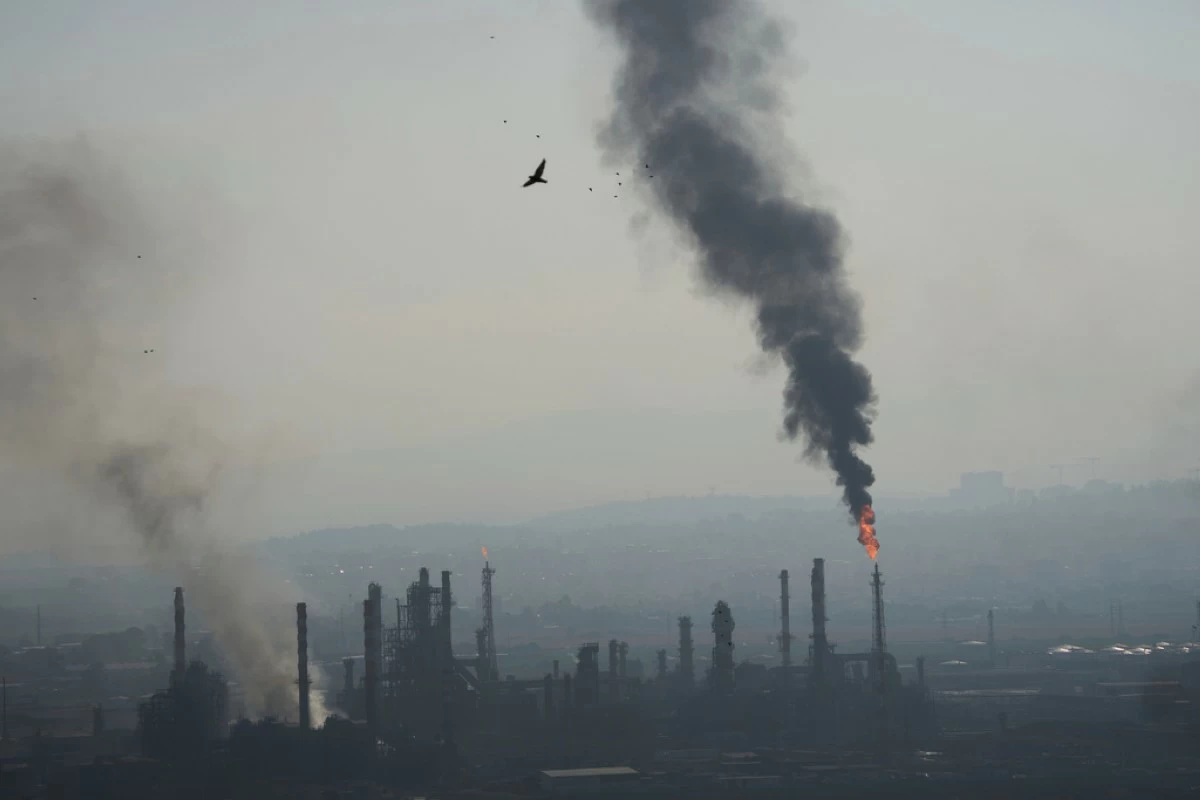
Smoke billows after an Iranian missile struck an oil refinery in Haifa, northern Israel, early Monday, June 16, 2025. (AP Photo/Ariel Schalit)
Marcos told the DOE to monitor closely in order to provide the necessary government intervention if the situation worsens and affects the fuel industry.
“I-monitor pong mabuti kung anong sitwasyon para po makapagbigay ng agaran ding solusyon at kahit papaano po ayuda kung talaga pong sobrang tataas ang presyo ng krudo (Closely monitor the situation in order to provide an immediate solution and, if necessary, some form of assistance in case fuel prices rise significantly),” Communications Undersecretary Claire Castro said in a Palace briefing on Tuesday, June 17.
According to Castro, DOE officer-in-charge Sharon Garin is closely monitoring the situation in the Middle East, as it could cause issues if the Strait of Hormuz is indeed closed.
However, at present, oil companies are required to maintain a 30-day inventory of fuel. If the price of crude oil rises above $80 per barrel, the fuel subsidy for public transport and fisherfolk will be triggered.
The Department of Agriculture (DA) and the Department of Transportation (DOTr) will also need to be notified regarding giving assistance.
In case the increase in prices becomes excessive, Castro said the DOE will talk to oil companies to maintain inventory levels and spread out oil price adjustments.
“Kung sobra daw po talaga ang pagtaas at hindi maiwasan, makikipag-usap po ang DOE sa mga oil companies para po ma-maintain iyong inventory levels po at hangga’t maaari ay ma-spread out ang oil price adjustments (If the increase is truly excessive and unavoidable, the DOE will talk to the oil companies to maintain inventory levels and, as much as possible, to spread out the oil price adjustments),” Castro said.
“Iyan po ay siyempre boluntaryo po at nasa magandang pakikipag-usap po iyan (Of course, that will be voluntary and will depend on good communication),” she added.
Meanwhile, the Department of Agriculture (DA) stands ready to respond to possible impact of the tensions to the supply of fertilizers in the country.
“Nakausap po natin kanina lamang po si DA Secretary Laurel at sinabi po niya na ready naman po at kung mangyayari man po ito, maaari po tayong kumuha sa ibang parte ng mundo na malapit sa atin katulad po ng Brunei (We just spoke with Secretary Francis Laurel, and he said they are ready. If this happens, we can source supplies from other parts of the world that are close to us, such as Brunei),” Castro said.
“At nakikita rin naman po ng DA na hindi naman ito magdudulot ng pangmatagalan na problema lalong-lalo na po kung hindi naman daw po isasara ang sea lanes so let’s just pray for that (The DA also sees that this will not cause a long-term problem, especially if the sea lanes are not closed—so let’s just pray for that),” she added.