ADVERTISEMENT

A look at the first artificial solar eclipses created by two European satellites

Published Jun 17, 2025 10:15 am
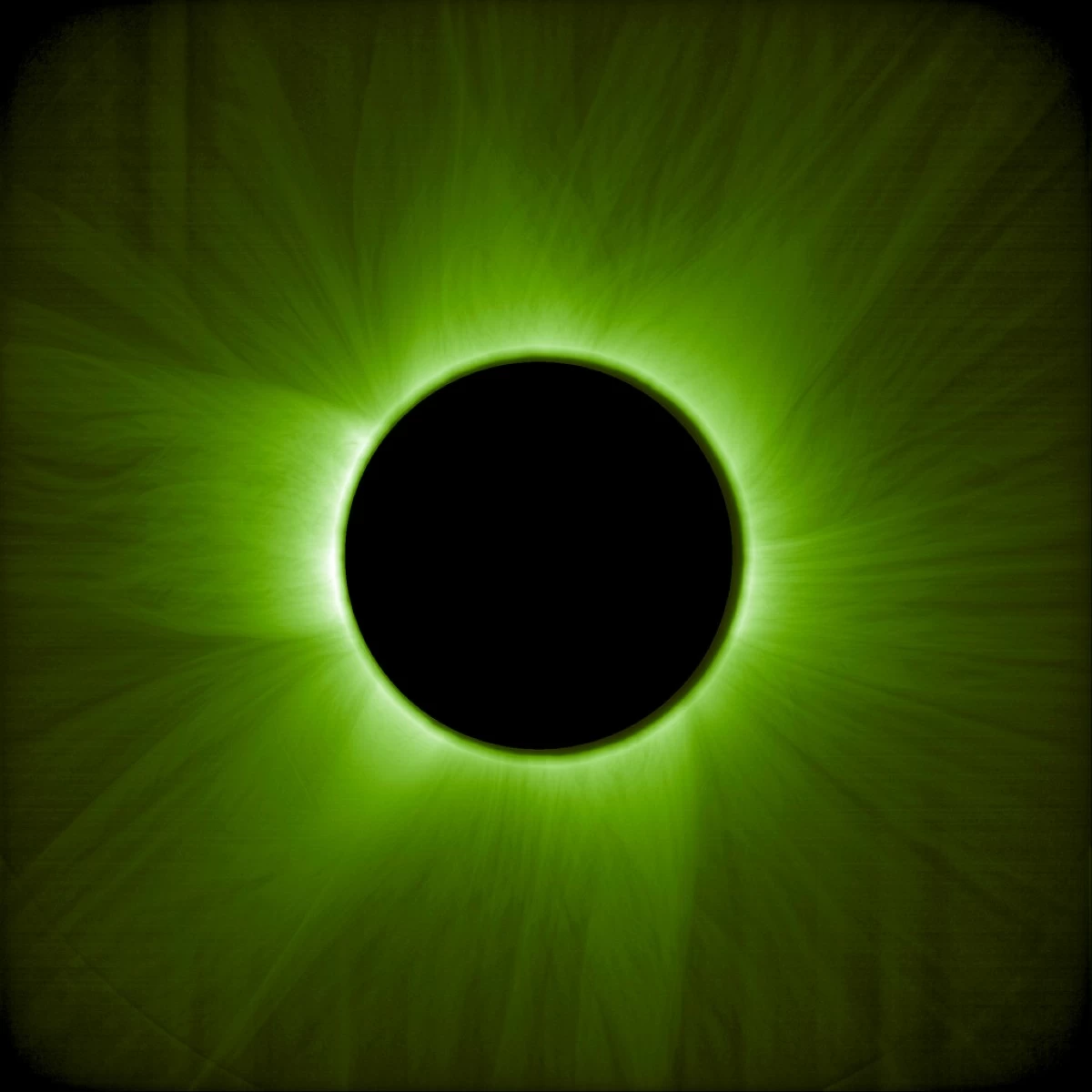
This image provided by the European Space Agency shows the Sun's corona captured by the Proba-3 pair of spacecraft on May 23, 2025, in the visible light spectrum, with the hair-like structures revealed using a specialized image processing algorithm. (ESA/Proba-3/ASPIICS/WOW algorithm via AP)
CAPE CANAVERAL, Fla. (AP) — A pair of European satellites have created the first artificial solar eclipses by flying in precise and fancy formation, providing hours of on-demand totality for scientists.
The European Space Agency released the eclipse pictures at the Paris Air Show on Monday. Launched late last year, the orbiting duo have churned out simulated solar eclipses since March while zooming tens of thousands of miles (kilometers) above Earth.
Flying 492 feet (150 meters) apart, one satellite blocks the sun like the moon does during a natural total solar eclipse as the other aims its telescope at the corona, the sun's outer atmosphere that forms a crown or halo of light.
It's an intricate, prolonged dance requiring extreme precision by the cube-shaped spacecraft, less than 5 feet (1.5 meters) in size. Their flying accuracy needs to be within a mere millimeter, the thickness of a fingernail. This meticulous positioning is achieved autonomously through GPS navigation, star trackers, lasers and radio links.
Dubbed Proba-3, the $210 million mission has generated 10 successful solar eclipses so far during the ongoing checkout phase. The longest eclipse lasted five hours, said the Royal Observatory of Belgium's Andrei Zhukov, the lead scientist for the orbiting corona-observing telescope. He and his team are aiming for a wondrous six hours of totality per eclipse once scientific observations begin in July.
Scientists already are thrilled by the preliminary results that show the corona without the need for any special image processing, said Zhukov.
We almost couldn't believe our eyes, Zhukov said in an email. This was the first try, and it worked. It was so incredible.
Zhukov anticipates an average of two solar eclipses per week being produced for a total of nearly 200 during the two-year mission, yielding more than 1,000 hours of totality. That will be a scientific bonanza since full solar eclipses produce just a few minutes of totality when the moon lines up perfectly between Earth and the sun — on average just once every 18 months.
The sun continues to mystify scientists, especially its corona, which is hotter than the solar surface. Coronal mass ejections result in billions of tons of plasma and magnetic fields being hurled out into space. Geomagnetic storms can result, disrupting power and communication while lighting up the night sky with auroras in unexpected locales.
While previous satellites have generated imitation solar eclipses — including the European Space Agency and NASA's Solar Orbiter and Soho observatory — the sun-blocking disk was always on the same spacecraft as the corona-observing telescope. What makes this mission unique, Zhukov said, is that the sun-shrouding disk and telescope are on two different satellites and therefore far apart.
The distance between these two satellites will give scientists a better look at the part of the corona closest to the limb of the sun.
We are extremely satisfied by the quality of these images, and again this is really thanks to formation flying with unprecedented accuracy, ESA's mission manager Damien Galano said from the Paris Air Show.
ADVERTISEMENT
.most-popular .layout-ratio{ padding-bottom: 79.13%; } @media (min-width: 768px) and (max-width: 1024px) { .widget-title { font-size: 15px !important; } }

{{ articles_filter_1561_widget.title }}

.most-popular .layout-ratio{ padding-bottom: 79.13%; } @media (min-width: 768px) and (max-width: 1024px) { .widget-title { font-size: 15px !important; } }

{{ articles_filter_1562_widget.title }}

.most-popular .layout-ratio{ padding-bottom: 79.13%; } @media (min-width: 768px) and (max-width: 1024px) { .widget-title { font-size: 15px !important; } }

{{ articles_filter_1563_widget.title }}

{{ articles_filter_1564_widget.title }}

.mb-article-details { position: relative; } .mb-article-details .article-body-preview, .mb-article-details .article-body-summary{ font-size: 17px; line-height: 30px; font-family: "Libre Caslon Text", serif; color: #000; } .mb-article-details .article-body-preview iframe , .mb-article-details .article-body-summary iframe{ width: 100%; margin: auto; } .read-more-background { background: linear-gradient(180deg, color(display-p3 1.000 1.000 1.000 / 0) 13.75%, color(display-p3 1.000 1.000 1.000 / 0.8) 30.79%, color(display-p3 1.000 1.000 1.000) 72.5%); position: absolute; height: 200px; width: 100%; bottom: 0; display: flex; justify-content: center; align-items: center; padding: 0; } .read-more-background a{ color: #000; } .read-more-btn { padding: 17px 45px; font-family: Inter; font-weight: 700; font-size: 18px; line-height: 16px; text-align: center; vertical-align: middle; border: 1px solid black; background-color: white; } .hidden { display: none; }
function initializeAllSwipers() { // Get all hidden inputs with cms_article_id document.querySelectorAll('[id^="cms_article_id_"]').forEach(function (input) { const cmsArticleId = input.value; const articleSelector = '#article-' + cmsArticleId + ' .body_images'; const swiperElement = document.querySelector(articleSelector); if (swiperElement && !swiperElement.classList.contains('swiper-initialized')) { new Swiper(articleSelector, { loop: true, pagination: false, navigation: { nextEl: '#article-' + cmsArticleId + ' .swiper-button-next', prevEl: '#article-' + cmsArticleId + ' .swiper-button-prev', }, }); } }); } setTimeout(initializeAllSwipers, 3000); const intersectionObserver = new IntersectionObserver( (entries) => { entries.forEach((entry) => { if (entry.isIntersecting) { const newUrl = entry.target.getAttribute("data-url"); if (newUrl) { history.pushState(null, null, newUrl); let article = entry.target; // Extract metadata const author = article.querySelector('.author-section').textContent.replace('By', '').trim(); const section = article.querySelector('.section-info ').textContent.replace(' ', ' '); const title = article.querySelector('.article-title h1').textContent; // Parse URL for Chartbeat path format const parsedUrl = new URL(newUrl, window.location.origin); const cleanUrl = parsedUrl.host + parsedUrl.pathname; // Update Chartbeat configuration if (typeof window._sf_async_config !== 'undefined') { window._sf_async_config.path = cleanUrl; window._sf_async_config.sections = section; window._sf_async_config.authors = author; } // Track virtual page view with Chartbeat if (typeof pSUPERFLY !== 'undefined' && typeof pSUPERFLY.virtualPage === 'function') { try { pSUPERFLY.virtualPage({ path: cleanUrl, title: title, sections: section, authors: author }); } catch (error) { console.error('ping error', error); } } // Optional: Update document title if (title && title !== document.title) { document.title = title; } } } }); }, { threshold: 0.1 } ); function showArticleBody(button) { const article = button.closest("article"); const summary = article.querySelector(".article-body-summary"); const body = article.querySelector(".article-body-preview"); const readMoreSection = article.querySelector(".read-more-background"); // Hide summary and read-more section summary.style.display = "none"; readMoreSection.style.display = "none"; // Show the full article body body.classList.remove("hidden"); } document.addEventListener("DOMContentLoaded", () => { let loadCount = 0; // Track how many times articles are loaded const offset = [1, 2, 3, 4, 5, 6, 7, 8, 9, 10]; // Offset values const currentUrl = window.location.pathname.substring(1); let isLoading = false; // Prevent multiple calls if (!currentUrl) { console.log("Current URL is invalid."); return; } const sentinel = document.getElementById("load-more-sentinel"); if (!sentinel) { console.log("Sentinel element not found."); return; } function isSentinelVisible() { const rect = sentinel.getBoundingClientRect(); return ( rect.top < window.innerHeight && rect.bottom >= 0 ); } function onScroll() { if (isLoading) return; if (isSentinelVisible()) { if (loadCount >= offset.length) { console.log("Maximum load attempts reached."); window.removeEventListener("scroll", onScroll); return; } isLoading = true; const currentOffset = offset[loadCount]; window.loadMoreItems().then(() => { let article = document.querySelector('#widget_1690 > div:nth-last-of-type(2) article'); intersectionObserver.observe(article) loadCount++; }).catch(error => { console.error("Error loading more items:", error); }).finally(() => { isLoading = false; }); } } window.addEventListener("scroll", onScroll); });

Sign up by email to receive news.