






Manila Bulletin
 Philippines
National
Salceda: 2026 budget should be crafted with Israel-Iran conflict in mind
Philippines
National
Salceda: 2026 budget should be crafted with Israel-Iran conflict in mind
Philippines
National
Salceda: 2026 budget should be crafted with Israel-Iran conflict in mind
Salceda: 2026 budget should be crafted with Israel-Iran conflict in mind
Published Jun 16, 2025 09:33 am


At A Glance
- Economist-solon Albay 2nd district Rep. Joey Salceda is calling on the country's economic managers to tailor the proposed 2026 national budget to the anticipated effects of the ongoing between Israel and Iran.
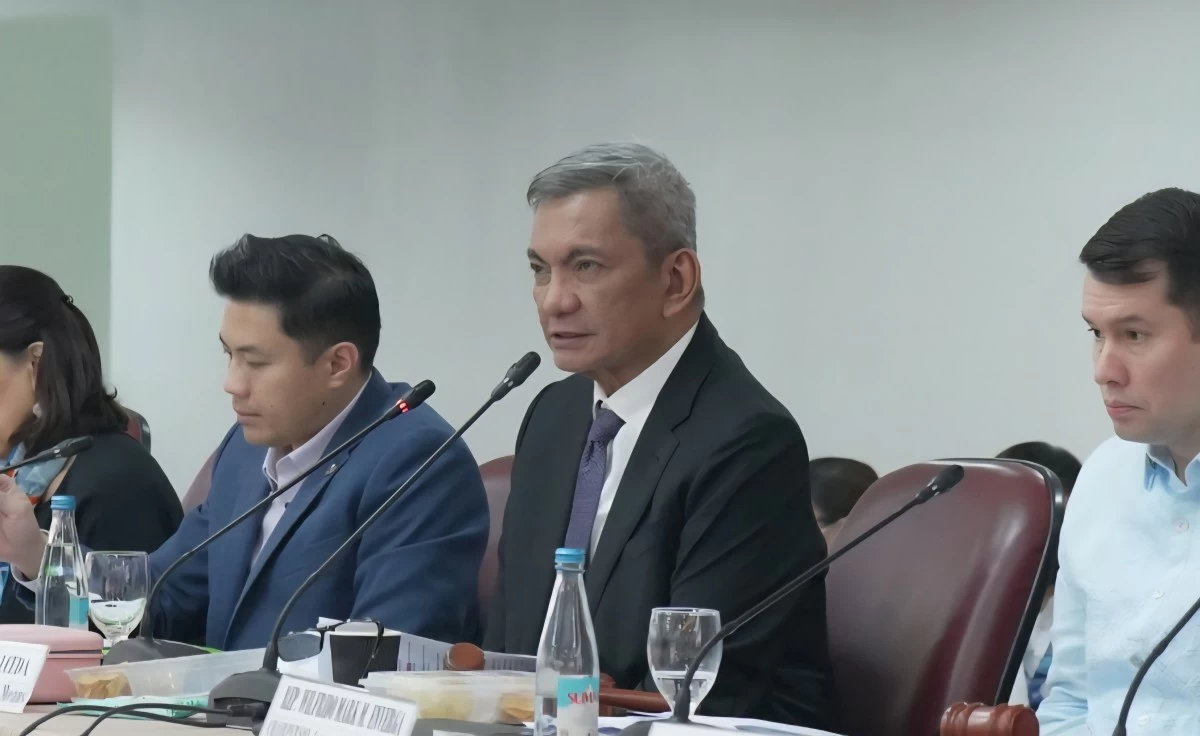
Albay 2nd district Rep. Joey Salceda (PPAB)
Economist-solon Albay 2nd district Rep. Joey Salceda is calling on the country’s economic managers to tailor the proposed 2026 national budget to the anticipated effects of the ongoing between Israel and Iran.
The Philippines does not control external conflicts, but it can control its fiscal posture. The 2026 budget should be designed to absorb external shocks, preserve domestic stability, and maintain purchasing power for Filipino households, Salceda said in a statement Sunday, June 15.
He said the tensions between Israel and Iran follow a long pattern of strategic hostility between the two countries. He noted that while the military actions in April 2025 were more direct than usual, both parties have historically avoided prolonged escalation.
The Development Budget Coordination Committee (DBCC), which defends the general provisions and principles of the National Expenditure Program (NEP) every year, should ensure that oil price scenarios are fully integrated into the inflation outlook and that agencies reflect these risks in their program costing, Salceda said.
The NEP is the precursor to the national budget bill, which the House of Representatives peruses through its power of the purse.
For the Philippines, the issue is not foreign alignment but economic preparedness. The conflict affects us through oil prices, exchange rate movements, labor market disruptions, and import costs. These risks must be considered as agencies finalize their Tier 1 and Tier 2 proposals under the 2026 budget call, Salceda said.
Of particular interest to Salceda is the Strait of Hormuz, which reports says Iran is planning to close as an offshoot of the Gulf conflict.
Crunching numbers, he said the Strait of Hormuz carries more than 20 percent of global oil supply. The Philippines consumes approximately 471,400 barrels of oil per day.
He said a $10 increase in Brent crude prices would raise the Philippines' oil import cost by $4.7 million daily. A P55 per dollar, that translates to a whopping P258.5 million per day or P94.9 billion per year.
These figures must be reflected in the budgetary assumptions of agencies responsible for fuel subsidies, transportation, agriculture, and power, the Bicolano said.
The outgoing congressman said the Department of Energy (DOE) and relevant agencies should assist private oil importers in securing forward contracts to manage price risks.
From 16 April to 25 April 2025, the peso appreciated slightly from P56.60 to P56.28 per US dollar. As of 31 May 2025, the Bangko Sentral ng Pilipinas (BSP) reported gross international reserves of $105.5 billion, equivalent to 7.3 months of import cover, he noted.
Salceda says that while this is a strong position, external volatility can change conditions rapidly. The macroeconomic assumptions guiding the 2026 National Expenditure Program should reflect this environment.
The [BSP] identifies oil prices as a significant driver of domestic inflation. Although there is no fixed conversion rate, historical data show that sustained increases in oil prices can contribute between 0.5 and 1.5 percentage points to headline inflation, depending on magnitude and duration, he said.
This should guide the [DBCC] in refining inflation assumptions and adjusting the costs of social protection programs for 2026, he added.