ADVERTISEMENT

PANaHON 3D: PAGASA's enhanced weather monitoring tool offers unified, real-time information

Published Jun 16, 2025 02:26 pm
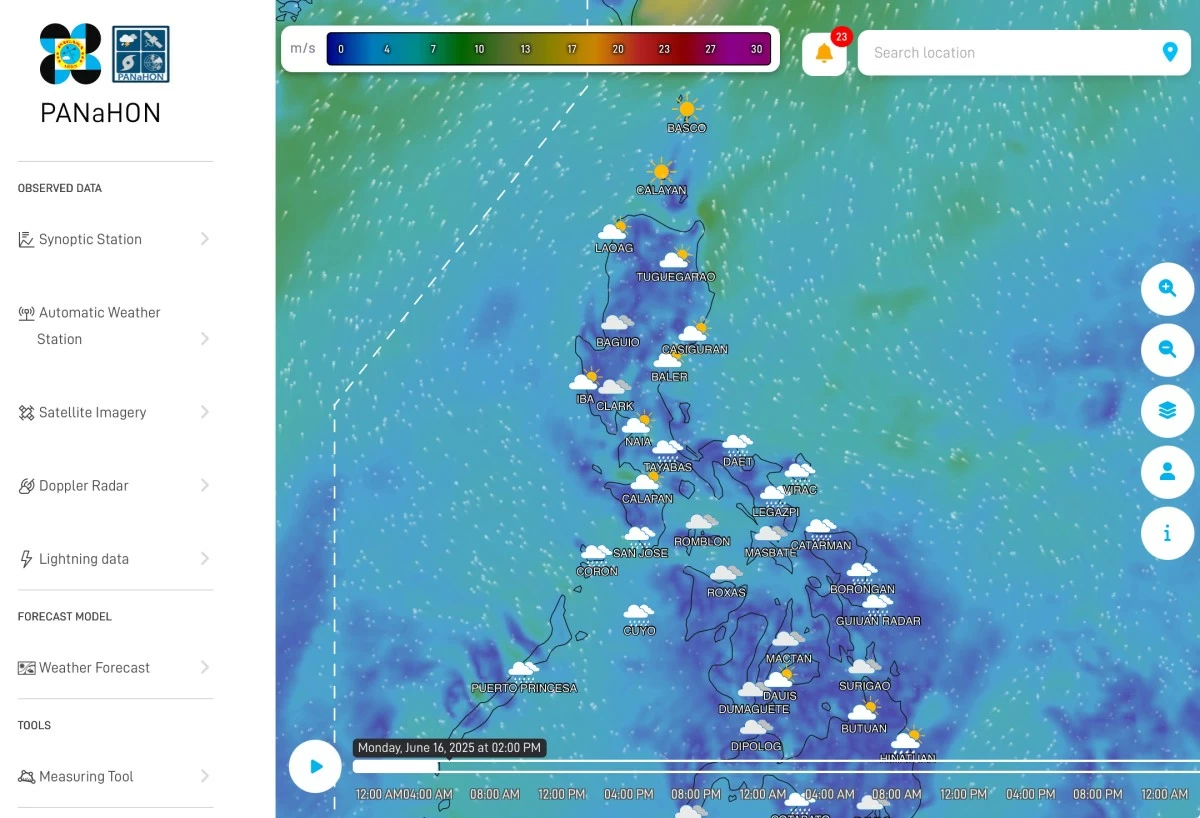
PAGASA National Hydro-Met Observing Network (PANaHON 3D)
The Philippine Atmospheric, Geophysical and Astronomical Services Administration (PAGASA) has rolled out key upgrades to its PANaHON 3D Web-Based Decision Support Information System, an interactive platform designed to provide more accurate and accessible weather information to disaster managers and local government units nationwide.
PANaHON, which stands for PAGASA National Hydro-Met Observing Network, now features integrated gridded forecasts that deliver precise weather data, such as rainfall accumulation, temperature, wind, and pressure, for any location, even those without nearby PAGASA weather stations. 
Users can explore this data through clickable map grids, time-sliders, and location-based search functions, offering a more detailed and user-friendly experience.
One of the most significant improvements is the consolidation of all regional weather warnings into a centralized alert system. 
The system displays real-time hazards on a color-coded interactive map to provide a unified view of warnings issued by all five PAGASA Regional Services Divisions, allowing disaster managers and local government units to monitor weather hazards more efficiently using a single platform.
“PANaHON now acts as a one-stop shop for all official weather warnings across the country,” said PAGASA senior weather specialist Raymond Ordinario. 
He explained that one of the salient features of PANaHON is its integration of official PAGASA warnings and near-real-time observation data, a level of reliability and immediacy not available in other platforms such as the Windy app.
“This interactive map can provide you with all warnings from PAGASA, as well as available observation data. This information becomes readily accessible to the public. Our near-real-time observations use ground information, radars, and satellites. That’s something other platforms don’t have,” Ordinario said.
He also highlighted the platform’s role in ensuring the accuracy of information disseminated by PAGASA.
“One thing we ensure is that all official information will be coming from this site. So it won’t become a source of fake news,” he added.
PAGASA Administrator Dr. Nathaniel Servando emphasized the importance of these upgrades in supporting local planning, risk reduction, and disaster preparedness initiatives. 
The relaunch coincides with Typhoon and Flood Awareness Week, observed every third week of June to promote readiness against weather-related hazards.
The theme for this year’s celebration is “Kahandaan sa Bagyo at Baha, Solusyon sa Ligtas na Bayan” (Being Ready for Typhoons and Floods is the Key to a Safe Community).
“This platform will help disaster managers and local government units access timely and reliable weather data essential for decision-making during emergencies,” Servando said.
The upgraded PANaHON platform continues to undergo development based on user feedback to further improve its features and accessibility. 
PAGASA encourages disaster managers and local government officials to utilize this tool as an alternative source of official weather information, especially during severe weather events.

Related Tags

PAGASA PANaHON 3D interactive platform Nathaniel Servando Raymond Ordinario
ADVERTISEMENT
.most-popular .layout-ratio{ padding-bottom: 79.13%; } @media (min-width: 768px) and (max-width: 1024px) { .widget-title { font-size: 15px !important; } }

{{ articles_filter_1561_widget.title }}

.most-popular .layout-ratio{ padding-bottom: 79.13%; } @media (min-width: 768px) and (max-width: 1024px) { .widget-title { font-size: 15px !important; } }

{{ articles_filter_1562_widget.title }}

.most-popular .layout-ratio{ padding-bottom: 79.13%; } @media (min-width: 768px) and (max-width: 1024px) { .widget-title { font-size: 15px !important; } }

{{ articles_filter_1563_widget.title }}

{{ articles_filter_1564_widget.title }}

.mb-article-details { position: relative; } .mb-article-details .article-body-preview, .mb-article-details .article-body-summary{ font-size: 17px; line-height: 30px; font-family: "Libre Caslon Text", serif; color: #000; } .mb-article-details .article-body-preview iframe , .mb-article-details .article-body-summary iframe{ width: 100%; margin: auto; } .read-more-background { background: linear-gradient(180deg, color(display-p3 1.000 1.000 1.000 / 0) 13.75%, color(display-p3 1.000 1.000 1.000 / 0.8) 30.79%, color(display-p3 1.000 1.000 1.000) 72.5%); position: absolute; height: 200px; width: 100%; bottom: 0; display: flex; justify-content: center; align-items: center; padding: 0; } .read-more-background a{ color: #000; } .read-more-btn { padding: 17px 45px; font-family: Inter; font-weight: 700; font-size: 18px; line-height: 16px; text-align: center; vertical-align: middle; border: 1px solid black; background-color: white; } .hidden { display: none; }
function initializeAllSwipers() { // Get all hidden inputs with cms_article_id document.querySelectorAll('[id^="cms_article_id_"]').forEach(function (input) { const cmsArticleId = input.value; const articleSelector = '#article-' + cmsArticleId + ' .body_images'; const swiperElement = document.querySelector(articleSelector); if (swiperElement && !swiperElement.classList.contains('swiper-initialized')) { new Swiper(articleSelector, { loop: true, pagination: false, navigation: { nextEl: '#article-' + cmsArticleId + ' .swiper-button-next', prevEl: '#article-' + cmsArticleId + ' .swiper-button-prev', }, }); } }); } setTimeout(initializeAllSwipers, 3000); const intersectionObserver = new IntersectionObserver( (entries) => { entries.forEach((entry) => { if (entry.isIntersecting) { const newUrl = entry.target.getAttribute("data-url"); if (newUrl) { history.pushState(null, null, newUrl); let article = entry.target; // Extract metadata const author = article.querySelector('.author-section').textContent.replace('By', '').trim(); const section = article.querySelector('.section-info ').textContent.replace(' ', ' '); const title = article.querySelector('.article-title h1').textContent; // Parse URL for Chartbeat path format const parsedUrl = new URL(newUrl, window.location.origin); const cleanUrl = parsedUrl.host + parsedUrl.pathname; // Update Chartbeat configuration if (typeof window._sf_async_config !== 'undefined') { window._sf_async_config.path = cleanUrl; window._sf_async_config.sections = section; window._sf_async_config.authors = author; } // Track virtual page view with Chartbeat if (typeof pSUPERFLY !== 'undefined' && typeof pSUPERFLY.virtualPage === 'function') { try { pSUPERFLY.virtualPage({ path: cleanUrl, title: title, sections: section, authors: author }); } catch (error) { console.error('ping error', error); } } // Optional: Update document title if (title && title !== document.title) { document.title = title; } } } }); }, { threshold: 0.1 } ); function showArticleBody(button) { const article = button.closest("article"); const summary = article.querySelector(".article-body-summary"); const body = article.querySelector(".article-body-preview"); const readMoreSection = article.querySelector(".read-more-background"); // Hide summary and read-more section summary.style.display = "none"; readMoreSection.style.display = "none"; // Show the full article body body.classList.remove("hidden"); } document.addEventListener("DOMContentLoaded", () => { let loadCount = 0; // Track how many times articles are loaded const offset = [1, 2, 3, 4, 5, 6, 7, 8, 9, 10]; // Offset values const currentUrl = window.location.pathname.substring(1); let isLoading = false; // Prevent multiple calls if (!currentUrl) { console.log("Current URL is invalid."); return; } const sentinel = document.getElementById("load-more-sentinel"); if (!sentinel) { console.log("Sentinel element not found."); return; } function isSentinelVisible() { const rect = sentinel.getBoundingClientRect(); return ( rect.top < window.innerHeight && rect.bottom >= 0 ); } function onScroll() { if (isLoading) return; if (isSentinelVisible()) { if (loadCount >= offset.length) { console.log("Maximum load attempts reached."); window.removeEventListener("scroll", onScroll); return; } isLoading = true; const currentOffset = offset[loadCount]; window.loadMoreItems().then(() => { let article = document.querySelector('#widget_1690 > div:nth-last-of-type(2) article'); intersectionObserver.observe(article) loadCount++; }).catch(error => { console.error("Error loading more items:", error); }).finally(() => { isLoading = false; }); } } window.addEventListener("scroll", onScroll); });

Sign up by email to receive news.