






Manila Bulletin
 Lifestyle
Arts and Culture
Outcasts, outliers, and outrageous: A trio of novels that redefine genre fiction
Lifestyle
Arts and Culture
Outcasts, outliers, and outrageous: A trio of novels that redefine genre fiction
Lifestyle
Arts and Culture
Outcasts, outliers, and outrageous: A trio of novels that redefine genre fiction
Outcasts, outliers, and outrageous: A trio of novels that redefine genre fiction
Published Jun 16, 2025 04:12 pm


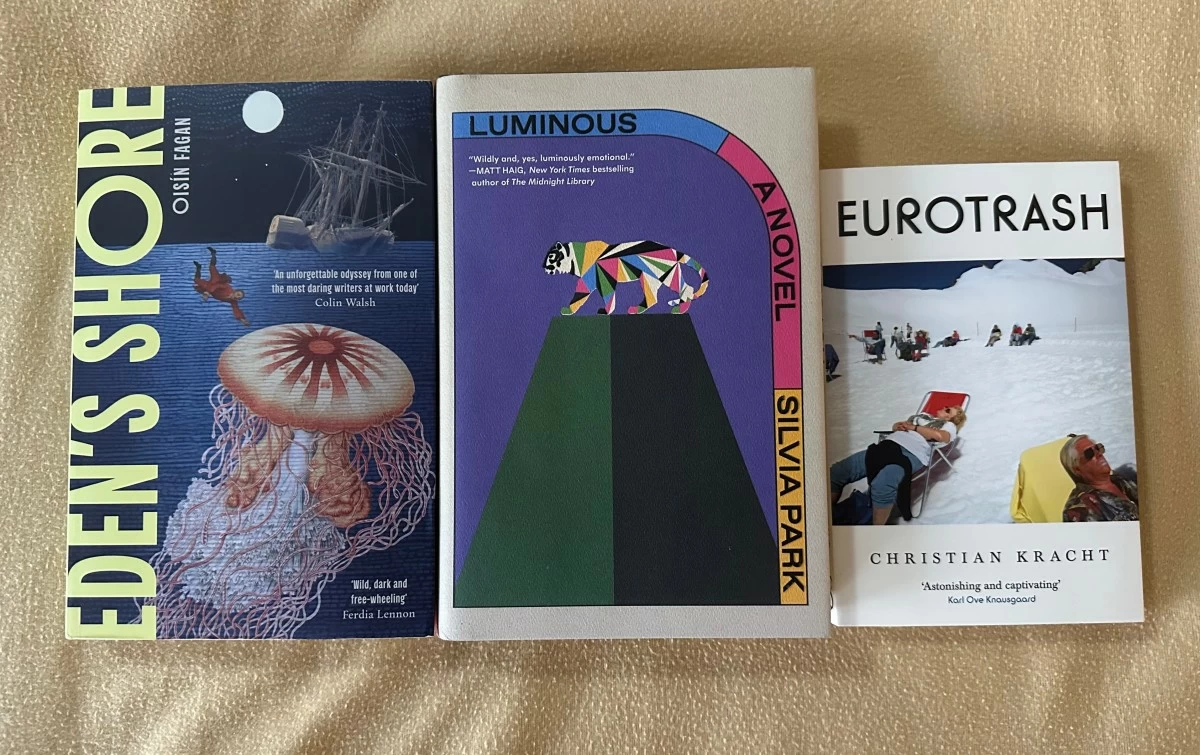
Historical fiction, sci-fi, and “the road novel” are three established subgenres of fiction—and here are three that explore what happens when you “go literary” on them.
“Eden’s Shore” by Oisín Fagan
Set at the close of the 18th century, one could say this is Oisin getting closer to the present day with his historical fiction. His previous novel, Nobber, was set in Ireland during the Black Plague. In Eden’s Shore, our central character is Irishman Angel Kelly. He considers himself an educated, enlightened person and harbors a dream of setting up a utopian commune in Brazil. He sails to Liverpool to set this dream in motion and boards the Atlas in a drunken, lust-quenched stupor. Incapacitated by seasickness for weeks, he’s oblivious to their stop in North Africa to take on a shipment of slaves for the New World. A Muslim man named Flores is also on board the ship, hoping to secure the freedom of his enslaved mother when they reach Brazil. Flores befriends our Angel.
Oisin is a wordsmith in creating the world order, the hierarchy aboard the Atlas, and what happens when a mutiny occurs.
Stranded on a Latin American island, Angel and Flores experience a surreal episode—full marks to Oisin for his mastery of language, description, and nuance. There are sections of this novel that read like we’re in the middle of a fever dream, as if we’re high on some hallucinogen, yet still have to function as castaways and survivors. Our cast of central characters expands to include a Welsh visitor to the Americas, the native girl Esa, indigenous tribes, and—never far from the action—both Angel and Flores. A series of events propels the narrative: from planned rebellions to a cat-and-mouse game between colonizing empires, and onward to stories of displacement, asylum, and global upheaval. While all of this transpires on the world stage, Oisin also gives us the small, intimate stories of the individuals we’ve come to know. Angel becomes a mythical figure, a countryside legend; while Flores searches for peace and some version of love and domesticity.
“Luminous” by Silvia Park
Silvia’s short fiction has been widely praised over the years, and this is the first novel by the young Korean writer, who now lives half of their time in the US. It’s sci-fi with a sharp edge of social realism. The story imagines a reunified Korea of the near future, and opens in a junkyard of abandoned robots. There, 11-year-old Ruijie is sifting through the scraps, searching for parts that could be used in her enhancement. She stumbles across a lifelike robot boy who says his name is Yoyo—and that he’s an early humanoid prototype designed by his father.
We then meet estranged siblings Morgan and Jun. Morgan is a top robot designer and something of an introvert. Jun is a detective with the Robots Crime Unit, and he’s been rebuilt after an incident during the Reunification War. It’s said of Jun that more than just a body went bionic—his case is bionic, finding a body.
It turns out their brother Yoyo disappeared when Morgan and Jun were still children, and it doesn’t take much sleuthing on the part of the reader to guess that the Yoyo “adopted” by Ruijie is their long-lost older brother. Yoyo is forever 12 years old but is closer to 20 in terms of years spent in existence. And the Yoyo Ruijie encounters is an evolved version—coupled with distressed robots and acting very much like a priest who performs Extreme Unction. Imagine Friends, where Morgan works, launches a new bot modeled on her memories of Yoyo. The irony? Ruijie and her friends bring the real Yoyo there, and Morgan doesn’t even recognize him.
Moments like these elevate Silvia’s writing beyond speculative fiction. It seeks to define what makes us—and the bots—human, and how emotion, feeling, and judgment in AI transform who they are and what role they play in society.
“Eurotrash” by Christian Kracht
Included on the longlist for the 2025 International Booker, I would highly recommend this slim novel for its moral clarity and how it succeeds as a melancholic comedy. It’s essentially a road story, unfolding during a curious drive. The narrator is a middle-aged man on a road trip around Switzerland, accompanied by his 80-year-old mother—who may be suffering from dementia or is cleverly fooling and manipulating everyone around her. She’s just been discharged from a mental institution, and we’re immediately made aware of the fact that the family is obscenely wealthy.
Coerced by her son to take the road trip via taxi, she wants to give away the wealth amassed from investing in the arms industry over the decades. His grandfather was an avid supporter of Nazism, so there’s an undercurrent of guilt—but the story is far more complicated than that.
There’s a meta-quality to the writing that fuels the comedy, as the narrator appears to be named Christian as well. At one point, the mother even makes snide remarks about why Christian isn’t as successful a German writer as, say, Daniel Kehlmann. But what the novel masterfully illuminates are the darker truths of the past, modern German identity, its uneasy relationship with Switzerland, and the idea that family trumps all.
The mother-son relationship explored here is deeply complex. It may seem reducible to anecdotes and memories, or to episodes of one-upmanship, laced with acerbic, bittersweet humor—but it remains painfully real. The very last scene may move readers to shed some quiet, inner tears as they realize this dynamic could be on rewind and repeat for some time.