

ADVERTISEMENT

'May Huli Ka!': MMDA launches website to check NCAP violations

Published Jun 16, 2025 02:57 pm

At A Glance

  • Dubbed as "May Huli Ka 2.0", MMDA chairperson Don Artes said it is a web-based platform that enables vehicle owners to conveniently check for traffic violations and provide information on the payment process
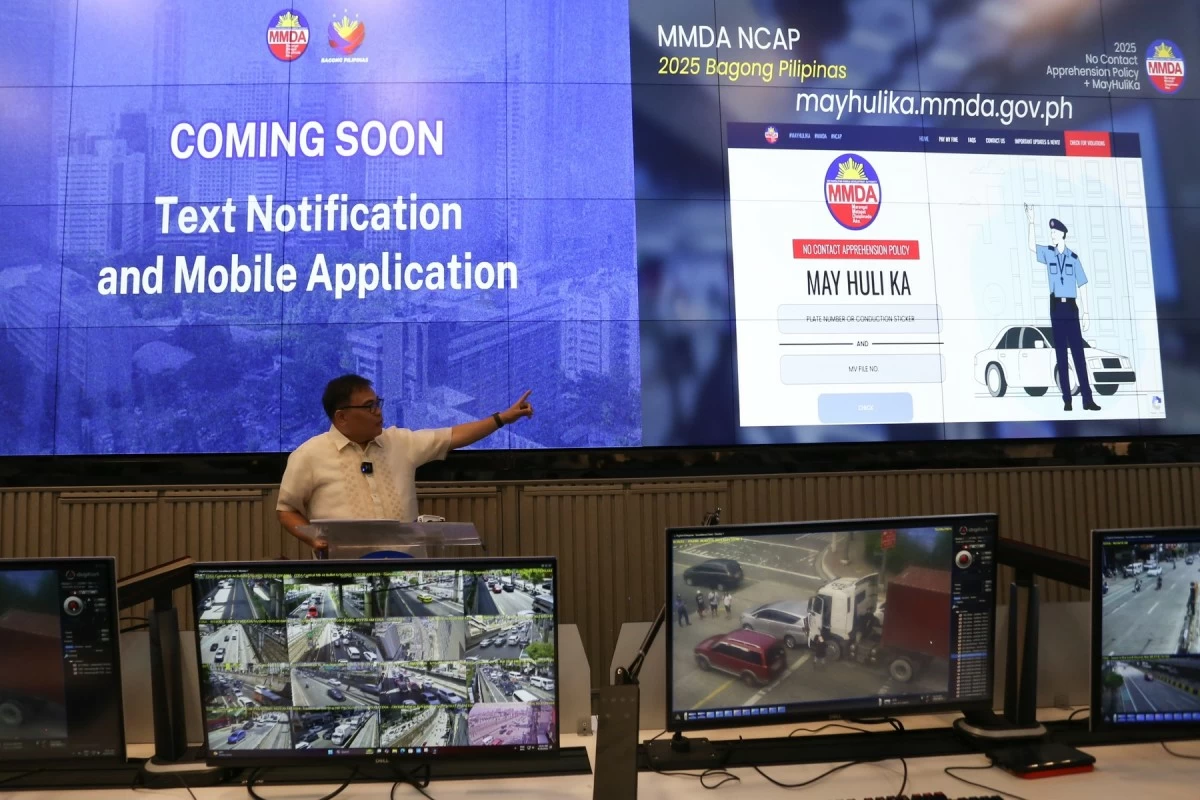
MMDA chairman Don Artes launches “May Huli Ka” app to make it easier for motor vehicle owners to check if they have violations under the No Contact Apprehension Policy (NCAP) on Monday, June 16, 2025, at the MMDA Head Office in Pasig City.  (Santi San Juan)
MMDA chairman Don Artes launches “May Huli Ka” app to make it easier for motor vehicle owners to check if they have violations under the No Contact Apprehension Policy (NCAP) on Monday, June 16, 2025, at the MMDA Head Office in Pasig City. (Santi San Juan)
Want to quickly find out if you have traffic violations under NCAP?
You can do so at your fingertips as the Metropolitan Manila Development Authority (MMDA) launched on Monday, June 16, a website that will give motorists an access to any information relating to traffic violations captured by artificial intelligence-run closed circuit television (CCTV) under the No-Contact Apprehension Policy.
Dubbed as “May Huli Ka 2.0”, MMDA chairperson Don Artes said it is a web-based platform that enables vehicle owners to conveniently check for traffic violations and provide information on the payment process.
Artes said the use of AI in NCAP implementation is a big step towards instilling discipline among motorists, as well as in the efforts of the national government to shift all government services and transactions to digital platforms.
“We are continuously making innovations to improve the services under NCAP… and in doing so a lot of factors are considered including the need to observe data privacy,” said Artes.
Through the website, Artes said vehicle owners can check for traffic violations by entering not only the license plate or conduction sticker number but also the motor vehicle (MV) file number.
Adding the MV file number, which only the vehicle owners know, is an added security feature to protect vehicle owners from any group or individual who could have access to their information through the “May Huli Ka 2.0” app.
“Before, vehicle owners verify their violations by simply entering their plate numbers on the former website. This system raised data privacy concerns, prompting the need for a more secure and authenticated access,” said Artes.
Artes disclosed that the website also contains the steps to take if there is a violation, the payment process, where fines can be settled, and how to contest or appeal the apprehensions.
More innovation
In a press briefing on Monday, Artes said the MMDA has been initiating moves to further improve the efficiency and convenience under NCAP.
These include access to detailed violation information that includes photo and video evidence, date and time, type of violation, corresponding fines, and settlement locations through the platform.
Soon, Artes said real-time SMS and email notifications upon account creation for any new violations recorded; and ability for users with multiple vehicles or fleets to enroll all their registered units under a single account.
He said online contest process and hearing schedules and online payment integration will also be made available.
“The MMDA will also launch a real-time notification system that includes SMS and email alerts, along with online access to violation details,” said Artes.
More CCTVs
The NCAP implementation started on May 26 after the Supreme Court lifted its temporary restraining order based on the legal issues raised by transport groups in relation to the constitutionality of the policy.
The MMDA said more than 5,400 violators were tagged for NCAP violation in the first week of its implementation.
Currently, almost all of the AI-run CCTVs are installed along EDSA but Artes said they will be installing around 1,000 more CCTVs in major thoroughfares in Metro Manila.
In the meantime that those CCTVs are not installed yet, Artes said the CCTV is complemented with MMDA enforcers.
ADVERTISEMENT
.most-popular .layout-ratio{ padding-bottom: 79.13%; } @media (min-width: 768px) and (max-width: 1024px) { .widget-title { font-size: 15px !important; } }

{{ articles_filter_1561_widget.title }}

.most-popular .layout-ratio{ padding-bottom: 79.13%; } @media (min-width: 768px) and (max-width: 1024px) { .widget-title { font-size: 15px !important; } }

{{ articles_filter_1562_widget.title }}

.most-popular .layout-ratio{ padding-bottom: 79.13%; } @media (min-width: 768px) and (max-width: 1024px) { .widget-title { font-size: 15px !important; } }

{{ articles_filter_1563_widget.title }}

{{ articles_filter_1564_widget.title }}

.mb-article-details { position: relative; } .mb-article-details .article-body-preview, .mb-article-details .article-body-summary{ font-size: 17px; line-height: 30px; font-family: "Libre Caslon Text", serif; color: #000; } .mb-article-details .article-body-preview iframe , .mb-article-details .article-body-summary iframe{ width: 100%; margin: auto; } .read-more-background { background: linear-gradient(180deg, color(display-p3 1.000 1.000 1.000 / 0) 13.75%, color(display-p3 1.000 1.000 1.000 / 0.8) 30.79%, color(display-p3 1.000 1.000 1.000) 72.5%); position: absolute; height: 200px; width: 100%; bottom: 0; display: flex; justify-content: center; align-items: center; padding: 0; } .read-more-background a{ color: #000; } .read-more-btn { padding: 17px 45px; font-family: Inter; font-weight: 700; font-size: 18px; line-height: 16px; text-align: center; vertical-align: middle; border: 1px solid black; background-color: white; } .hidden { display: none; }
function initializeAllSwipers() { // Get all hidden inputs with cms_article_id document.querySelectorAll('[id^="cms_article_id_"]').forEach(function (input) { const cmsArticleId = input.value; const articleSelector = '#article-' + cmsArticleId + ' .body_images'; const swiperElement = document.querySelector(articleSelector); if (swiperElement && !swiperElement.classList.contains('swiper-initialized')) { new Swiper(articleSelector, { loop: true, pagination: false, navigation: { nextEl: '#article-' + cmsArticleId + ' .swiper-button-next', prevEl: '#article-' + cmsArticleId + ' .swiper-button-prev', }, }); } }); } setTimeout(initializeAllSwipers, 3000); const intersectionObserver = new IntersectionObserver( (entries) => { entries.forEach((entry) => { if (entry.isIntersecting) { const newUrl = entry.target.getAttribute("data-url"); if (newUrl) { history.pushState(null, null, newUrl); let article = entry.target; // Extract metadata const author = article.querySelector('.author-section').textContent.replace('By', '').trim(); const section = article.querySelector('.section-info ').textContent.replace(' ', ' '); const title = article.querySelector('.article-title h1').textContent; // Parse URL for Chartbeat path format const parsedUrl = new URL(newUrl, window.location.origin); const cleanUrl = parsedUrl.host + parsedUrl.pathname; // Update Chartbeat configuration if (typeof window._sf_async_config !== 'undefined') { window._sf_async_config.path = cleanUrl; window._sf_async_config.sections = section; window._sf_async_config.authors = author; } // Track virtual page view with Chartbeat if (typeof pSUPERFLY !== 'undefined' && typeof pSUPERFLY.virtualPage === 'function') { try { pSUPERFLY.virtualPage({ path: cleanUrl, title: title, sections: section, authors: author }); } catch (error) { console.error('ping error', error); } } // Optional: Update document title if (title && title !== document.title) { document.title = title; } } } }); }, { threshold: 0.1 } ); function showArticleBody(button) { const article = button.closest("article"); const summary = article.querySelector(".article-body-summary"); const body = article.querySelector(".article-body-preview"); const readMoreSection = article.querySelector(".read-more-background"); // Hide summary and read-more section summary.style.display = "none"; readMoreSection.style.display = "none"; // Show the full article body body.classList.remove("hidden"); } document.addEventListener("DOMContentLoaded", () => { let loadCount = 0; // Track how many times articles are loaded const offset = [1, 2, 3, 4, 5, 6, 7, 8, 9, 10]; // Offset values const currentUrl = window.location.pathname.substring(1); let isLoading = false; // Prevent multiple calls if (!currentUrl) { console.log("Current URL is invalid."); return; } const sentinel = document.getElementById("load-more-sentinel"); if (!sentinel) { console.log("Sentinel element not found."); return; } function isSentinelVisible() { const rect = sentinel.getBoundingClientRect(); return ( rect.top < window.innerHeight && rect.bottom >= 0 ); } function onScroll() { if (isLoading) return; if (isSentinelVisible()) { if (loadCount >= offset.length) { console.log("Maximum load attempts reached."); window.removeEventListener("scroll", onScroll); return; } isLoading = true; const currentOffset = offset[loadCount]; window.loadMoreItems().then(() => { let article = document.querySelector('#widget_1690 > div:nth-last-of-type(2) article'); intersectionObserver.observe(article) loadCount++; }).catch(error => { console.error("Error loading more items:", error); }).finally(() => { isLoading = false; }); } } window.addEventListener("scroll", onScroll); });

Sign up by email to receive news.