







European Commission's vote of confidence in PH financial reforms
Published Jun 16, 2025 12:05 am
|
Updated Jun 15, 2025 04:53 pm


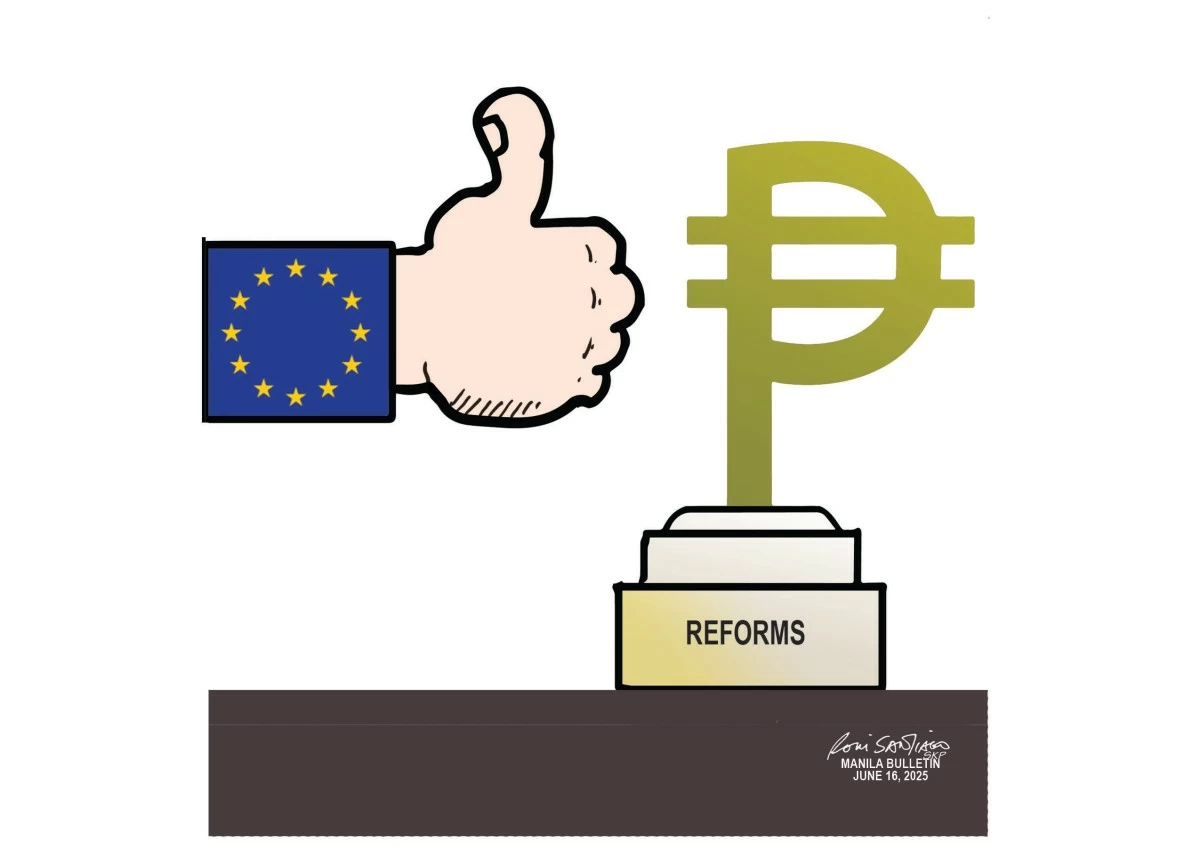
The European Commission’s recent announcement removing the Philippines from its list of high-risk countries for money laundering and terrorist financing is a welcome and significant development. Alongside seven other jurisdictions, the Philippines was acknowledged for implementing comprehensive reforms to strengthen its defenses against illicit financial flows.
This delisting means that the Philippines is no longer subject to enhanced monitoring measures by the European Union’s Financial Action Task Force (FATF). It is a signal to the global financial community that our country has made tangible progress in aligning with international standards on anti-money laundering and combating the financing of terrorism (AML/CFT).
The implications of this development are far-reaching. First and foremost, it is a strong vote of confidence in the country’s financial regulatory framework, particularly in the efforts of the Bangko Sentral ng Pilipinas (BSP), the Anti-Money Laundering Council (AMLC), and other institutions that played critical roles in shepherding these reforms.
For international investors and financial institutions, this delisting translates to a reduced risk profile for the Philippines. It lowers the compliance burdens on transactions involving Philippine entities, streamlines cross-border financial operations, and opens the door for increased foreign direct investment and international partnerships. It also bodes well for overseas Filipino workers and their remittances, as they may face fewer scrutiny-related delays or requirements when transacting through EU-based financial channels.
Central to this progress is the BSP’s proactive approach under the leadership of Governor Eli Remolona. He rightly noted that while the country has achieved a milestone, vigilance must not wane. The challenge now is to sustain these gains by identifying and mitigating emerging risks that could once again jeopardize our standing.
In this context, the BSP can take several concrete steps. First, it must continue enhancing its regulatory technology capabilities to improve data collection, monitoring, and predictive analysis of suspicious transactions. Strengthening coordination among financial institutions, law enforcement, and the judiciary is equally vital to ensure timely investigation and prosecution of financial crimes.
Second, as financial innovations evolve—especially in digital banking, fintech platforms, and cryptocurrency—the BSP must keep pace with regulation. Updating its supervisory frameworks to cover virtual assets and their service providers will be critical in closing loopholes that criminals may exploit.
Third, public education and private sector engagement remain crucial. Financial institutions must be capacitated to understand and meet AML/CFT obligations. Promoting a compliance culture at all levels—from rural banks to large conglomerates—will help embed long-term safeguards.
Finally, the Philippines must continue working with global AML bodies to benchmark its policies against international best practices. Participation in peer reviews and technical capacity-building can further enhance the resilience of our financial system.
The delisting from the EU watchlist is a milestone to celebrate—but it is not an endpoint. It is a stepping stone toward a more transparent, trusted, and inclusive financial system. The country must stay the course and remain agile in confronting new and complex threats. In doing so, the Philippines can earn not just regulatory approval, but also the long-term trust of investors, partners, and citizens alike.