







PH, Japan begin bilateral drills after ratification of RAA
Published Jun 15, 2025 02:32 pm


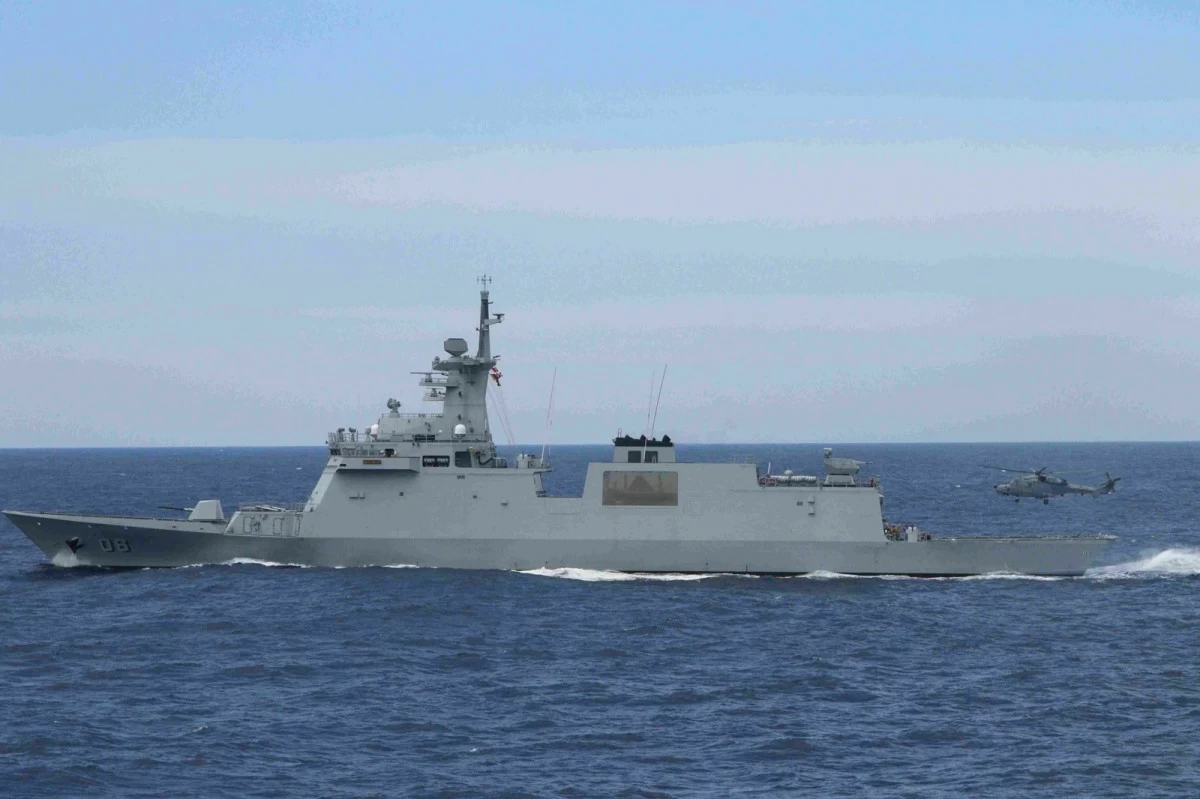
An AgustaWestland AW159 anti-submarine helicopter tries to land on the deck of BRP Miguel Malvar (FFG06) during a maritime cooperative activity between the Philippines and Japan in the West Philippine Sea (WPS) on June 14, 2025. (Photo: Japan Maritime Self-Defense Forces)
A week after the ratification of the Reciprocal Access Agreement (RAA), the Philippines and Japan have begun training their militaries, marking the launch of a “new phase” in the defense cooperation of the two Asian countries.
Naval ships from the Armed Forces of the Philippines (AFP) and Japan Maritime Self-Defense Force (JMSDF) sailed in the West Philippine Sea (WPS) as the two forces held their second bilateral maritime cooperative activity (MCA) last June 14, eight days since Japan's National Diet ratified the RAA on June 6. The Senate earlier ratified the troop access pact in December last year.
“This cooperative activity is more than a display of maritime capability—it is a manifestation of our enduring commitment to uphold peace, stability, and a rules-based order in the Indo-Pacific,” AFP Chief, General Romeo Brawner Jr. said on Sunday, June 15.
The AFP deployed BRP Miguel Malvar (FFG-06), the newest warship of the Philippine Navy (PN), as well as anti-submarine naval helicopter AgustaWestland AW159, an intelligence, surveillance and reconnaissance (ISR) C-208 helicopter of the Philippine Air Force (PAF), and PAF search and rescue units.
Meanwhile, Japan deployed Takanami-class destroyer JS Takanami (DDG110) and a Sikorsky SH-60K Seahawk multi-mission helicopter.
The AFP and JMSDF showcased a series of interoperability exercises such as check exercise, anti-submarine warfare exercise, cross-deck exercise, Division Tactics and Officer of the Watch Maneuvers (DIVTACS/OOW), Photo Exercises (PHOTOEX), and a Finish Exercise (FINEX).
Brawner stressed that the MCA was more than a “maritime drill” as it underscored the operationalization of the RAA, an accord that lays the groundwork for increased joint training, and humanitarian assistance and disaster response (HADR) initiatives between the AFP and Japan Self-Defense Forces (JSDF).
“With the RAA now in effect, our coordination with Japan will only grow stronger and more responsive to the complex demands of our shared security environment,” he added.
The military chief also stated that the bilateral training highlighted the “deepening trust and coordination” between the two allied forces as they respond to traditional and emerging security challenges in the region.
During the training, the AFP reported the presence of at least one Chinese vessel in the exercise area but noted that it did not interfere with the exercise.
Previously, the AFP mentioned that Chinese vessels would “behave” when the Philippines would hold a military exercise with its allies. But it said Chinese vessels would exhibit aggressive actions once the training is done and Philippine vessels or forces are not accompanied by other nations’ troops.